the latest

Archive for the ‘Uncategorized’ Category

Canadian Rock!

Monday, October 31st, 2011

Early Season Itchy Trigger Finger!

Saturday, October 29th, 2011

Early Season Climbing

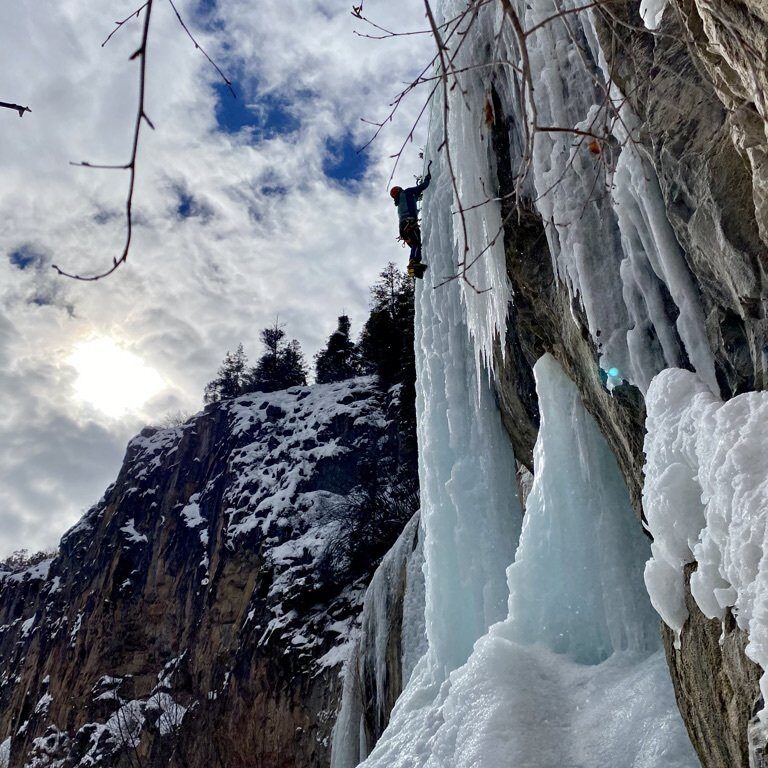
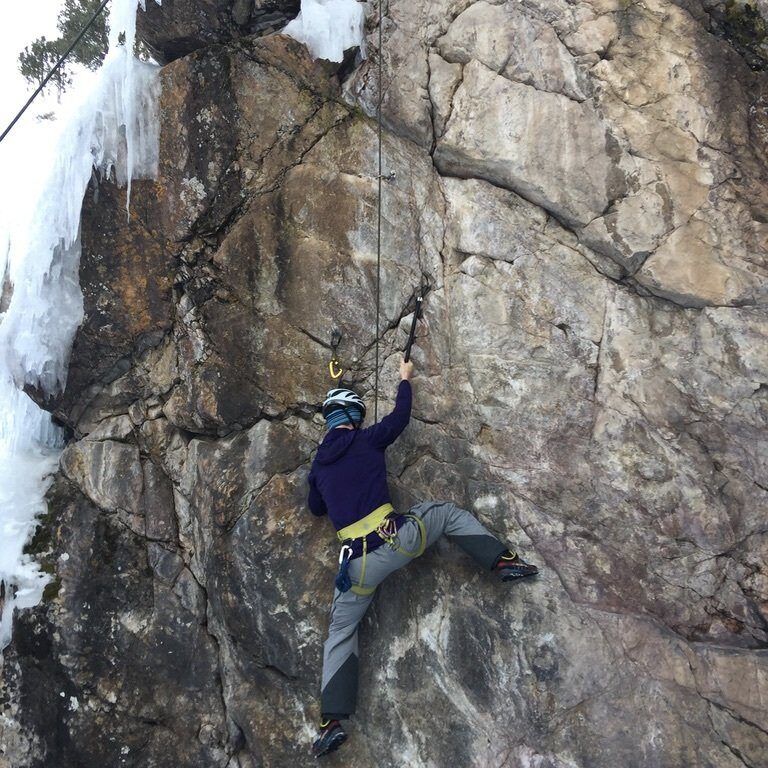
Routes like The Terminator, Sea of Vapors and Bird Brain Boulevard are already in! Many are salivating at the chance wipe the dust off and scrape the rust from there ice tools and crampons, which have been in storage since April. One thing I have learned about ice climbing this time of year is that you are often the most tested when you are the least prepared! Climbing ice in the early season is fun and (usually) never dull! Your enthusiasm is high, you’ve been doing pull-ups since August, you’ve spent a week in Indian Creek, and maybe even had a lot of indoor dry tooling sessions.  However, none of this physical training and enthusiasm really “prepares” you for the true riggers of climbing what is likely to be ice in it’s most primitive, aggressive and difficult condition. The mental muscle will get an extremely valuable work out.
Such is the nature of climbing early season ice. While it is fun, easy and necessary to do all the physical prep and training, nothing can adequately prepare you for psychological side of the game like doing it. Ice climbing season often happens in reverse: you get your toughest, most rewarding moments early on and then things progressively get easier and less challenging through the season. This is certainly compounded by the Mob Rules mentality that makes most climbs easier by at least a grade due to the high traffic path-of-least-resistance found on the classics by mid-season. Early, there is no path and who can not attest to the added difficulties encountered when on truly virgin ice. It is extraordinary and often frightful at the same time.
It is often best to temper your enthusiasm with prudence and scale your ambitions back by a grade or so in the early season, keeping in mind that protection is likely to be sparse, less reliable and the grades will feel “real” and “solid.” However, these qualities are gifts that you may not get the rest of the season and are the best things you can have for gaining the experience to do FA’s and real alpine climbs. This is the time of year your mind gets a real work out and it will gain strength as a result. Taking things a bit easy this time of year, but still having a true adventure will allow your mental toughness to develop and help your confidence on more difficult endeavors later on in the season when all the other skills (speed, efficient movement, anchoring, etc.)  are well honed.
This is also a time of year when many routes lack the significant threat of avalanche danger which can be present later on when Winter’s snows really pile up. So, it is a great time to get out and find some neglected, hard to get to routes in the high country. There will be plenty of time to get out on the front country routes in the mid winter, so seek out some longer, moderate (for you) adventures and help stretch that mental muscle.
Just keep in mind when you’re 40 feet out from your last 13 cm screw, scratching your way up some mossy chimney that this is a gift that you may not get again until the spring on a true Alpine Monster!

Black Canyon Guided Climbing Threatened!

Thursday, September 29th, 2011

The Black Canyon National Park administrators are proposing to discontinue all guided climbing there as of Spring, 2012. They are basing this decision on a very strict and narrow interpretation of the 1964 Wilderness Act. They are accepting public comment on the new plan until October 27. I STRONGLY encourage individuals to take the time to comment regarding this. Follow the link at the bottom to post your comment to their web-site. This proposal not only threatens guided climbing access to the Black Canyon, but also poses a threat to other areas by setting a bad precedent. Please speak out against this proposal and help preserve the right to access to guided climbing in the Black Canyon by taking a few moments to post a thoughtful comment to their site.

The Park administrators openly admit that guided climbing is inherently a safer and better experience for guests, and that this has always been a very amenable relationship over the years, with no problems. However, it is up to the public to ultimately convince them that guided climbing is necessary for people to experience this resource, and that through guides it is the only way they would be able to experience this resource. Specifically, they feel that guided climbing in The Black Canyon is inconsistent with the “desired condition” of self reliance.
I recommend emphasizing the following in your comments to the Park:

  1. Guided climbing is necessary in the Black Canyon specifically because it allows a higher degree of self-reliance for many parties.
  2. Guided climbing does not diminish the challenge, adventure and ruggedness involved in climbing in the Black Canyon.
  3. Guided climbing is of minimal impact to the other users of the inner canyon wilderness.
  4. Guided climbing has long history of practice in the Black Canyon (since the 1960’s!) and is, therefore, an integral part of the climbing legacy there.
  5. Any other reasons you personally feel are important about allowing guided climbing to continue in the Black Canyon.

Click here to speak out by posting a comment to the NPS site. Please forward this link to any and all other climbers you feel may take interest in the cause.

Thank you very much!

Vince Anderson


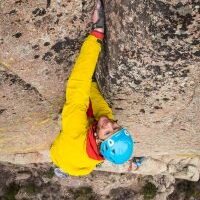
Ben Dressel on “The Tourist Route,” a climb established in the mid 1970′s by Guide Michael Covington and a client.


For those interested in reading further, here is a more in depth rebuttle of their proposal:

Black Canyon Wilderness Management Plan Guided Climbing Exclusion

I strongly recommend that the National Park Service reconsider their proposal to discontinue allowing commercially guided climbing in the new Wilderness and Backcountry Management Plan for the Black Canyon of the Gunnison National Park for the following reasons:

In the Decision Making Matrix of the Park’s Environmental Assessment document(Table 1, p 233-234), commercial services for climbing (i.e. guided climbing) was determined to be “appropriate & necessary” in ALL of the Park’s own filters (Filters 1-3) and only with respect to their personal interpretation of the the Wilderness Act (section 4(d)(6)) was it then deemed unnecessary and not meeting the “desired conditions for wilderness character.”
This section of The Wilderness Act states that “commercial services may be performed…to the extent necessary for activities that are proper for realizing the recreational…purposes of the area.” Filters 1-3 did determine that climbing is proper, so then guided climbing should be permitted to the extent necessary. That extent is to provide access to the services of a trained professional for the purpose of rock climbing to those who would prefer such services and is, therefore, necessary, as it has been since the inception of the Black Canyon National Park.
Furthermore, page 7 of the Environmental Assessment states that “Wilderness character is described as having four necessary and interrelated qualities: untrammeled, natural, undeveloped, and solitude or primitive and unconfined recreation (USDA 2008).” Guided climbing does “protect and enhance (these) desired conditions for wilderness character” on par with, if not more than, non-guided climbing. There is no proof offered to suggest the opposite.
Therefore, according to the Park Service’s own Environmental Assessment Decision Making Matrix, Commercial Service as it pertains to rock climbing (i.e. guided climbing) meets the necessary requirements to be deemed an appropriate activity.
Also in the Environmental Assessment (p. 207) it states that, “Per the findings in the Black Canyon NP… Wilderness and Backcountry Management Plan, commercial use authorizations (for climbing) … are not allowed within Black Canyon NP to maintain and improve opportunities for challenge, self-reliance and adventure that are integral to the wilderness character of the inner canyon.” However, it is for precisely these reasons, “to maintain and improve opportunities for challenge, self-reliance and adventure” that guided climbing is necessary and appropriate in the Black Canyon.
Challenge: According to the American Heritage Dictionary, Adventure is defined as A test of one’s abilities or resources in a demanding but stimulating undertaking. Guided climbing allows this and aims to maintain reasonable safety all the while. There is no proof that guided climbing offers any less challenge than non-guided climbing.
Self-reliance: From The American Heritage Dictionary of the English Language, self-reliance is defined as: Reliance on one’s own capabilities, judgment, or resources; independence. Taken to an extreme, total self-reliance, then would involve climbing alone. This is clearly not the Park’s intention. How does guided climbing not fit this definition? There is no proof that guided climbing is any less self-reliant than non-guided climbing. In fact, it could well be argued that climbing with a trained and certified mountain guide offers a higher degree of self-reliance than that with which is present in the average climbing party.
Adventure: Again, from the American Heritage Dictionary, Adventure is defined as Participation in hazardous or exciting experiences. Risk is inherent in climbing and there is still an ample amount in guided climbing, especially in the Black Canyon. A guide, simply helps evaluate and manage the inherent risks to an acceptable level to the best of his or her ability and training. Climbing with a guide does not eliminate these risks, but it can help mitigate them.
In the public meetings (9/21/2011-Montrose and 9/22/2011-Gunnison), it was stated in the Power Point presentation that  “the objective (of the new proposal) is to: Provide a template for basing management decisions on sound scientific research & informed observations.” If so, there has been no such scientific research or  informed observations referenced or cited to support any claims that guided climbing does not help maintain and improve the above mentioned qualities.
There is a long and documented history of not only professional guiding, but that of partnerships based on mentorship in the Black Canyon. The tradition of mentorship: master and apprentice has been a part of the Black Canyon climbing experience all along. Guided climbing, is just a formalized master and apprentice relationship and the guide is compensated financially for his or her training, experience and skill by the client. From the oldest documented climbs in the Canyon in the 1960’s, climbers like Layton Kor would often mentor young climbers by taking them along on various climbs in the Black Canyon. At that time, the canyon was unquestionably wild, rugged and untrammeled. These climbers then, had an extremely high level of commitment, self-reliance and sense of adventure. Here are a few examples of this type of relationship in the history of climbing in the Black Canyon.
In 1962, Layton Kor and a very young Bob Culp established the Route “Rosy Arete” in the Long Draw. Kor led the entire route.
A 16 year old Pat Amment also apprenticed under the the tutelage of the older and more experienced Layton Kor on a first ascent of the North Chasm View Wall in 1963.
Wayne Goss says of his climb of “The Swallow Walll” in 1967 with Layton Kor, “Kor’s drive to complete the route… and leadership made the dream a reality. I was just along for the ride.”
In the1970’s and 80’s, guide Michael Covington took numerous clients on adventures here long before the modern days of numerous parties climbing on any given day. In the mid 70’s, Covington and an unknown client established “The Tourist Route” in Long Draw. There are numerous other examples of guided climbing having been an integral part to the Black Canyon’s climbing history to this point. To say that it is not part of the user experience here would imply an unfamiliarity with the canyon’s fifty year climbing history.
Guided climbing is of little impact to the current overall inner canyon use. In 2010, guided climbing accounted for 1% of all inner canyon use. The newly proposed Climbing Management Plan maintains the status quo for all aspects of climbing in the Black Canyon except for guided climbing. Considering that guided climbing has an important and documented history here and poses no threat to the resource or its users, it should be maintained at status quo, as well.

TFT

Sunday, September 4th, 2011

Kristof Kulp & I enjoyed Cascade Alpine Splendor along the aesthetic, mile long Torment-Forbidden Traverse in The North Cascades National Park.
Conditions could not have been better for this fun, moderate outing. We completed it over three days with one beautiful bivouac high up along the ridge.

20110904-010252.jpg

20110904-010319.jpg

20110904-010335.jpg

Black Canyon Back in Season!

Thursday, August 25th, 2011

I just returned from two days’ climbing in the Black Canyon. It seems like we’ve turned the corner on the mid-summer heat and temps for climbing in the Black are nearing near perfect (at least, in the shade)! I climbed with the seasoned veteran, Ben Dressel from St. Louis. I was fortunate enough to do two routes which I’ve previously never done, The Dragon’s Tooth (5.8+) and The Rosy Arete/Tourist Route (5.9). They were both gems in their own special way. The Dragon’s Tooth was short (9 pitches, though only 2  of 5.8) with great rock and a fun and easy way to get in  bunch of quick pitches. The Rosy Arete, on the other hand, is a grand Black Canyon Adventure Route, with all that descriptor entails, It was long (over 1,500 feet) and mostly on steep rock. The climbing was never too hard (maybe a few sections of 5.9), but it was serious (there were numerous runouts and some climbing on less than perfect rock.) Route finding was definitely the crux of climbing this route and due to its length, demanded keen attention so as not to waste time trying to figure things out. At times, it seemed best to just pick a good looking line and forge ahead. The approach was one of the easiest I’ve done in the Black and there was NO poison ivy! All in all, it was a high quality outing.

I look forward to getting out again in late September or Rocktober, after I return from the Cascades.

Breck Epic

Monday, August 22nd, 2011

I am just returning to some sort of sanity after blowing my mind and destroying my body all last week in Breckenridge, racing my single speed bike at this year’s Breck Epic. As it turned out for me, it was a good race: I won the Single Speed category outright, though it did get a little interesting in the end. Six days of going all out for 3-4 hours and then doing everything in my power to recover enough to do it again proved no easy task. In the end I rode my bike for 21 hours, 16 minutes and 48 seconds which was 3 minutes and 38 seconds less than second place finisher, Mike Melley. That’s a close margin after so many hours. I can’t speak enough to how great a competitor Mr. Melley was and how much he enriched my experience of being nailed to the cross of pain by NEVER letting up a forcing me to stay on it the whole time.

I found it amazing how difficult it was to keep going so hard each successive day. It was a lot like alpine climbing, only without much threat or hazard. In that, I found I could pour out much more than I would in the mountains since I was not in any real danger. Still, I did have to dig similarly deep into my reserves of will power to scrape up enough energy to continue the level of output that it demanded of me to stay in the lead. The ascents would be total lung scorchers, having me breathing as hard as I possibly could. the descents would offer an initial respite in that the aerobic demands would be given a break, but the mental difficulty increased dramatically here by forcing me to push my bike to the limit going down rough, rocky and often loose trail and roads at dangerously fast speeds. My body would ache during the descents as I’d be tensed up trying to deliver my total focus to the trail and bike handling in order to keep things moving as fast as possible. I’d be begging for more climbing to give my fingers, shoulders, back and mind a break. Then, it’d be th lungs’ turn again.

I’d spend my after race hours eating, soaking in a cold creek, getting massage, eating more, trying to sleep, cleaning my bike, fixing my bike, eating more and trying to get down as much water as possible. I’d complete most days with 32 oz of water mixed with GU Electrolyte Brew in my hydration pack and having eaten 3-4 shots of GU Roctane mixed with a bit of water in a Gel Flask. That seemed to work for me and immediately after each race, I’d down 16 oz. of GU Recovery Brew. This stuff really works charms and I can’t say enough about how well the Roctane GU is. That stuff works! As for recovery, a buddy of mine turned me on to Pro Anox, a super powerful antioxidant formula that really helped kick my recovery into high gear. I’m not much of a believer in most supplements and stuff. I like to keep it simple, but the ingredients in products like GU’s Roctane and Pro Anox have well researched and documented science behind them. And, I can personally say that my experience with these types of things have helped quite a bit when going to the extremes of my physical capacity.

Here’s the numerical stats, though I’m not sure what kind of story they really tell.

Stage 1: 3:37:49, 39.5 miles, 6,000′

Stage 2: 3:50:03, 39 miles, 5,300′

Stage 3: 4:05:08, 39.5 miles, 5,950′

Stage 4: 4:07:15, 42 miles, 6,000′

Stage 5: 3:02:30, 27.3 miles, 4,300′

Stage 6: 2:34:13, 31.5 miles, 3,300′

Totals: 21:16:48, 219 miles, 30,850′

That’s a big chunk of terrain to cover. A LOT of it was rocky so the mileage took it’s toll on me. I felt good for the first three stages, then it was a progressive slide downwards. I had built up a pretty good lead after stage four (my toughest) and then played a game of hanging on and trying not to wreck or have any mechanical problems. By the final stage, I was hammered and flat. I rode as hard as I could, but couldn’t manage to stay with Mr. Melley as he dug into my hard work and 12:30 gap, taking 9 of those minutes off by the time I dragged my self across the finish line, holding onto second place for that stage and the overall lead. As much as I would have liked to have felt stronger on the final day, my strategy worked to give me the win.

It will take me a while to recover from this one. Now, its time to get back to the business of climbing mountains!


The Wilson Group

Thursday, August 11th, 2011

Earlier this week, I had the pleasure of climbing the three 14,000-foot peaks comprising the Wilson Group, Wilson Peak, Mount Wilson & El Diente, with Michael McAuliffe.
We hiked in the new Rock of Ages trail on Monday afternoon & climbed Eilson Peak that evening. We enjoyed a beautiful sunset on the descent to our camp in Navajo Basin. Tuesday saw us climbing Mount Wilson & El Diente via the classic connecting ridge. We returned via our approach route after a fulfilling 14-hour day.

20110811-084013.jpg

20110811-084028.jpg

20110811-084037.jpg

20110811-084115.jpg

20110811-084131.jpg

Oregon!

Wednesday, July 27th, 2011

My wife and I just returned from a road-trip vacation in Oregon. We took our camper West and went out to see my good friend and climbing partner Steve House marry Eva Dulnig in Cannon Beach, along the Oregon coast. The place was very tranquil and a great place to relax a bit from the busy summer. After that, we took a few days to travel home and see a bit more of the state.

We stopped along the way in Oakridge, known as the “mountain biking capital of the Northwest.” That’s a pretty bold claim, but from our brief stay there, the can back it up with the miles and miles of sweet singletrack strewn about in big, old growth forests with fast, soft trail. It was super moist with moss and ferns everywhere. We kept a watchful eye out for a Sasquatch. We camped by a nice, clear stream, Salmon Creek, and enjoyed home made pizza and local Willamette Valley Pinot Noir! Not bad!

From here, we ventured on to Crater Lake National Park (Oregon’s only NP) to view and ride around America’s deepest (and purist!) lake. The 33 mile loop around the lake makes for an incredible road ride with its smooth, recently paved surface and rolling nature. There’s 3,80o feet of climbing, but it never gets steep. The 5 1/2 mile diameter lake is an almost unnatural hue of blue and is startling to look at from every vantage point around it. Sitting at over 6,000 feet in elevation, it has a high mountain feel for this part of the country.

We continued on home from there, getting to see a lot of rural, Eastern Oregon as our route traversed some lesser traveled roads on our way into Northwestern Nevada and then back through Utah and home.

Summer Climbing in the Black!

Tuesday, July 5th, 2011

It’s really not as hot as you’d think. I just finished climbing for four days with Vivek Mital in the Black Canyon and in the surrounding desert. We were able to climb Independence Monument, Castleton Tower and two fine routes in the Black Canyon: a link up of The Leisure Route to Midsummer’s Night Dream and then Casually Off Route with the Rim Extension.

The Leisure to Midsummer linkup is a great afternoon endeavor this time of year as it goes into the shade by 2:00 pm. Finishing with Midsummer Night’s Dream keeps the quality a bit higher in the end while adding just a touch of difficulty to The Leisure Route after climbing the first two pitches of that.

After climbing six pitches on Casually Off Route, it is possible to continue up on good rock for another four pitches to the canyon rim and avoid any bushwhacking. This makes for a nice, ten-pitch 5.9. The last two pitches to the rim are some of the best found on the route.


Father’s Day Weekend

Monday, June 20th, 2011

It was a great weekend here in the Western Colorado Desert. The temps have remained moderate for the season with highs in the low 80′s! It feels more like spring, but the days are lasting well into the evening. I took advantage of this respite from the heat and went for a few nice, long rides close to home since there’s still a LOT of snow left up in the mountains.


I rode a very nice 45 mile loop from my house to Whitewater, up and over on the Tabequache Trail into Bangs Canyon followed by a descent back home on two of Colorado’s finest single track trails, The Ribbon and Gunny Loop. It was a great ride that included a seven mile stretch through town (touring some of GJ’s meth labs!), and jaunt on the historic Spanish Trail (which felt like being transported to Dakota Badlands) along the Gunnison River to get to Whitewater. The Tabequache Trail started with a nine mile, sustained but moderate climb into the Pinyon & Juniper forests over Unaweep Canyon. Then, a fast DH-style descent into the Red-Rock lined Bangs and Rough Canyons. A two mile ascent on slick rock got me out onto Little Park road, from where a short mile and half climb on pavement put me at the top of the Ribbon where the real fun began! For just a forty mile ride, my legs felt heavy when I got home that afternoon.

On Sunday, I decided to take things a bit easier with a nice, mellow road ride over Colorado National Monument. It was great to pedal easily up the smooth pavement and fly down the West side turns at over 40 mph!

For dinner that evening, I was rewarded with my Father’s Day gift: A delicious, home cooked, authentic Mexican dinner, made by my wife. Ummmmm! Chile Rellenos! Yes, there was real lard used! I like to say: “Lard is like oxygen!”