
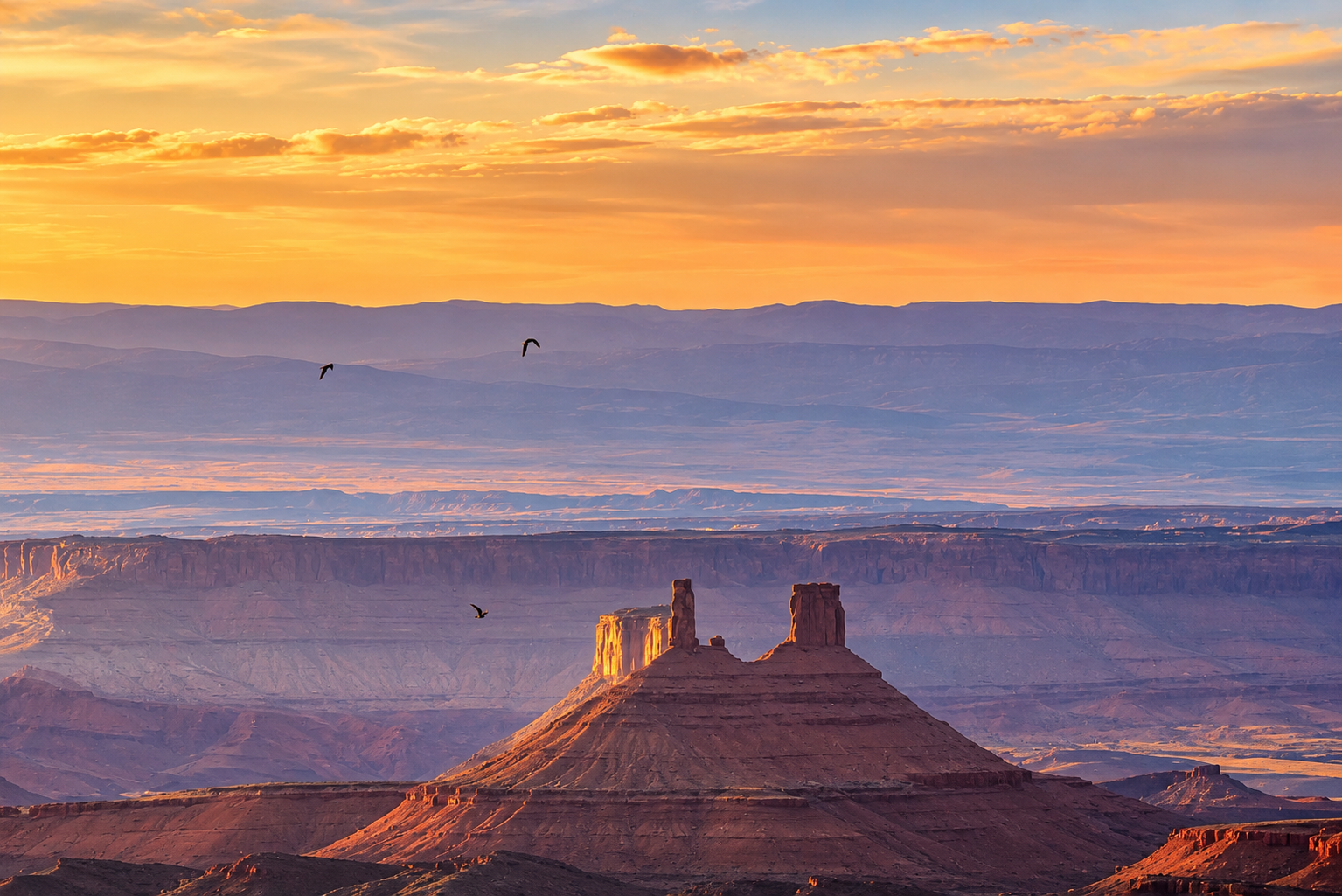
Guided Rock Climbing in Moab, Utah
Climb Moab’s Iconic Desert Towers and Splitter Cracks
Experience the world class sandstone climbing in Moab with our AMGA certified Rock Guides at Skyward Mountaineering. From beginner friendly cragging and classic crack climbs to exposed multipitch desert towers, Moab offers an incredible variety of rock climbing in one of the Southwest's most spectacular landscapes.
Whether you want to learn to climb outdoors, improve your crack climbing technique, develop trad leading skills, or climb a classic desert tower, we'll build a private, customized climbing day around your experience and goals. Our local guides bring decades of climbing and guiding experience, helping you climb efficiently, learn new skills, and make the most of your time in the Moab desert.
Choose From Single Pitch Crack Climbing To Multipitch Desert Towers
Plan Your Moab Rock Climbing Trip
Beginner to Desert Towers: A Moab Climbing Progression
If you're new to outdoor climbing but want to experience Moab's famous desert towers, consider building your trip as a progression rather than jumping straight onto a committing route.
Start with a day of single pitch climbing to learn movement, belaying and basic outdoor climbing systems. A second day can focus on sandstone crack climbing technique and efficient movement. From there, your guide can introduce multipitch systems and help you decide which moderate desert tower is an appropriate objective.
A multi-day itinerary gives you the opportunity to develop skills while enjoying some of Moab's best climbing, rather than trying to learn everything on your first multipitch route.

Natural & Cultural History Of The Moab Desert
Moab has a rich geologic history, spanning each of the four major subdivisions of geologic time: Precambrian, Paleozoic, Mesozoic, and Cenozoic. The greatest concentration of exposed rock in Moab is from the Mesozoic age with an extensive fossil record, especially from that of dinosaurs! With multiple types of wind eroded sandstone in the area, most of the climbing is on Wingate sandstone, where water and oxygen react with tiny bits of iron inside the sand grains, turning the rock red.
Ancestral Puebloans and Fremont people, have lived on the Colorado Plateau (Moab area) since over 10,000 years ago! Around 2,000 years ago these tribes began farming and cultivating plants around Moab and the Four Corners region. The Nuche (commonly referred to as Ute), Paiute, Hopi, and Diné (commonly referred to as Navajo) have also lived on the Colorado Plateau. The Spanish called the Nuche people “Yutta”, which became the name for the state for Utah and the tribe’s name was shortened to Ute.
Why Climb In Moab With Skyward Mountaineering?
Moab has plenty of world class rock climbing, but knowing where to climb is only part of the guided experience. A great guide should help you choose an appropriate objective, manage the logistics and teach you skills that are personalized and make noticeable improvements in your movement or technical systems.
Skyward Mountaineering is an AMGA Accredited Business and our guides bring extensive technical training, local knowledge and decades of climbing and guiding experience to each trip. We specialize in customized private climbing experiences rather than one-size-fits-all trips.
That means your day can be focused on exactly what you want to accomplish, whether that's learning to climb outdoors, improving your efficiency with crack climbing, preparing for a multipitch route, or standing on the summit of a classic Moab desert tower.
Frequently Asked Questions
-
Yes, Moab has guided climbing options for beginners as well as experienced climbers.
From family friendly climbing options with short approaches, comfortable base areas, and a variety of toprope route options, easy, and accessible multipitch adventure routes, to challenging desert towers, Moab is a world class rock climbing destination for all abilities.
Beginner friendly:
Wall Street
selected Kane Springs crags
introductory single-pitch routes
Intermediate:
Looking Glass Rock
Terma
Ancient Art
Advanced:
Kor-Ingalls, Castleton Tower
Fine Jade, The Rectory
Lonely Vigil, Lighthouse Tower
Additional desert towers
-
Previous multipitch rock climbing experience is required for a guided ascent of most desert towers in Moab, such as Castleton Tower or Ancient Art, though there are also introductory multipitch routes that are perfect for beginners such as Looking Glass Arch.
Most towers require solid crack climbing technique, so climbers should be comfortable climbing sustained desert cracks. A climber who comfortably climbs 5.9 indoors or on sport routes may still need additional preparation before climbing a tower. We recommend a day of crack climbing instruction as prep for climbing most tower routes.
If you're unsure whether your experience is sufficient, tell us about the routes you've climbed, your outdoor experience and your multipitch background. We'll help you determine the best objective and any training that may be necessary.
-
Approaches to crags in Moab vary in length and roughness of terrain. Similar to the variety of routes for different abilities, there are very easy approaches such as roadside climbing at Wall Street; short hikes up well maintained trails (2-5 minutes) such as Ice Cream Parlor or River Road Dihedrals; easy/medium length hikes with some uphill gain on climber’s paths (~15 minutes) such as Abraxas or Deadman’s Buttress; and long approaches up steep and loose uphill trails such as many of the desert towers in Moab.
For example, the approach to Castleton Tower is approximately 1.25 miles with 1,350 feet of elevation gain, following a steep and sometimes loose desert trail toward the base of the tower. Expect a few short scrambling sections, but most of the approach is steep hiking. For a typical climbing team carrying day packs, the approach takes approximately 1.5 hours. Your guide will help set an appropriate pace and can discuss the approach, weather and what to expect before your trip.
-
Yes! Skyward Mountaineering puts a lot of value in working with you to personalize every guided climbing trip, so details like the start time, hiking pace, photos, climbing instruction, bonus pitches afterwards, etc can all be adjusted to meet your specific goals. Your guide will reach out in the days before the climb to discuss these logistics, please let them know if you have any questions or specific requests.
Additionally, our administrative staff are climbers and guides too and we’re here to support you through the whole process. If you have any questions before booking your guided climb or before the trip starts please reach out to us and we are happy to answer your questions.
-
We guide toproping in Moab at a maximum of 4 climbers per guide. If you would like to climb with a group larger than 4 people we can add a guide so everyone is able to climb together. Contact us to discuss a rock climbing trip with groups larger than 4 people.
On multipitch routes, we climb at a maximum of 2 climbers per guide, but similarly can add another guide for additional climbers so you can all climb together.
-
Spring: excellent
Fall: excellent
Winter: possible on sunny aspects
Summer: generally too hot except shaded/early-morning objectivesThe best weather for rock climbing in Moab is spring and fall when temperatures are moderate and rain events are rare. It is also possible to rock climb sunny aspects during the winter though occasional storms pass through the Moab region and cold windy conditions are common. The summer can be blazing hot and though it’s possible to climb shady aspects, it is difficult to maximize the full day.
-
Rock climbing in Moab is on a soft sandstone that is highly porous. Rain is absorbed into the rock and weakens the bond on hand holds and even bolts. Cams even can have a weaker holding power on the saturated sandstone. In the event of rain within 24 hours of our climbing trip in Moab, we may have to reschedule. This rescheduling will depend on how much rain occurs, whether the sun comes out, and what the wind speed/direction is. Thankfully, it’s rare that we have to cancel or reschedule a climb due to rain.
Our guides and office staff will work you to coordinate rescheduling, if necessary. For more information on our cancellation policy, please see our terms and conditions and contact us with any other questions.