The First Alpine Style Ascent Of Nanga Parbat’s Rupal Face
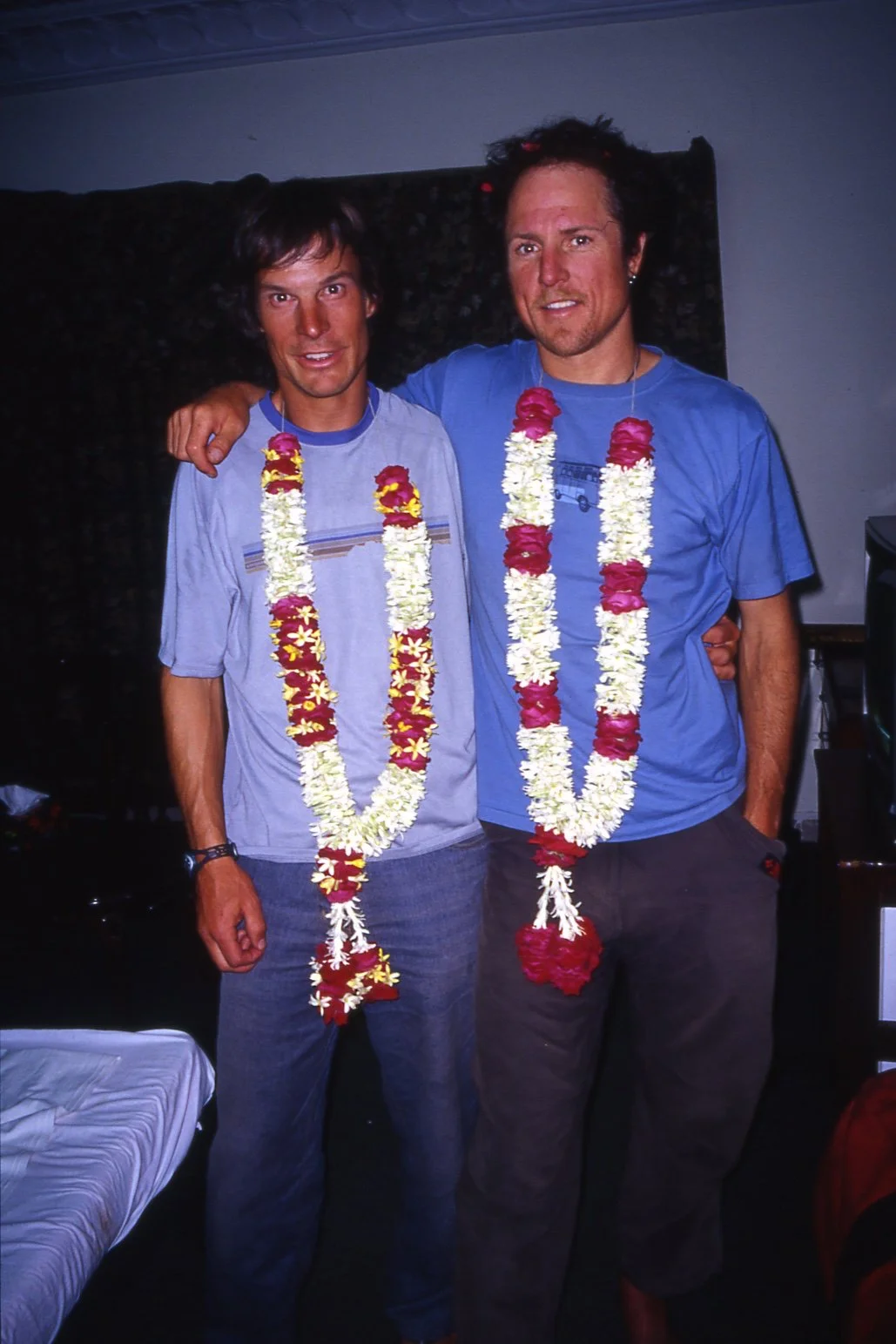
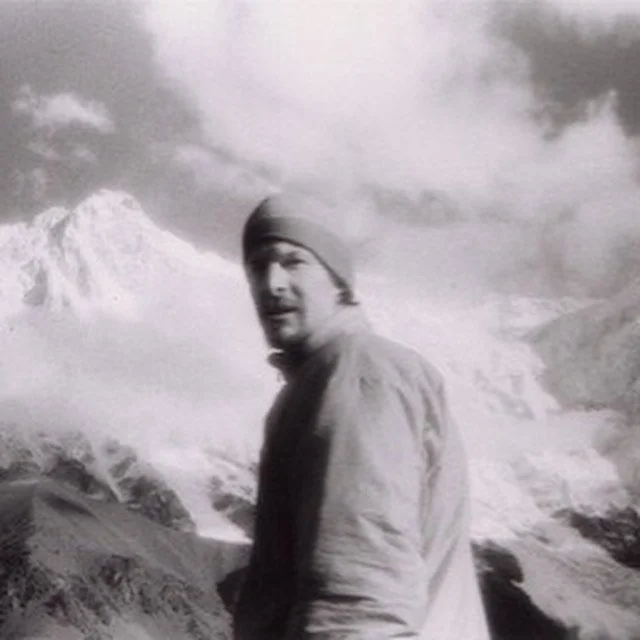
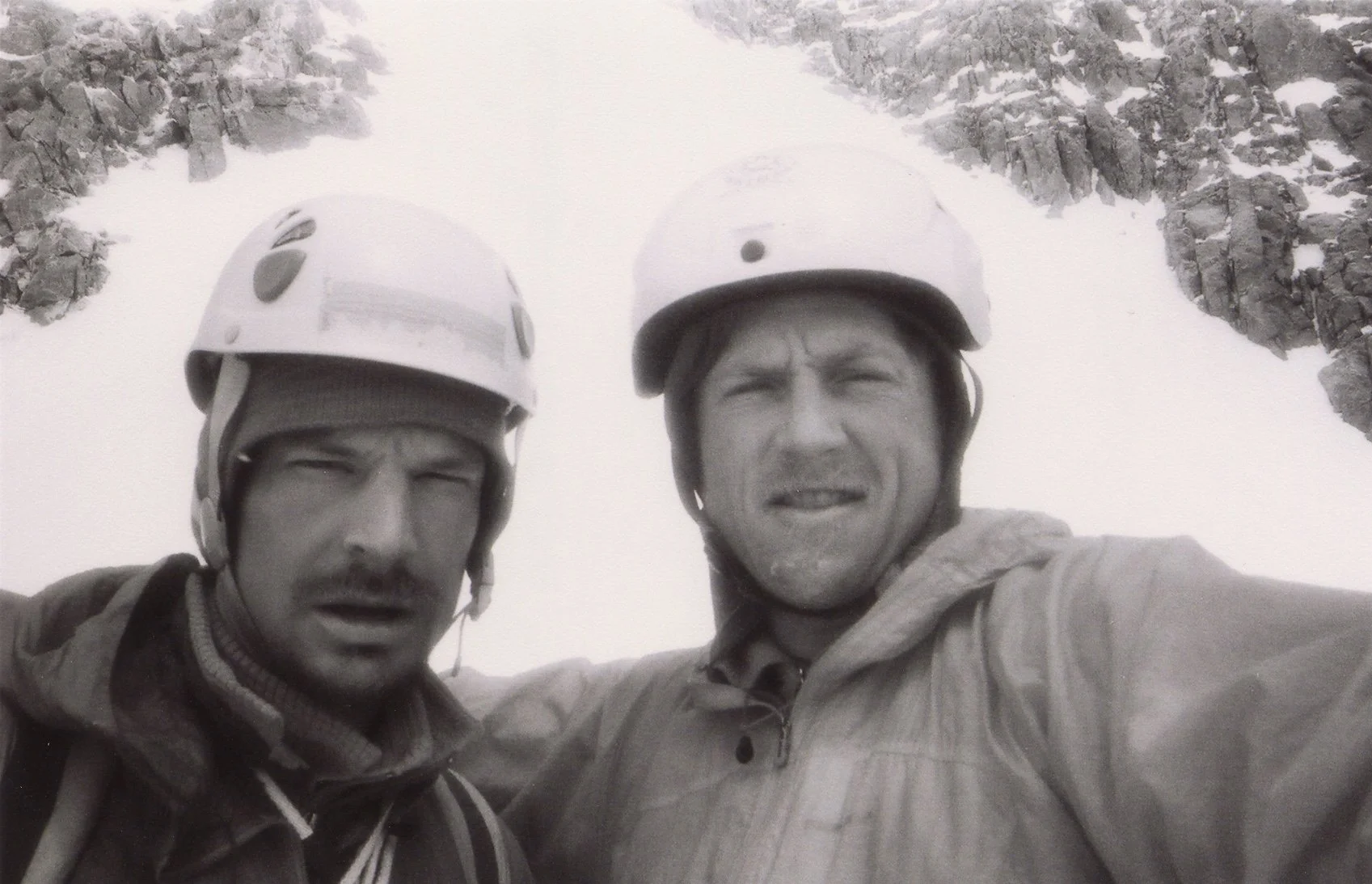
In September 2005, Skyward Mountaineering founder and co-owner, Vince Anderson teamed up with his friend and former Skyward co-owner Steve House for a historic ascent, winning them both the Piolet d’Or (in fact, they were the first Americans to win the prestigious award). Nanga Parbat (26,660 ft / 8,126 m) in Pakistan is one of the top ten tallest peaks on Earth and the Rupal Face is its dramatic south face rising over 15,000 ft from the valley floor. This steep face is considered one of the tallest continuous walls on Earth and has a rich climbing history, including the first ascent of the southeast spur by the Messner brothers in 1970 and an epic attempt by Kevin Doyle, Ward Robinson, Barry Blanchard, and Mark Twight in 1988. In commemoration of the 20 year anniversary of the successful First Ascent of the central pillar of the Rupal Face by Vince Anderson and Steve House, Vince recounts the climbing challenges, wild positions, hazardous terrain, and pushing through barriers with vivid storytelling and grainy images that speak to the mindset of his climbing.
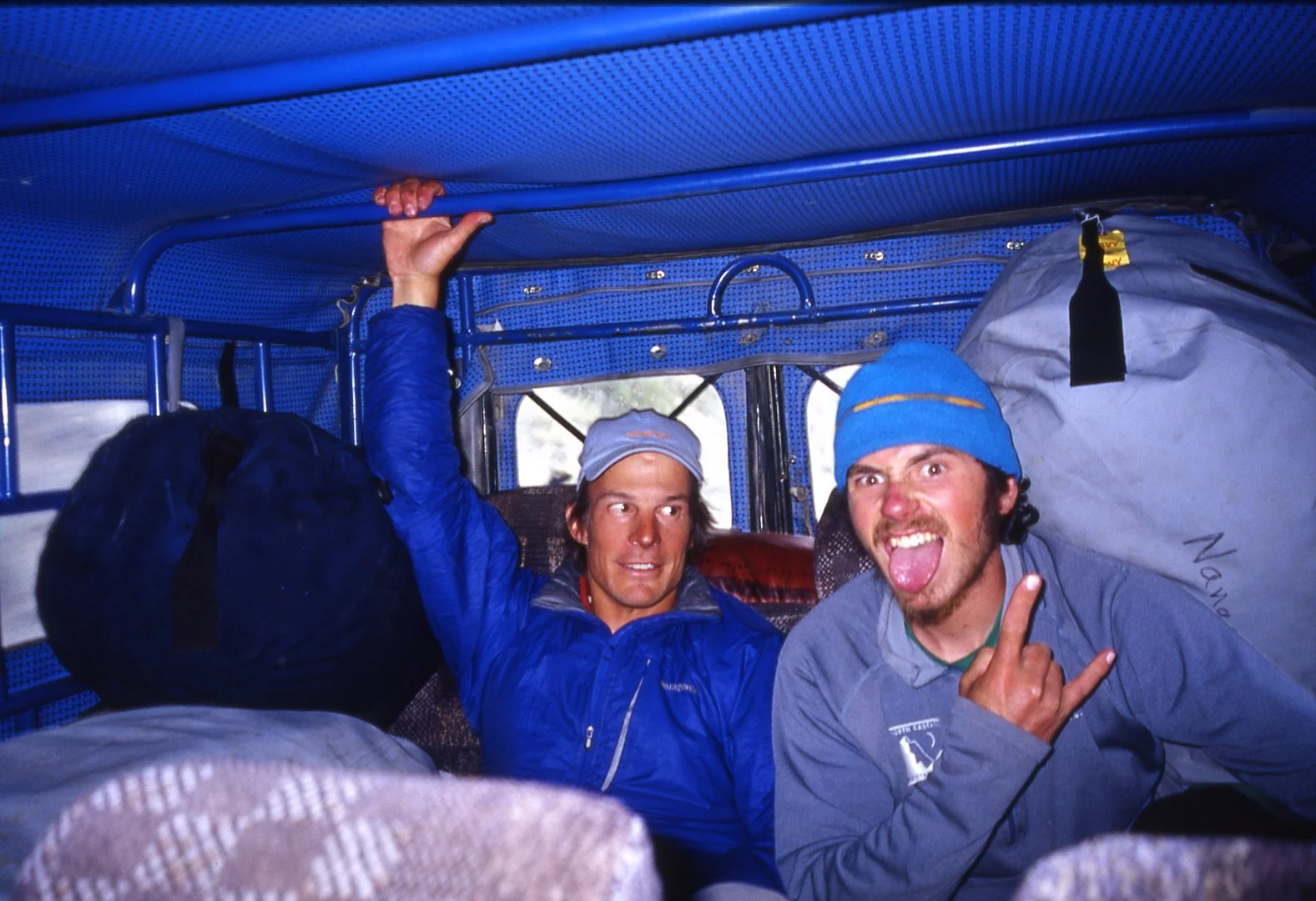
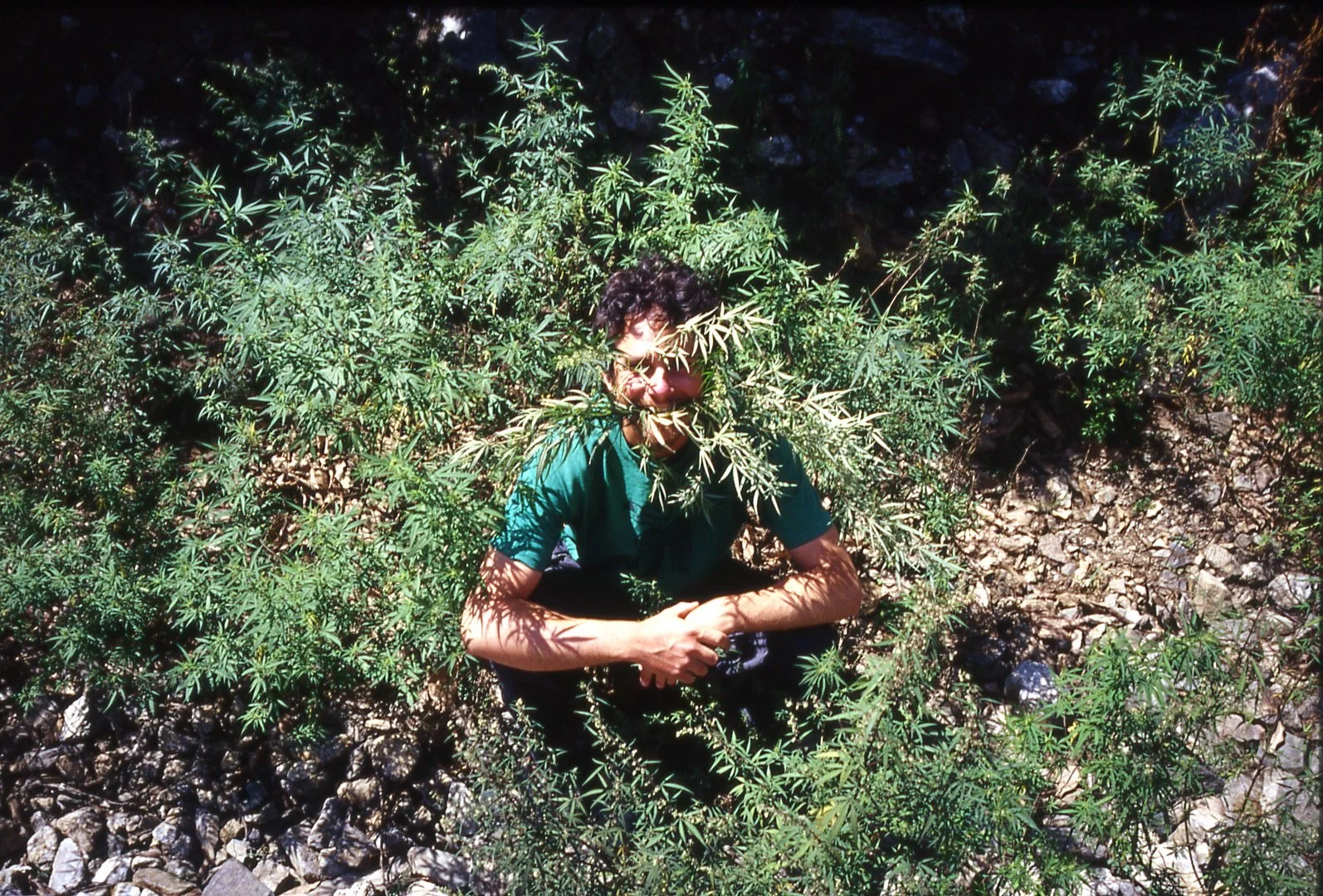
Twenty years sounds like a long time, but now doesn’t quite feel that way. Twenty years ago I was preparing to start an incredible journey with an amazing fellow human being. My memory sees it like we are today, but the photos suggest otherwise. These images are from film photography which also seems like a long time ago now.
We had acclimatized for Nanga weeks prior and had just been waiting and waiting to get a good enough weather window for an attempt to climb it. Colin Haley was there with us and helped bring some much needed levity (and great music knowledge) to our basecamp conversations. We also got to meet Reinhold Messner who happened to be trekking around the mountain to retrieve the recently found remains of his brother Gunther who perished there in 1970, the same year Steve and I were born.
He (and Steve and I) had no idea what was in store for us in the coming days.
After 3 weeks of waiting out unsettled weather, we finally got some real splitter days. Our forecaster at home, Jim Woodmencey, nailed it and on Aug 31 it indeed cleared and he felt confident we’d have at least six good days. That seemed enough for a try and we were already overstaying our planned time frame so needed to get going. Unfortunately, the weeks of unsettled weather also deposited plenty of new snow high on the mountain and the powerful sun created a lot of avalanche activity as the mountain began to shed its new skin. Once near the base, we aborted our attempt to start that day as we saw a nearly constant barrage of fresh avalanches on the approach slopes, some coming from way up high. The base was about 13,000’ so these were coming from 7,000-10,000 feet above.
We cached our gear near the base and decide to have a redo the following morning after a day of shedding.
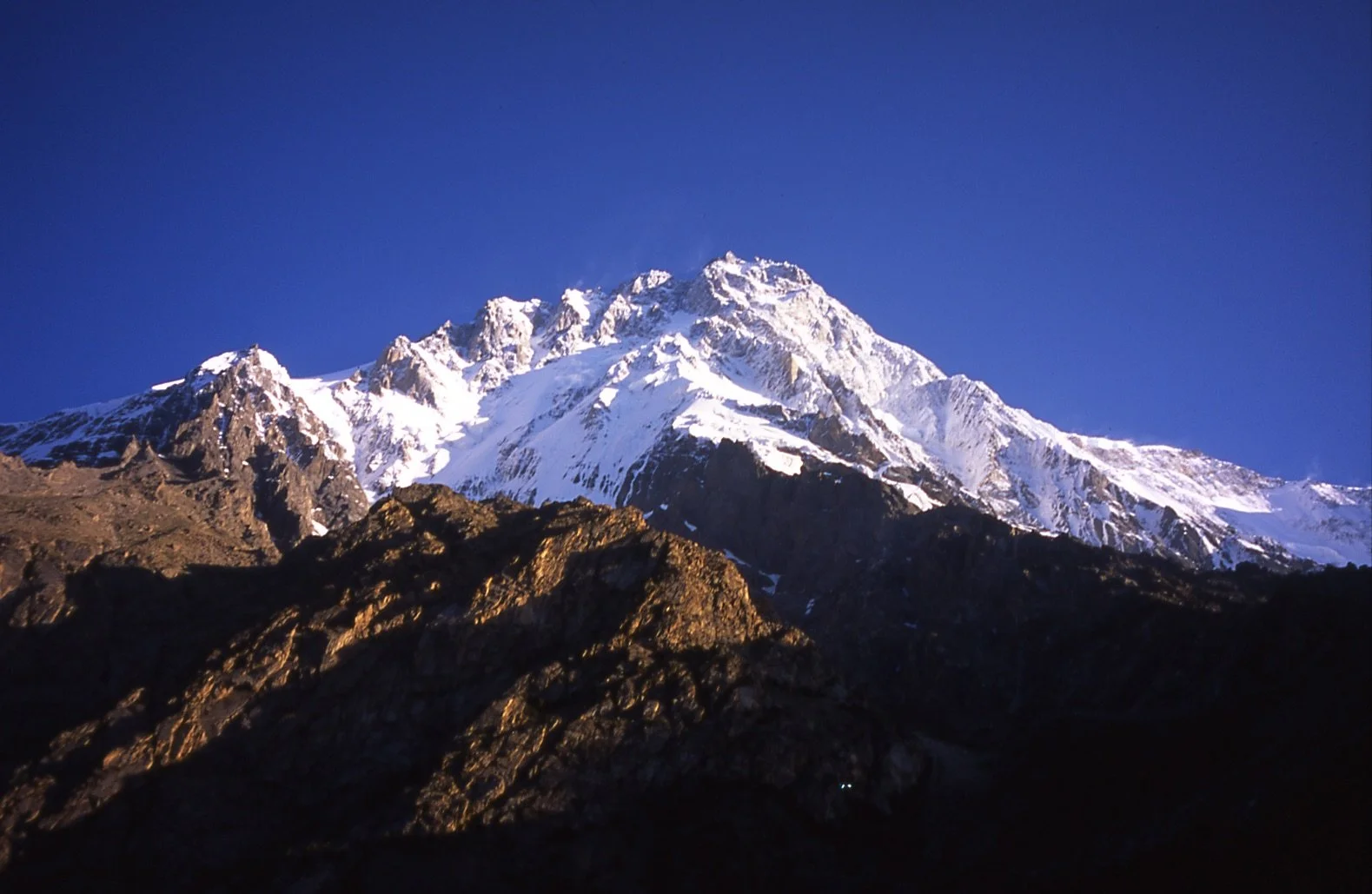
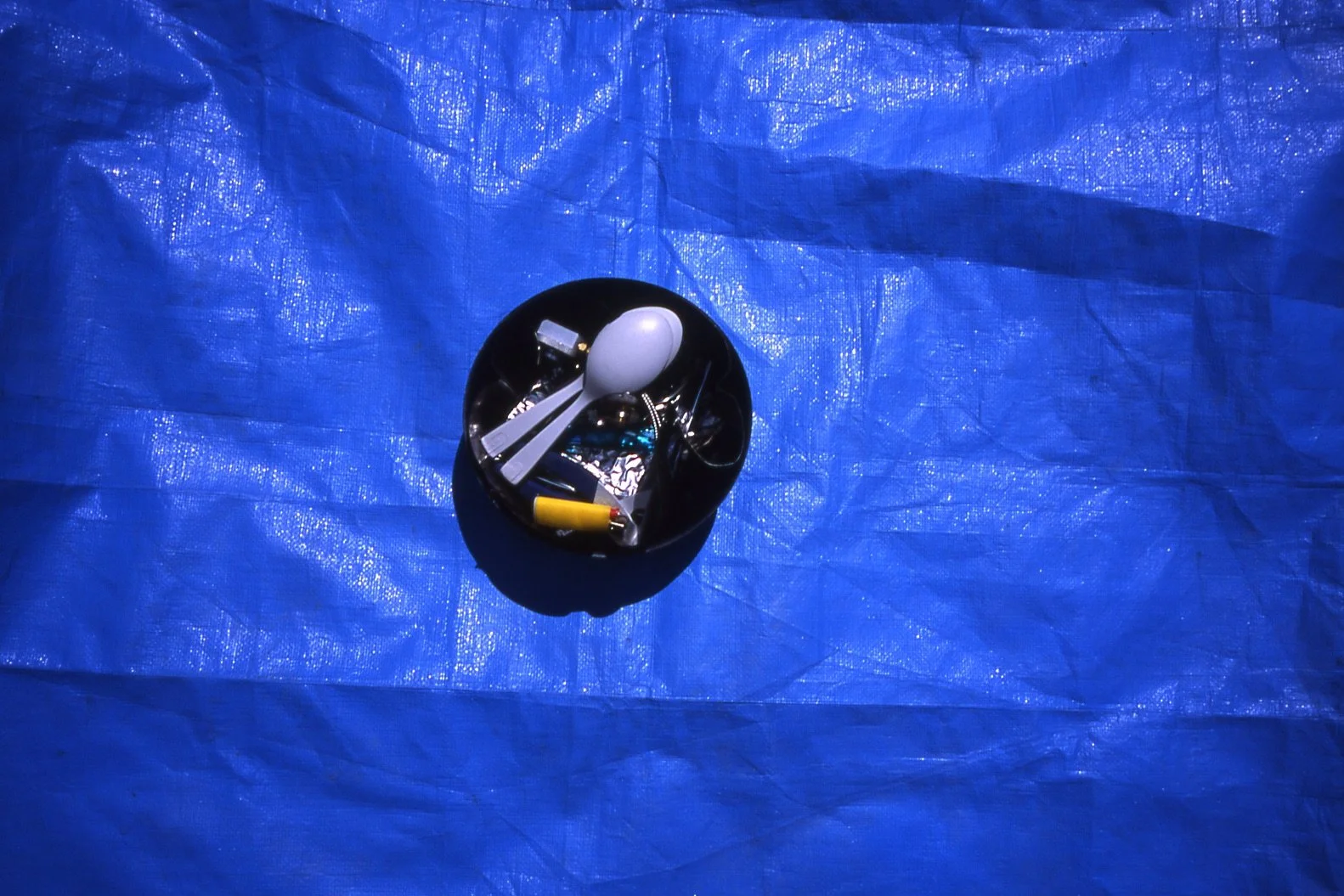
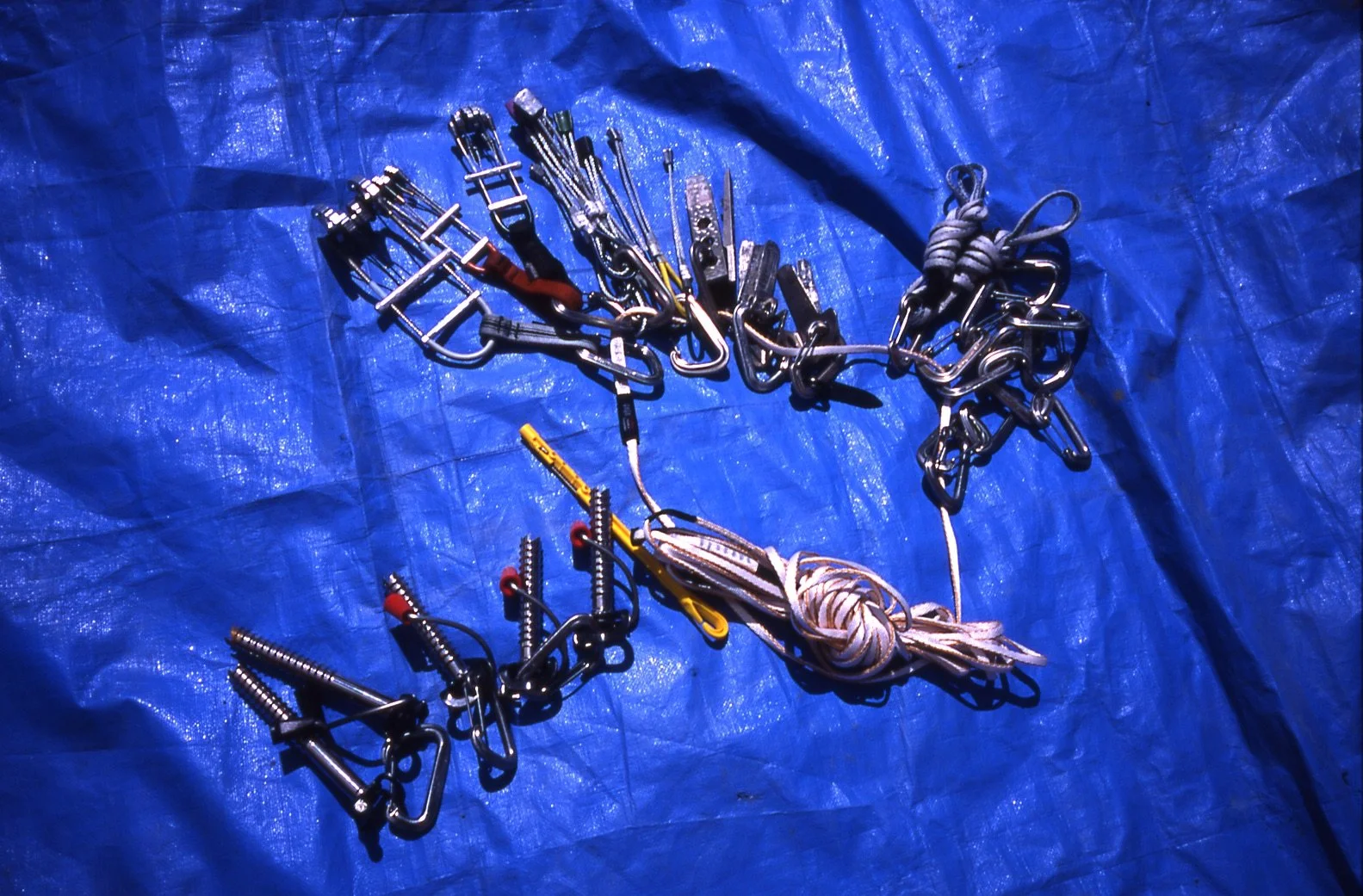
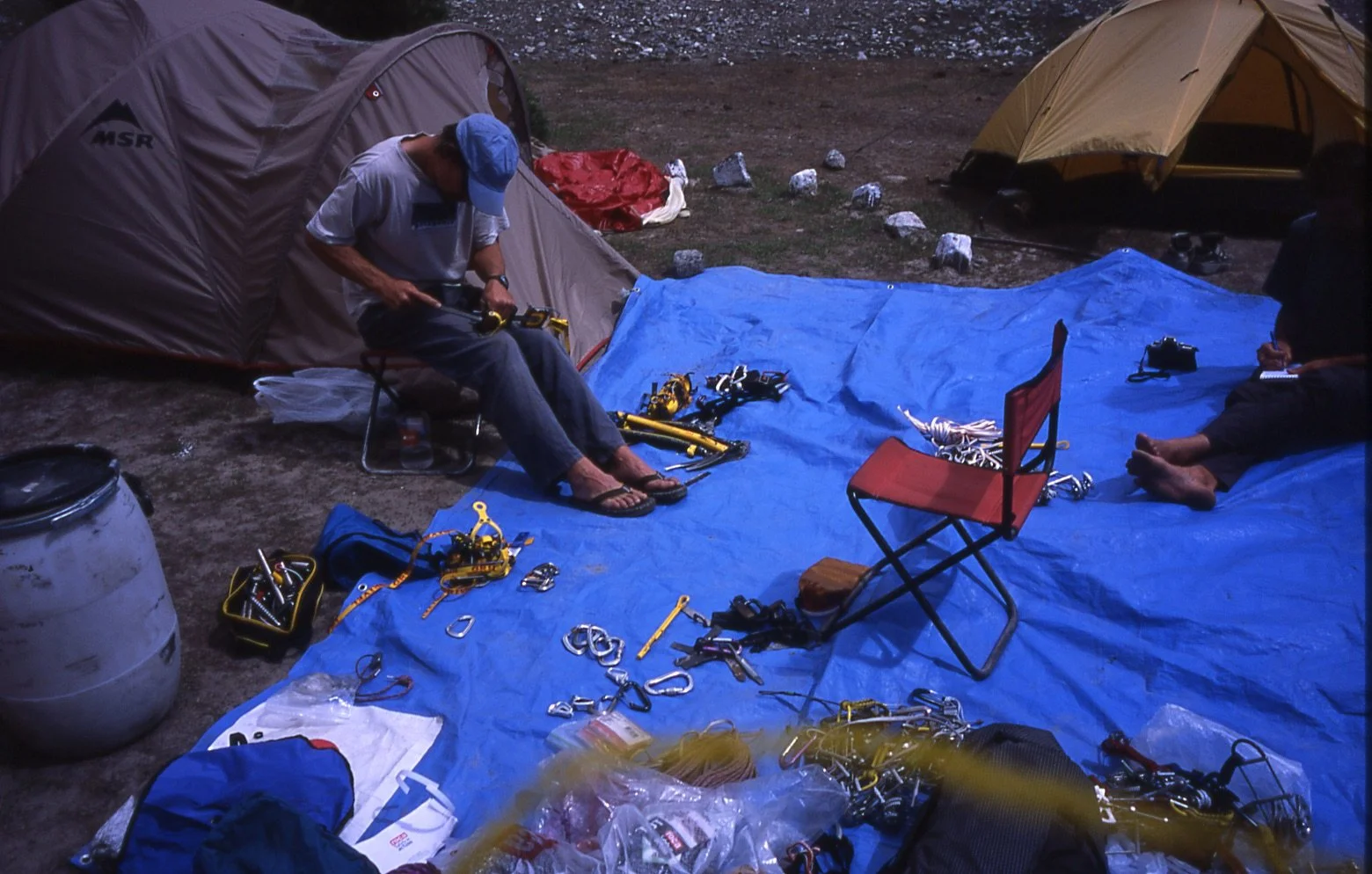
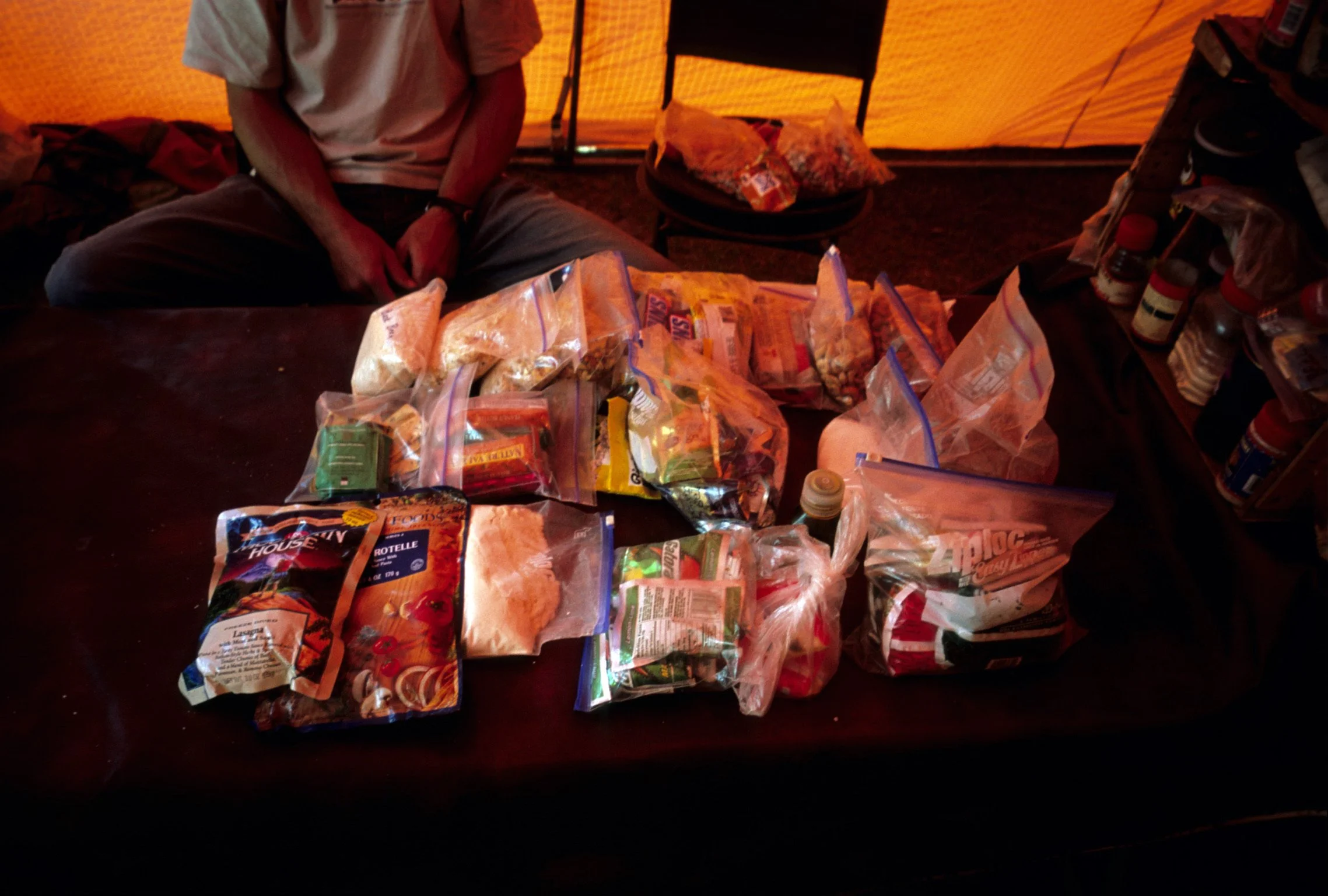
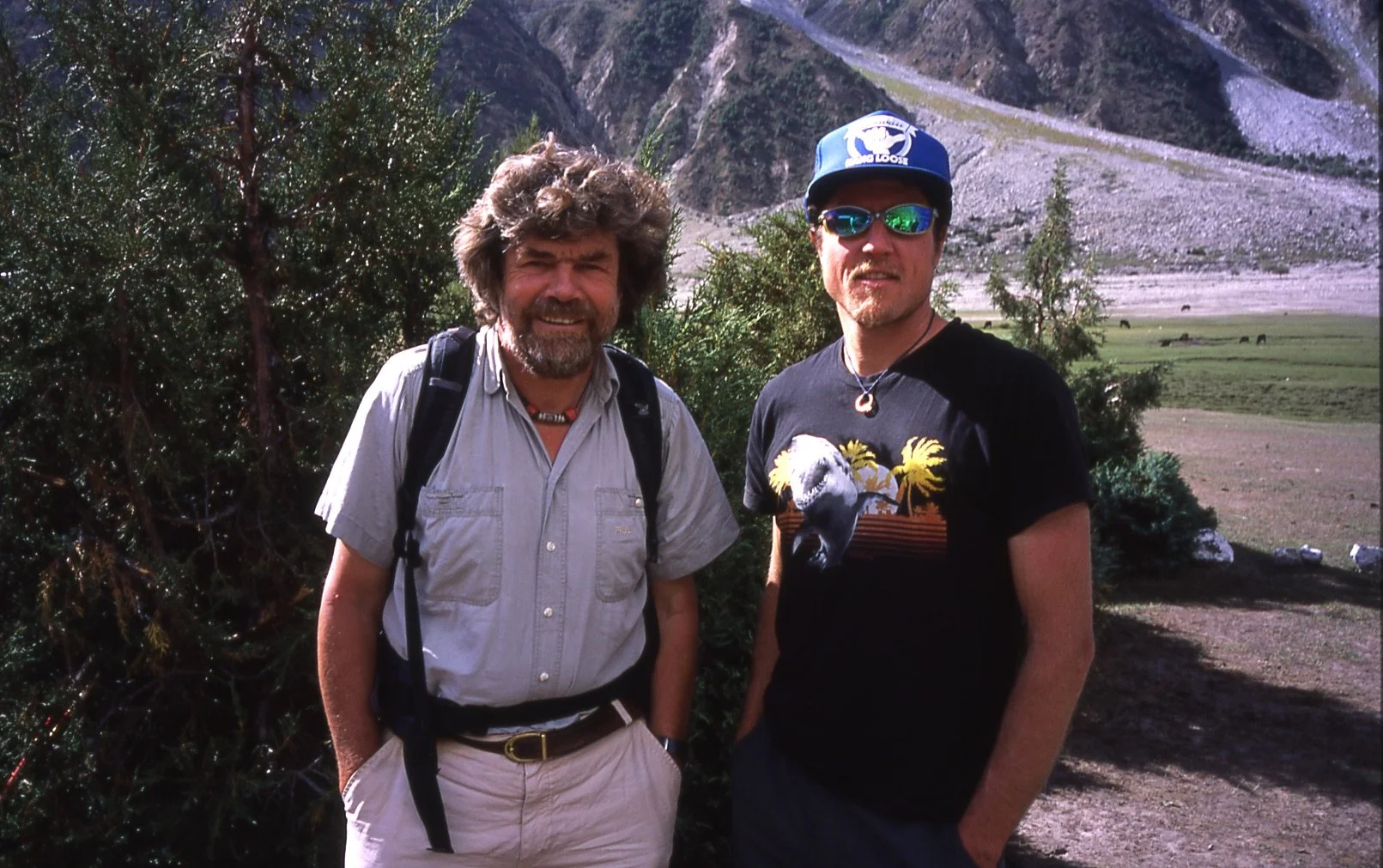
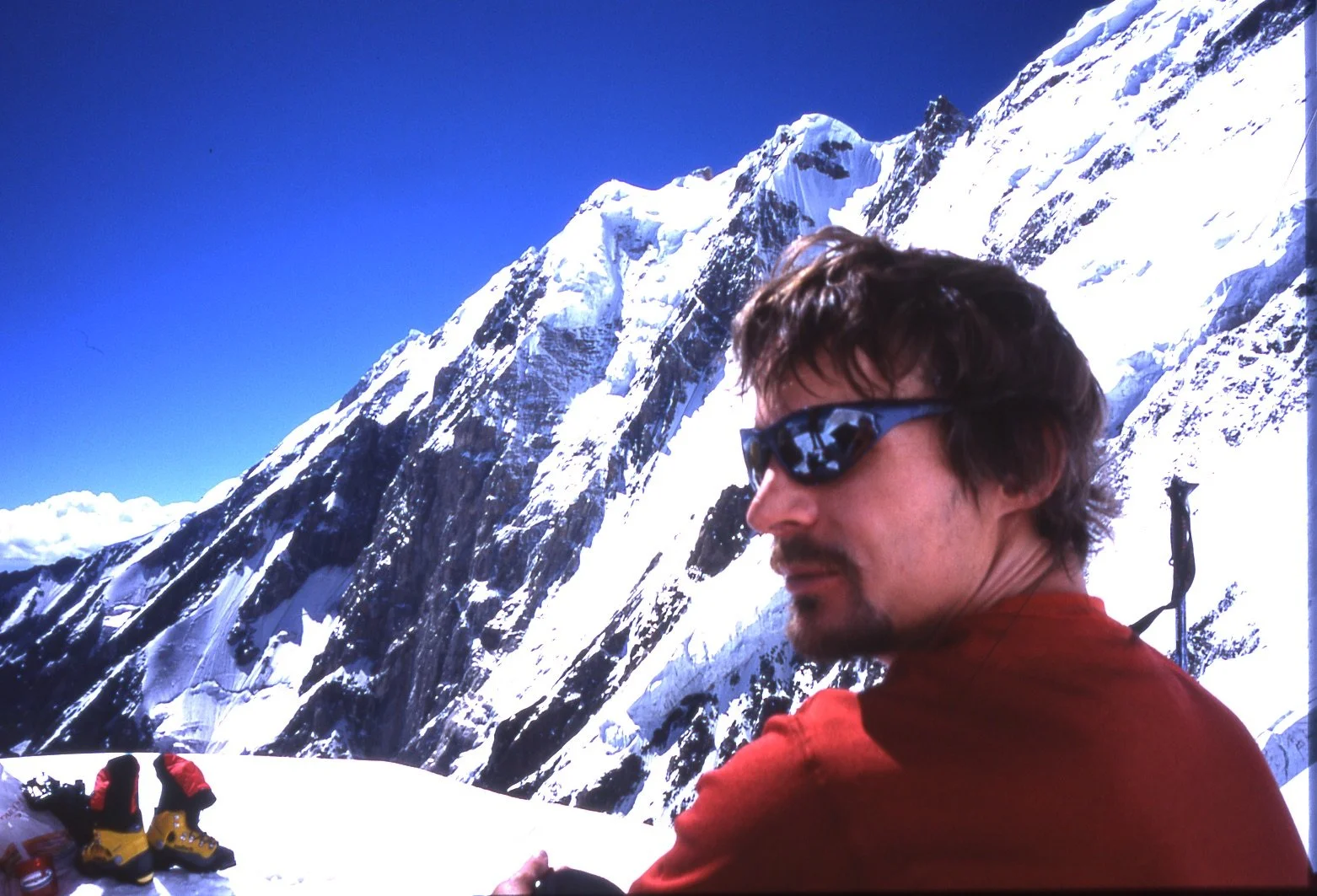
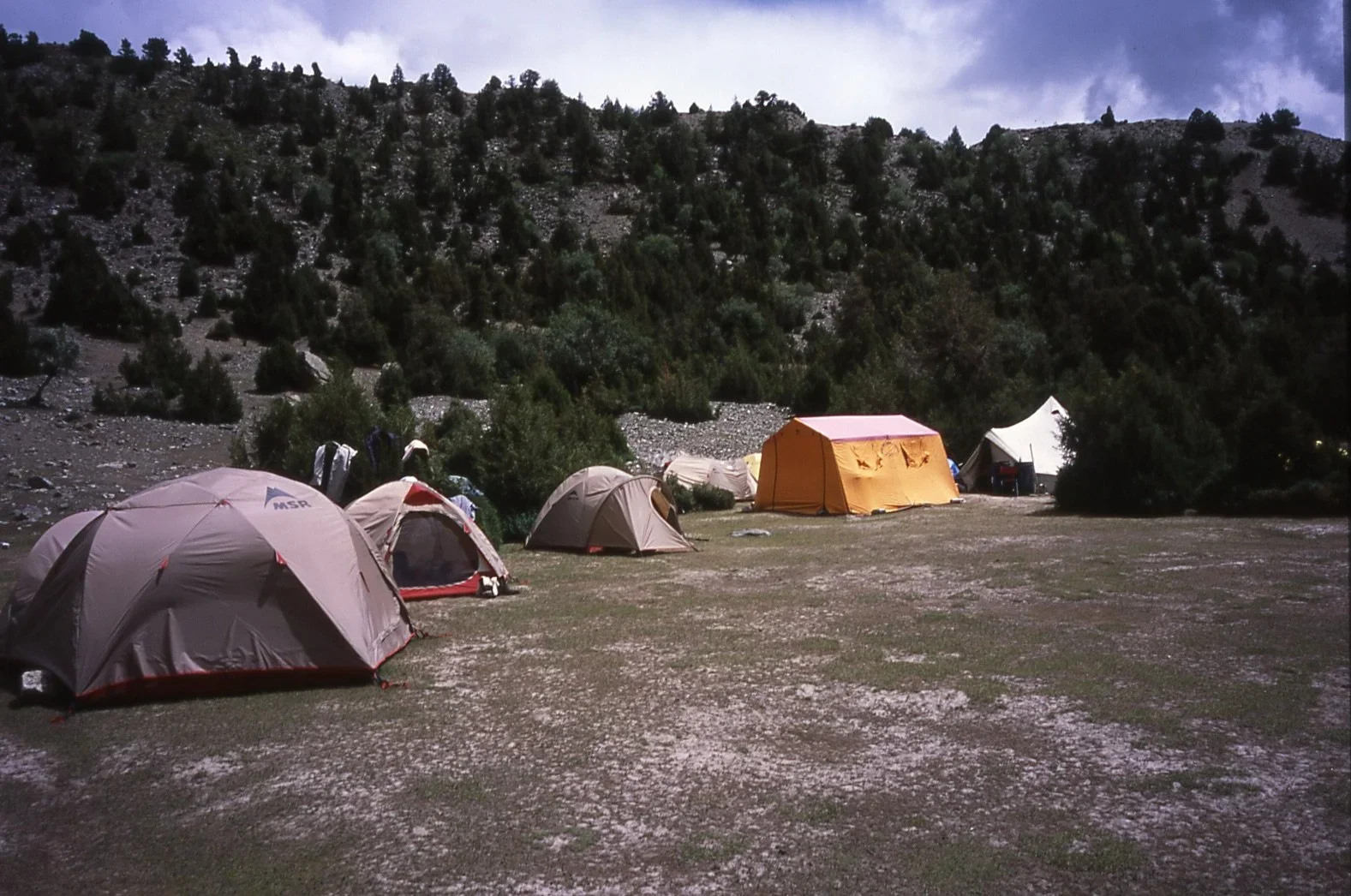
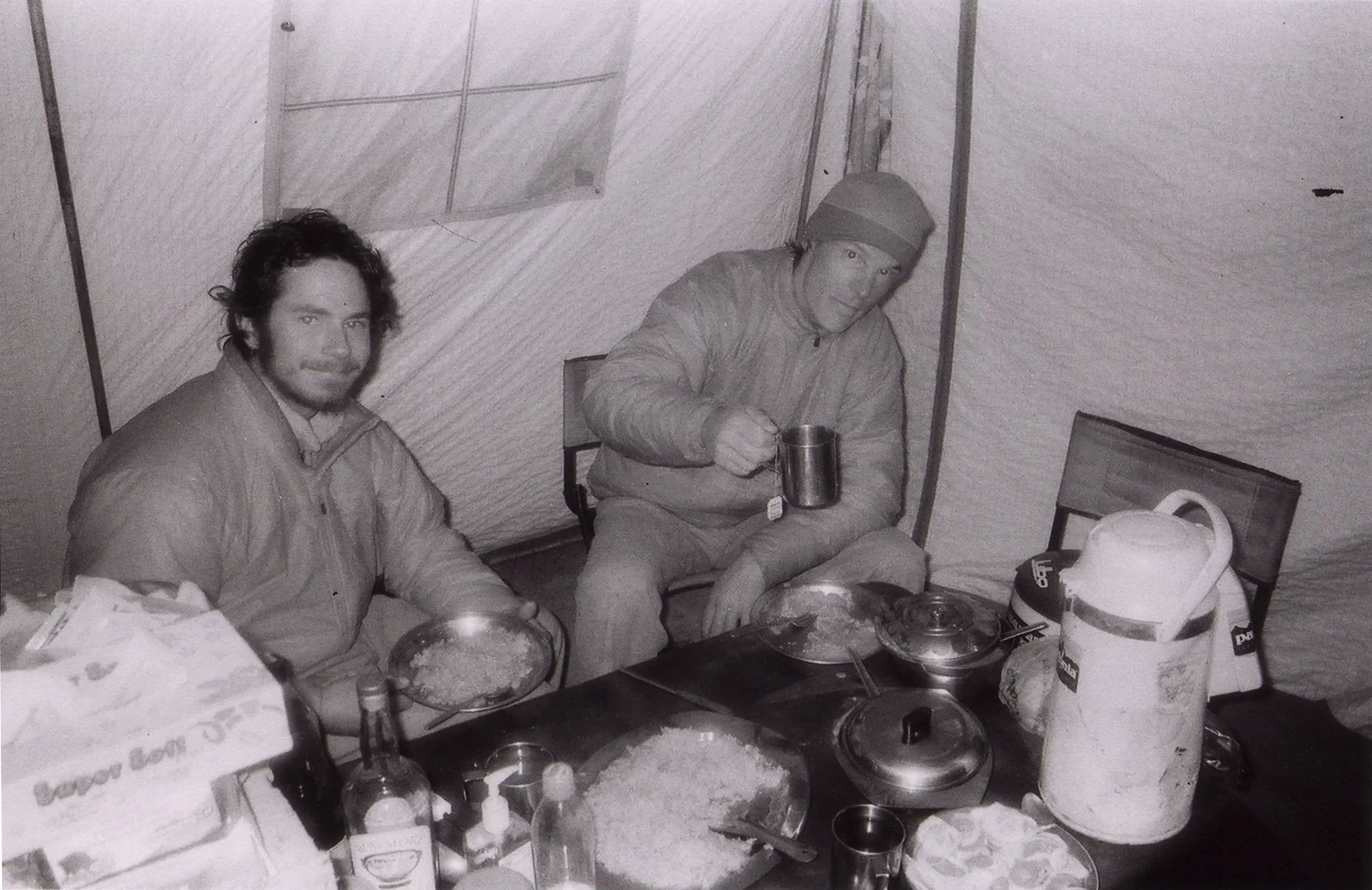
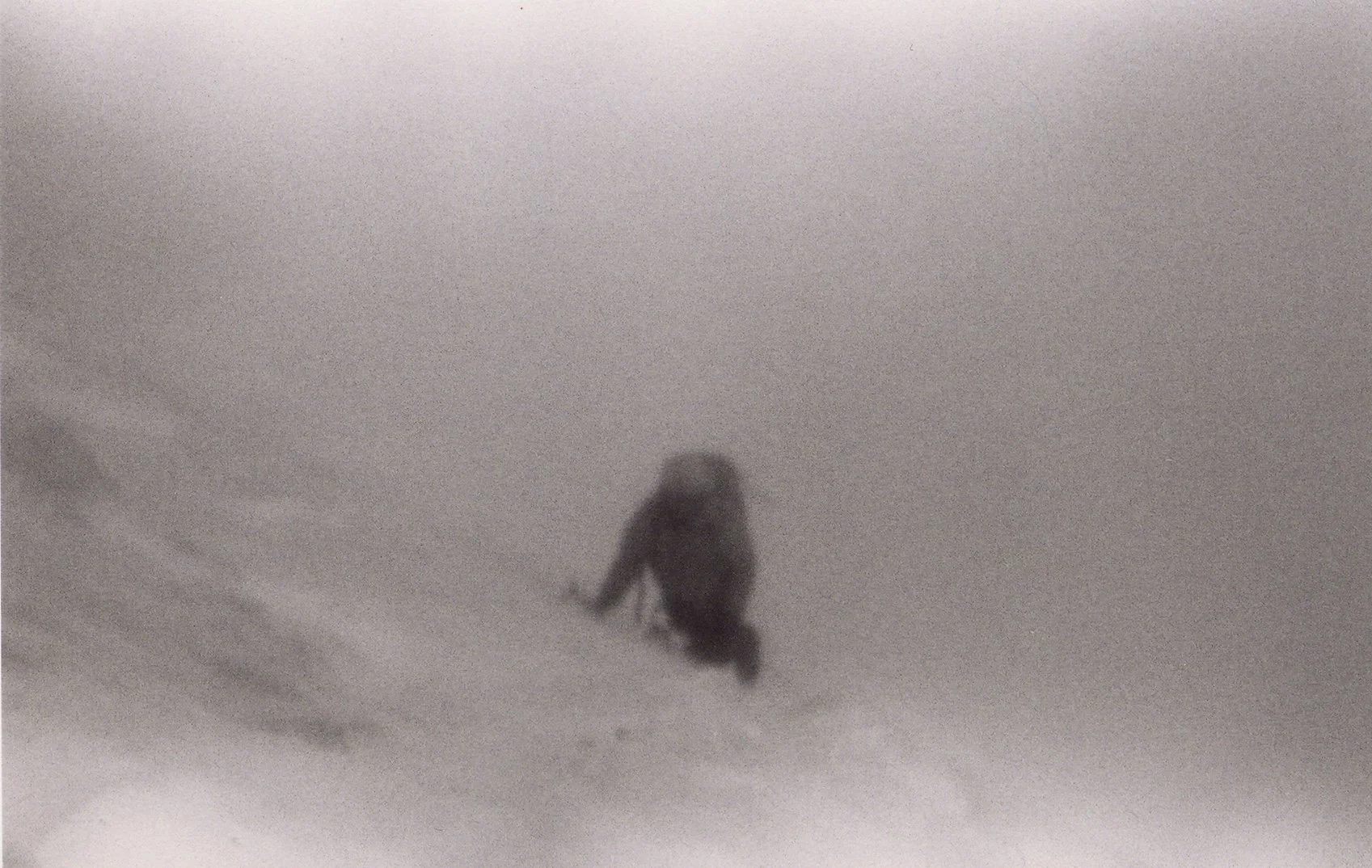
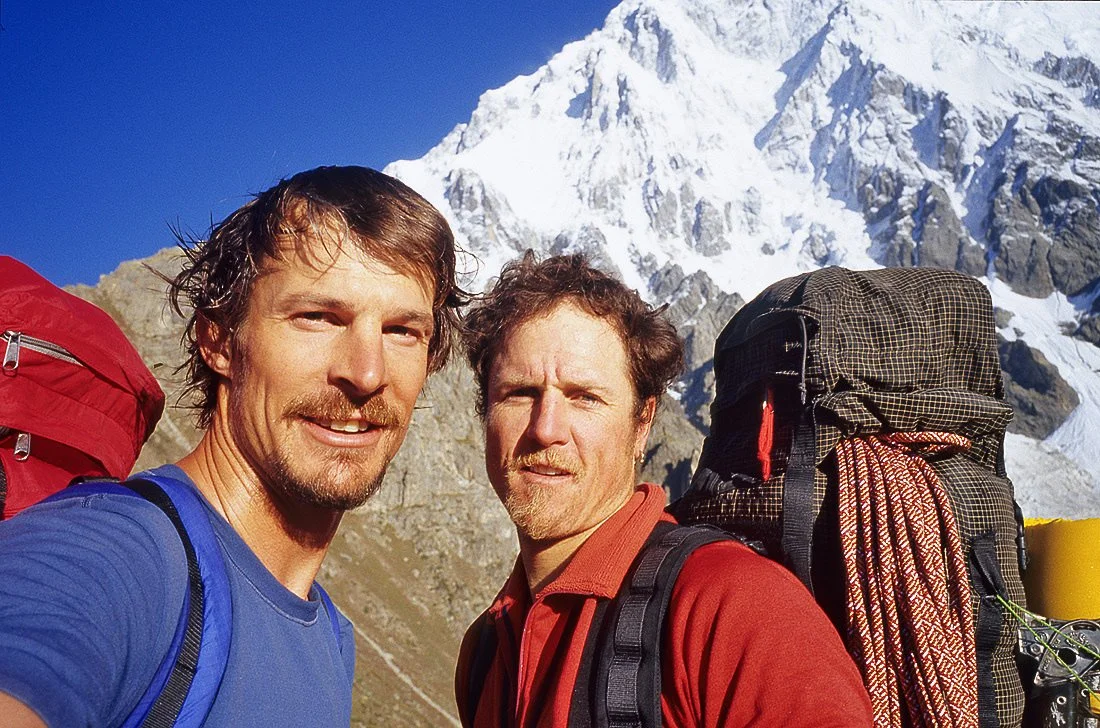
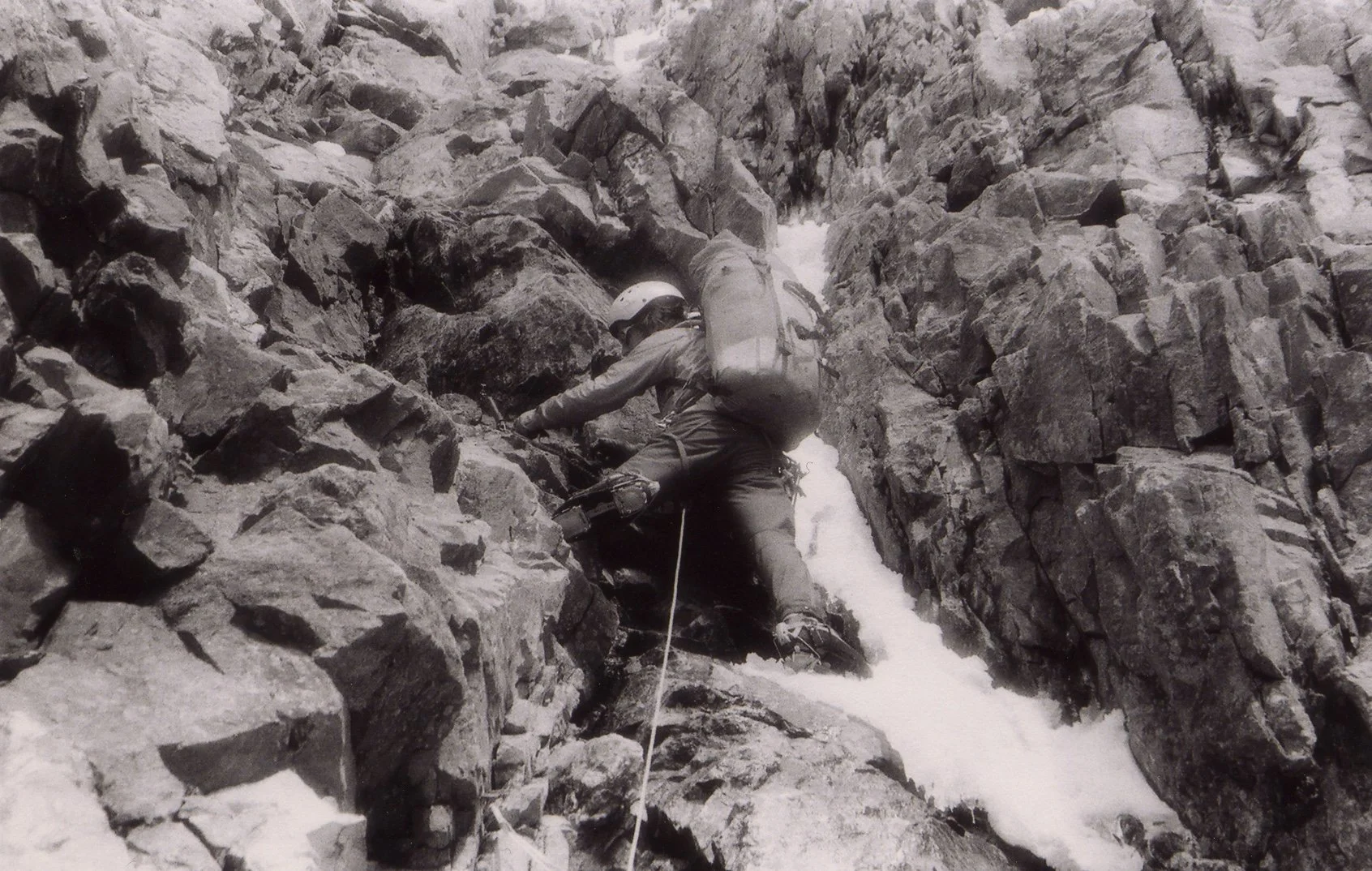
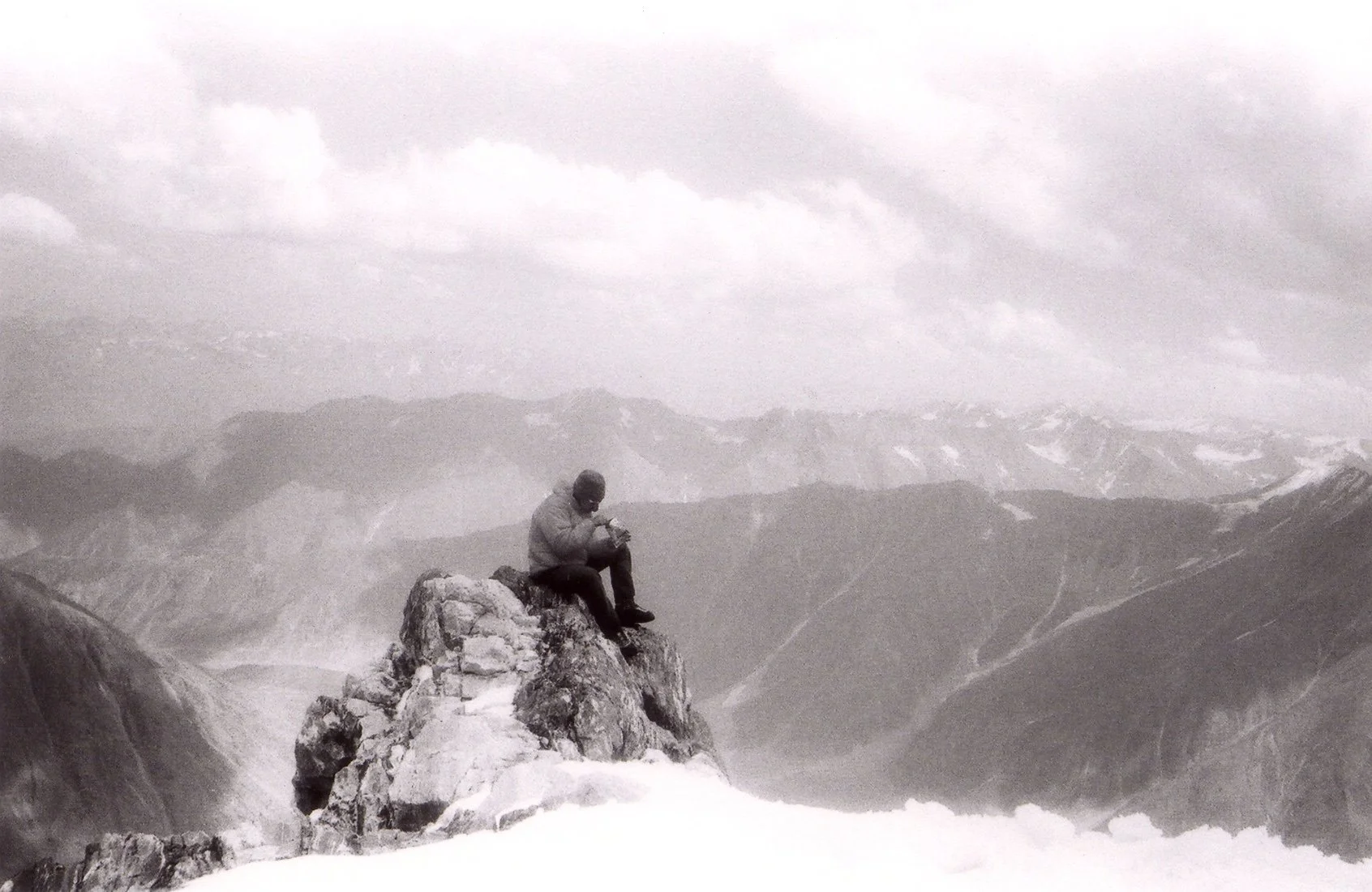
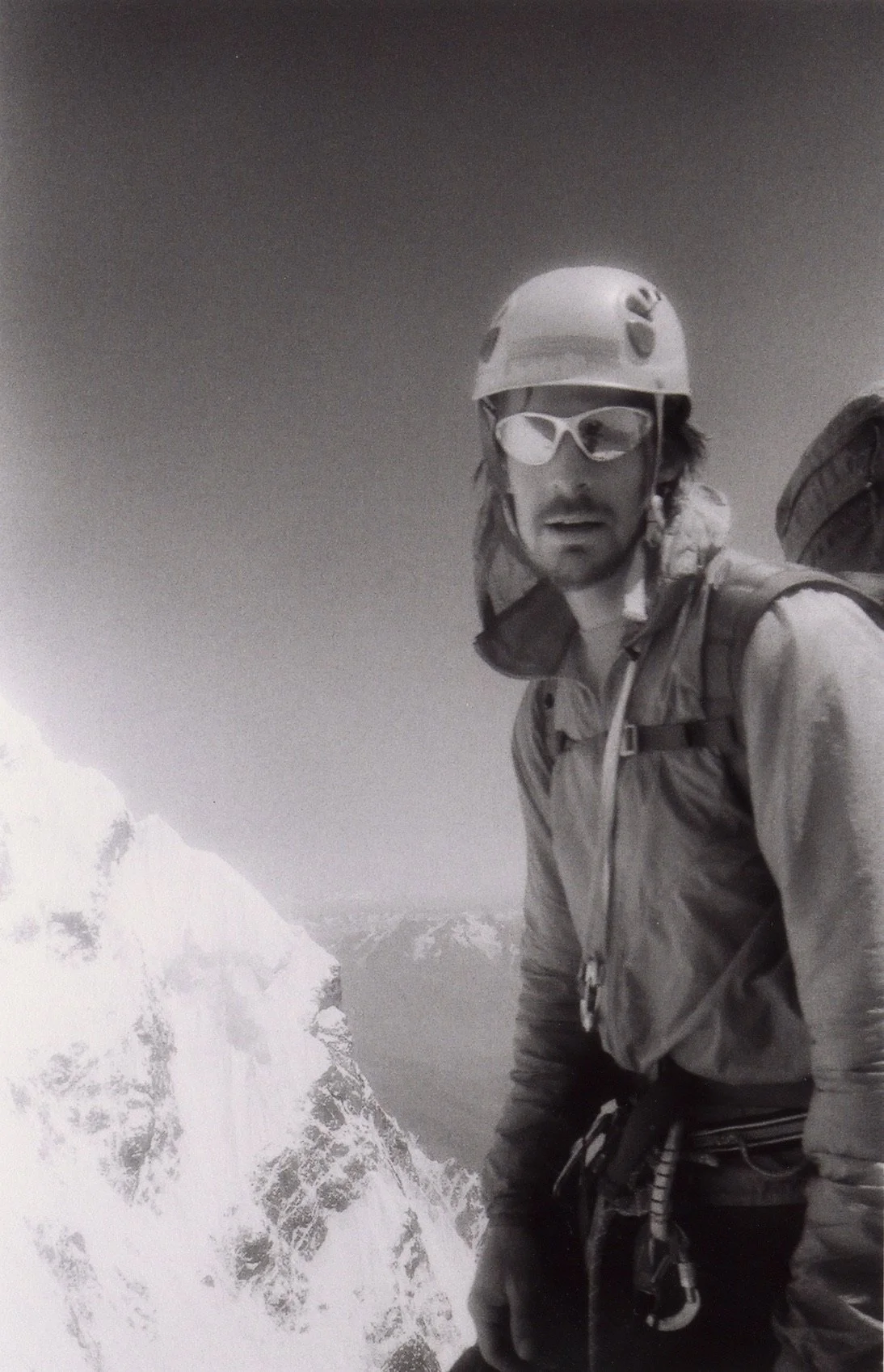
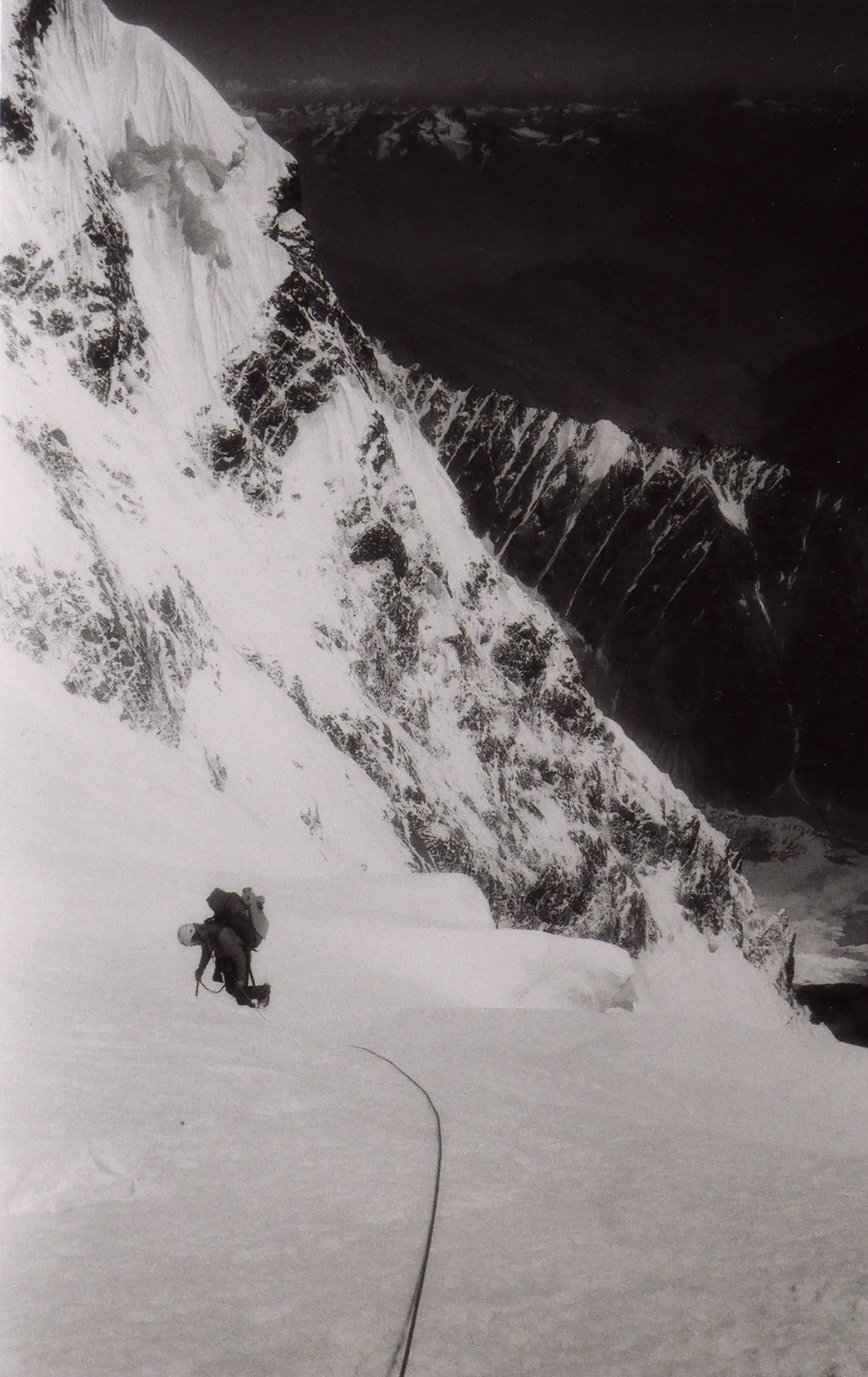
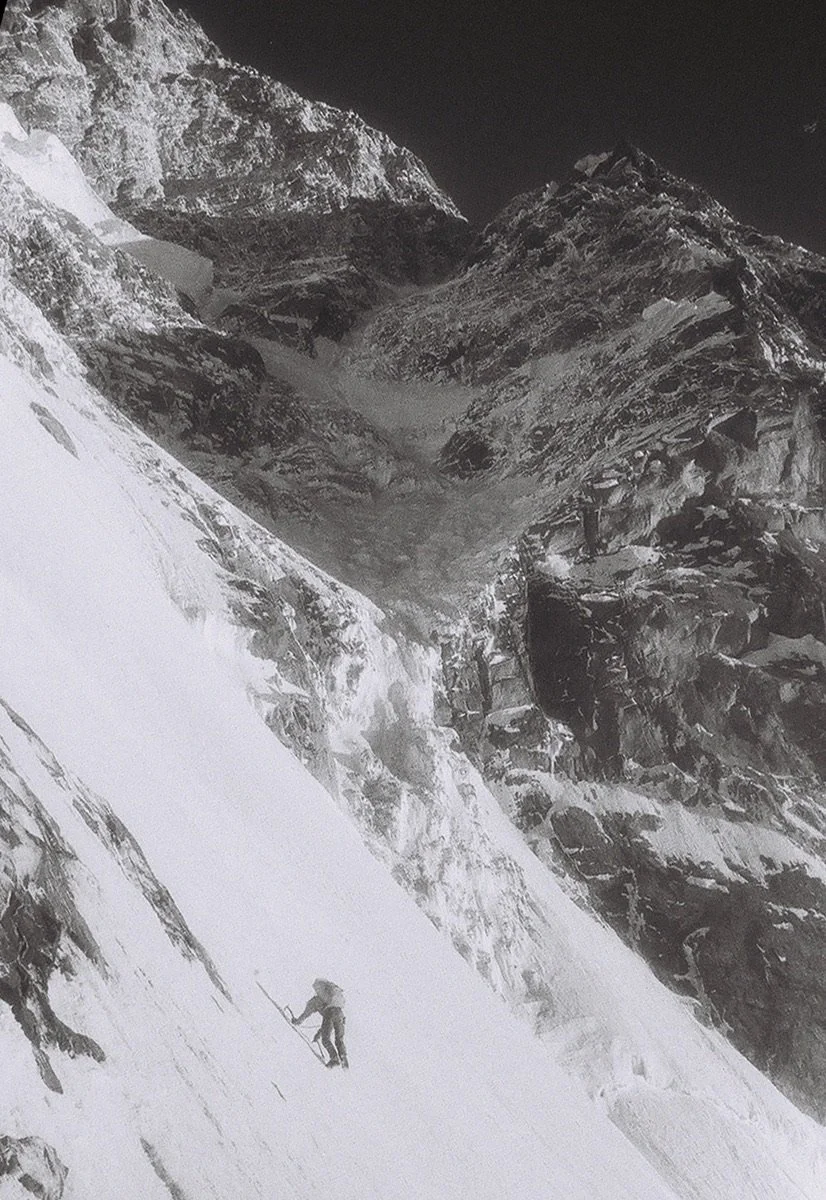
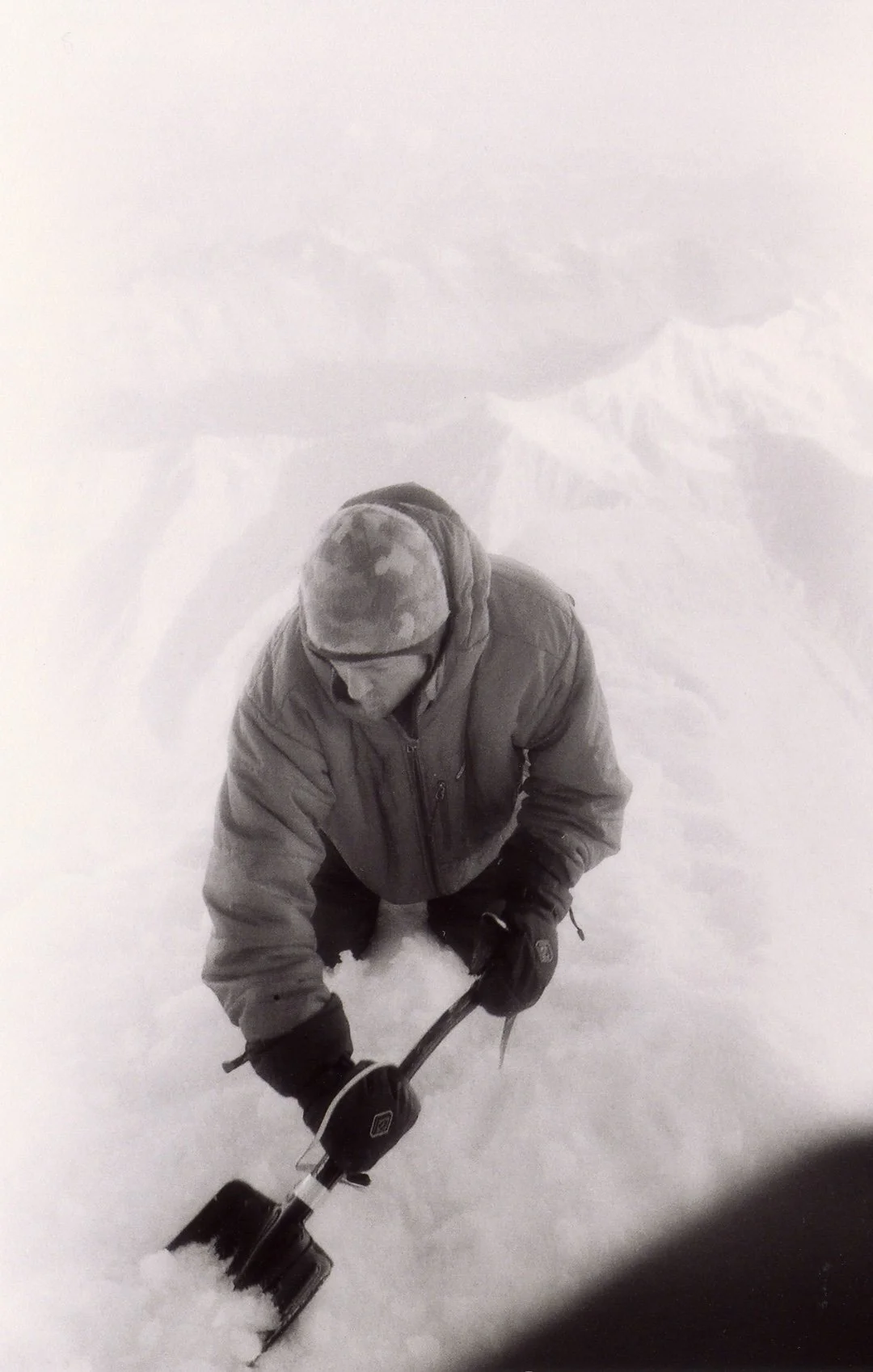
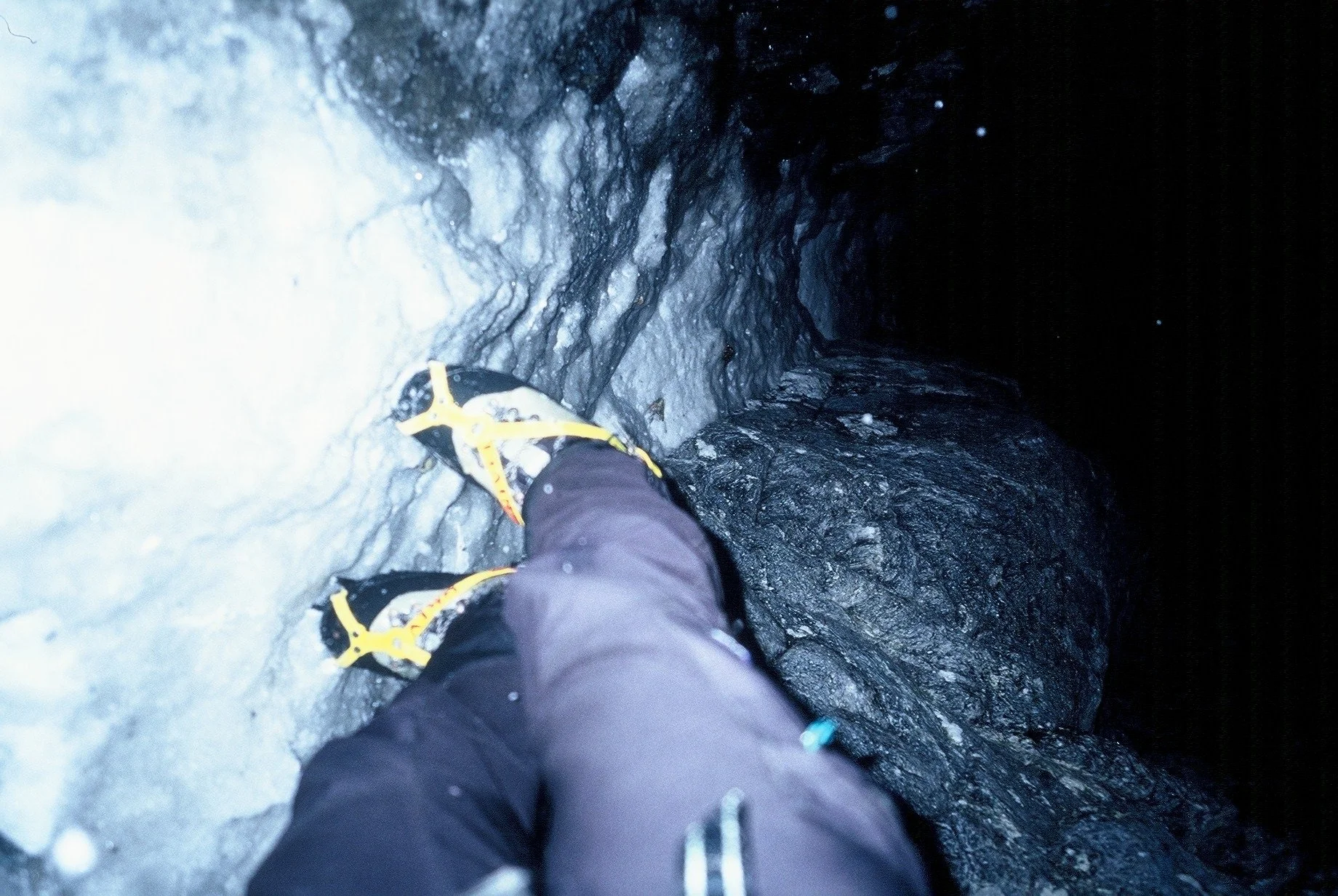
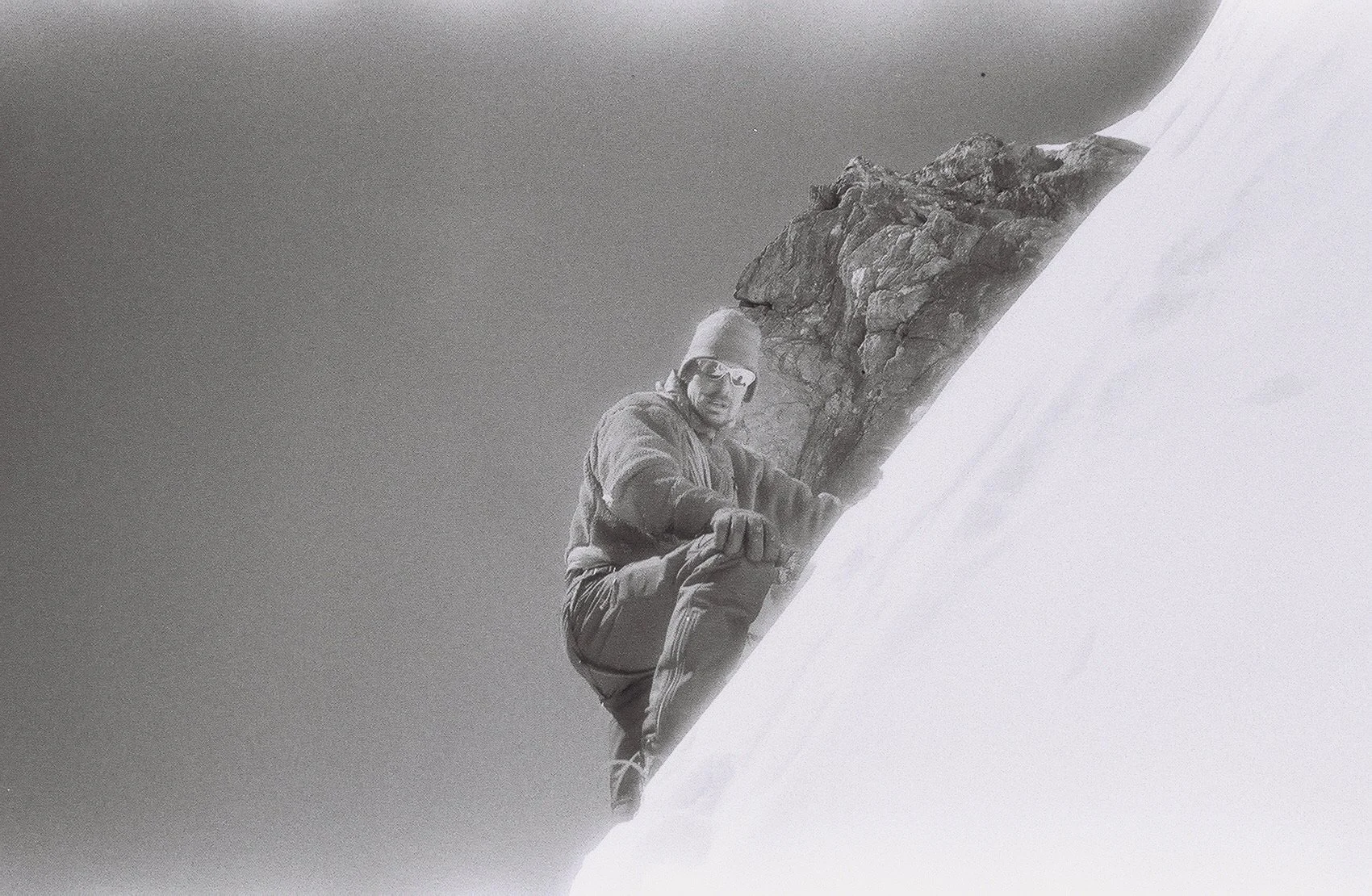
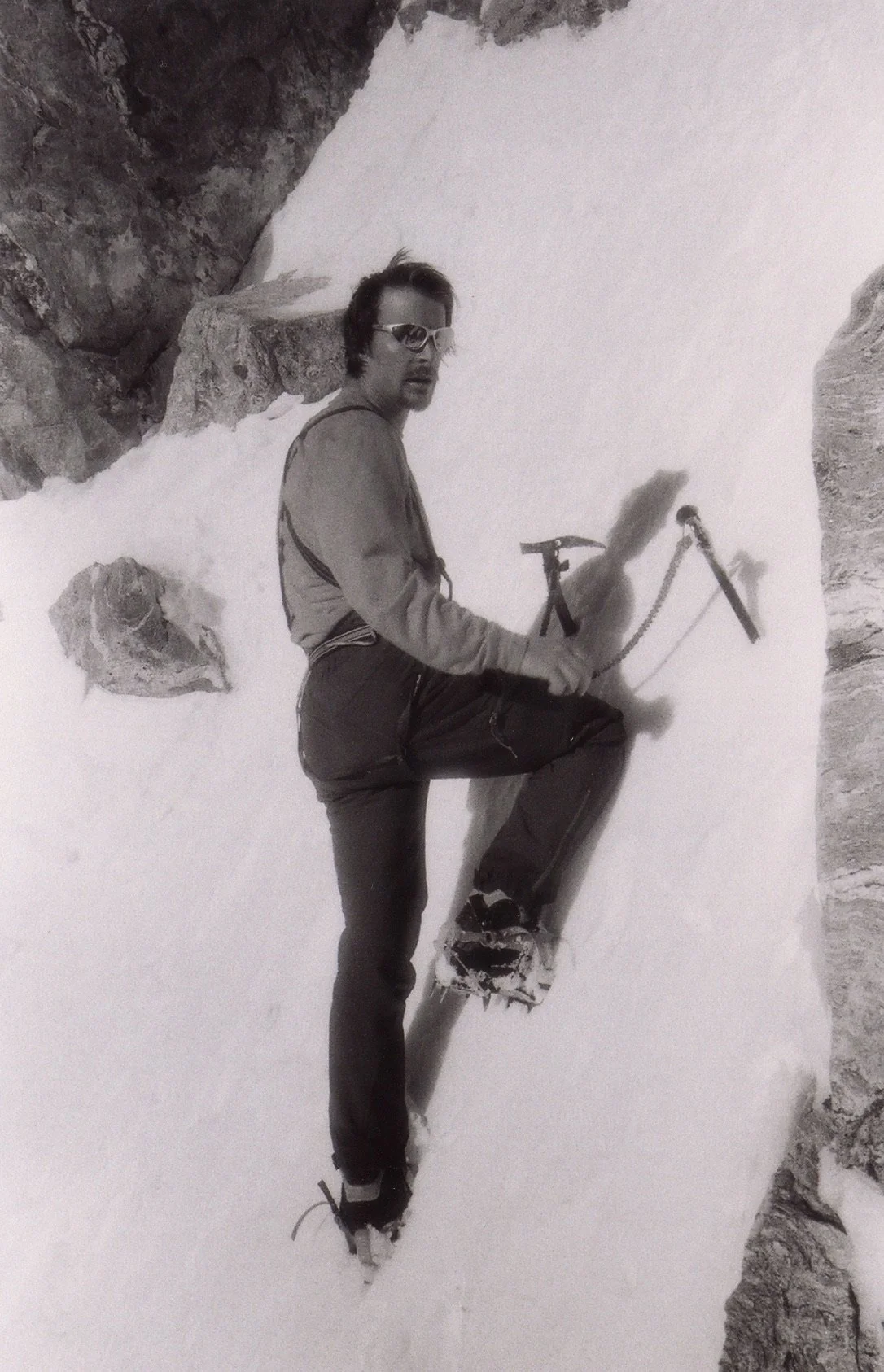
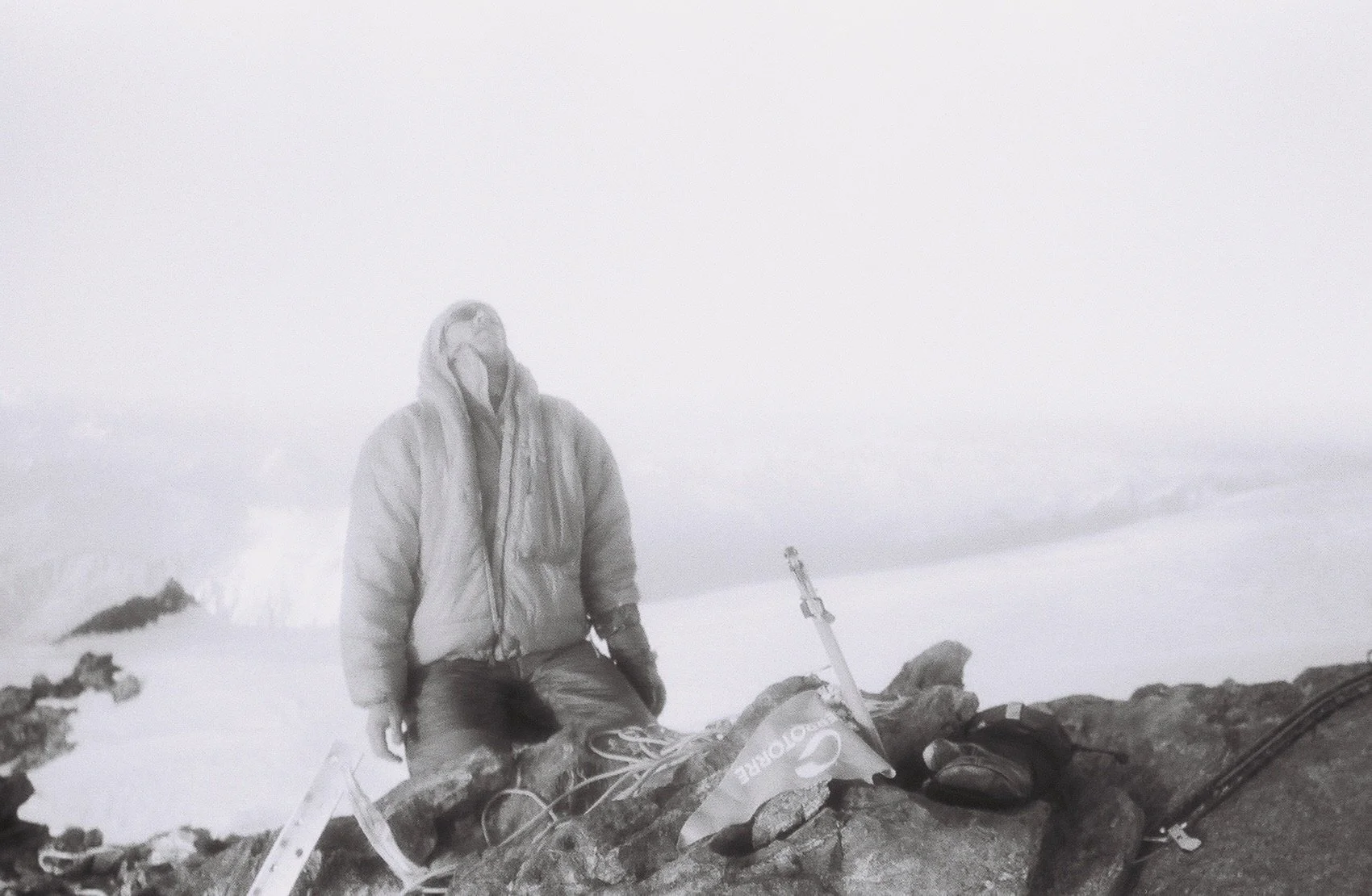
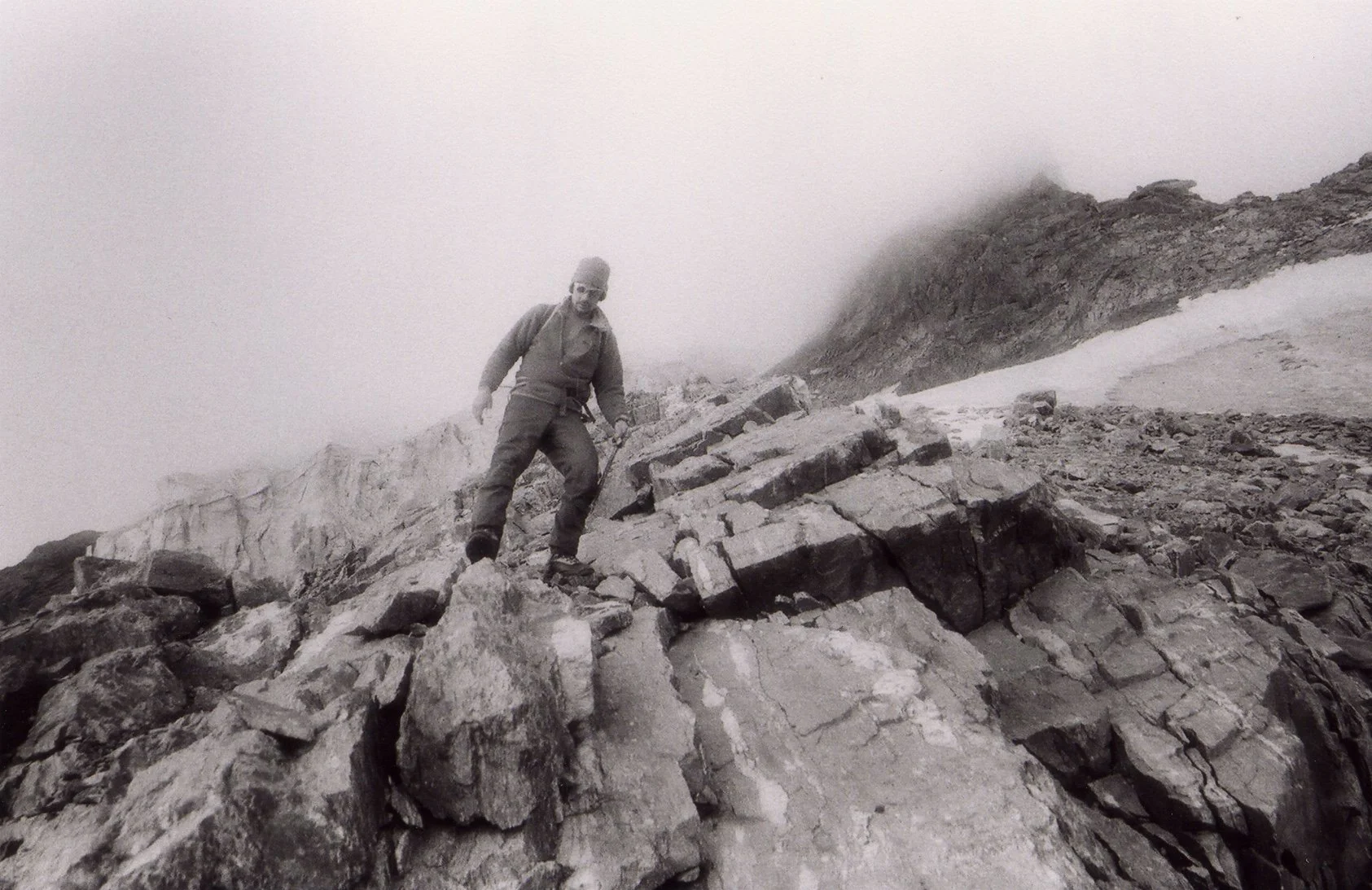
About the photos: Steve shot with Fujichrome slide film on a small point & shoot; I used infrared print film and used a modest Leica point & shoot. These were big cameras by today’s standards and we had to carry multiple rolls of film with us. The IR film is a real PITA to change out as it has to be done in complete darkness or it will ruin it. I could only change roles at night and inside my sleeping bag after which I would tape the canisters shut. We had no idea how the shots would turn out until weeks later. These photos are a mix of Steve’s excellent color slides and my IR B&W prints. We did exchange cameras from time to time.
September 1, 2005
The weather was still near perfect and sounded like we had another 4-5 good days in store. We left base camp by 4am and gathered the gear we had cached near the glacier. Steve had said the mountain really starts at “cow line”: where there was no more cattle and that was more or less at the glacier near the base.
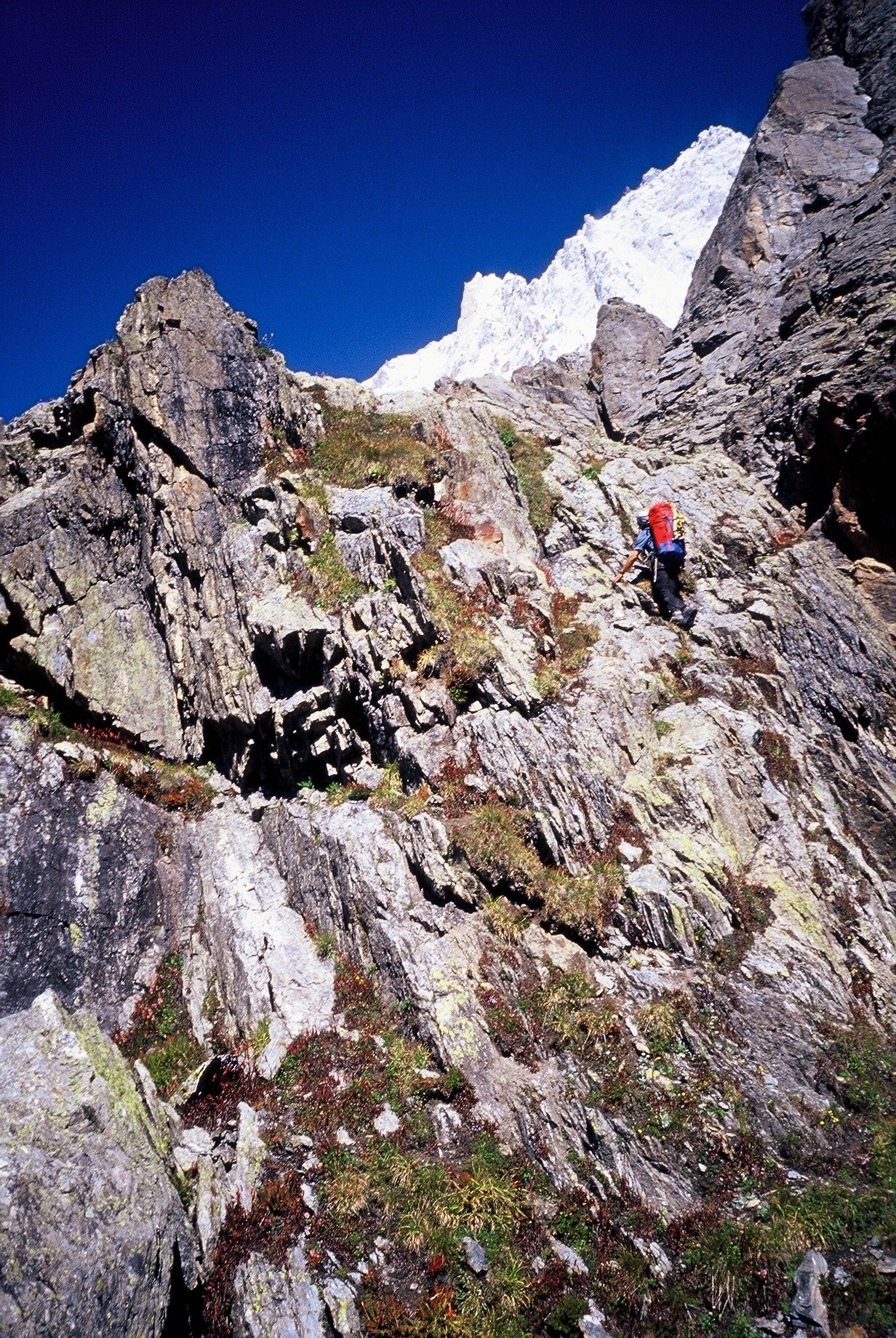
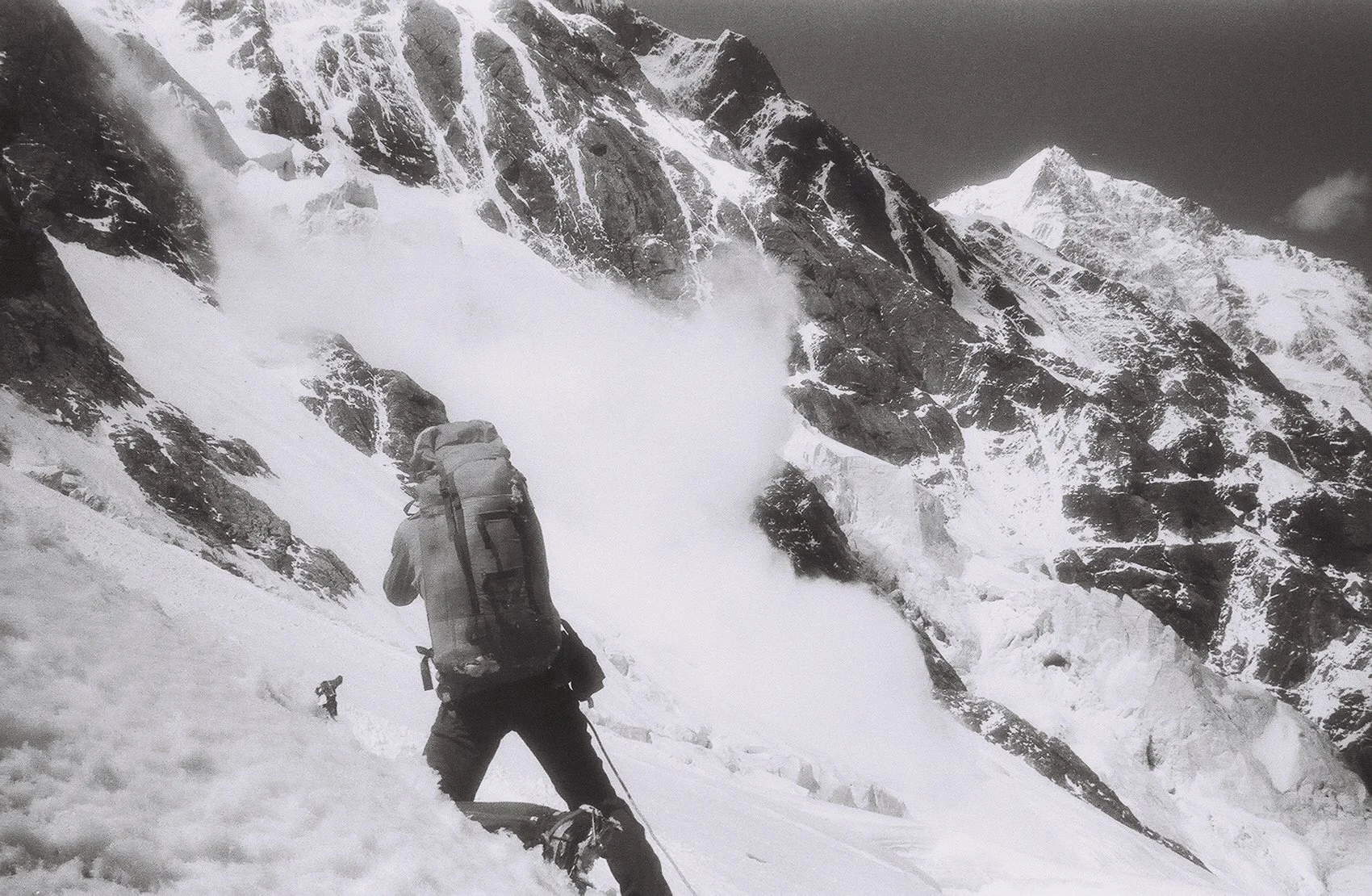
We climbed to about 17,500’ that day; much of it on moderate rocky terrain (4th class - 5.6 at most) still covered with alpine grass and flowers. We stayed on the rocky buttresses as much as possible due to the still frequent avalanches running down the adjacent snow covered glaciers from the ongoing shedding cycle. They would come from so much higher that you could hear them well in advance and by the time they would get down near us they had confined themselves into well defined channels. We would traverse across these quite quickly as they seemed to be running very frequently. The snow and ice was also quite moderate maybe 60-70°.
After climbing about 5,500’ from basecamp (a nice climb in and of itself!) we arrived at a bergschrund under which we had great shelter in which to bivouac. Above us lie the most technically challenging portion of the mountain; a steep ice and mixed gully leading to a separate glacier system which we hoped to ascend toward the upper reaches of the face. There were large seracs guarding it from below so the safest access go this glacier would be by climbing the steep ice into the mixed gully. There was a prominent rock outcropping about 1,000’ above which we hoped would provide another relatively sheltered bivy spot.
September 2, 2005
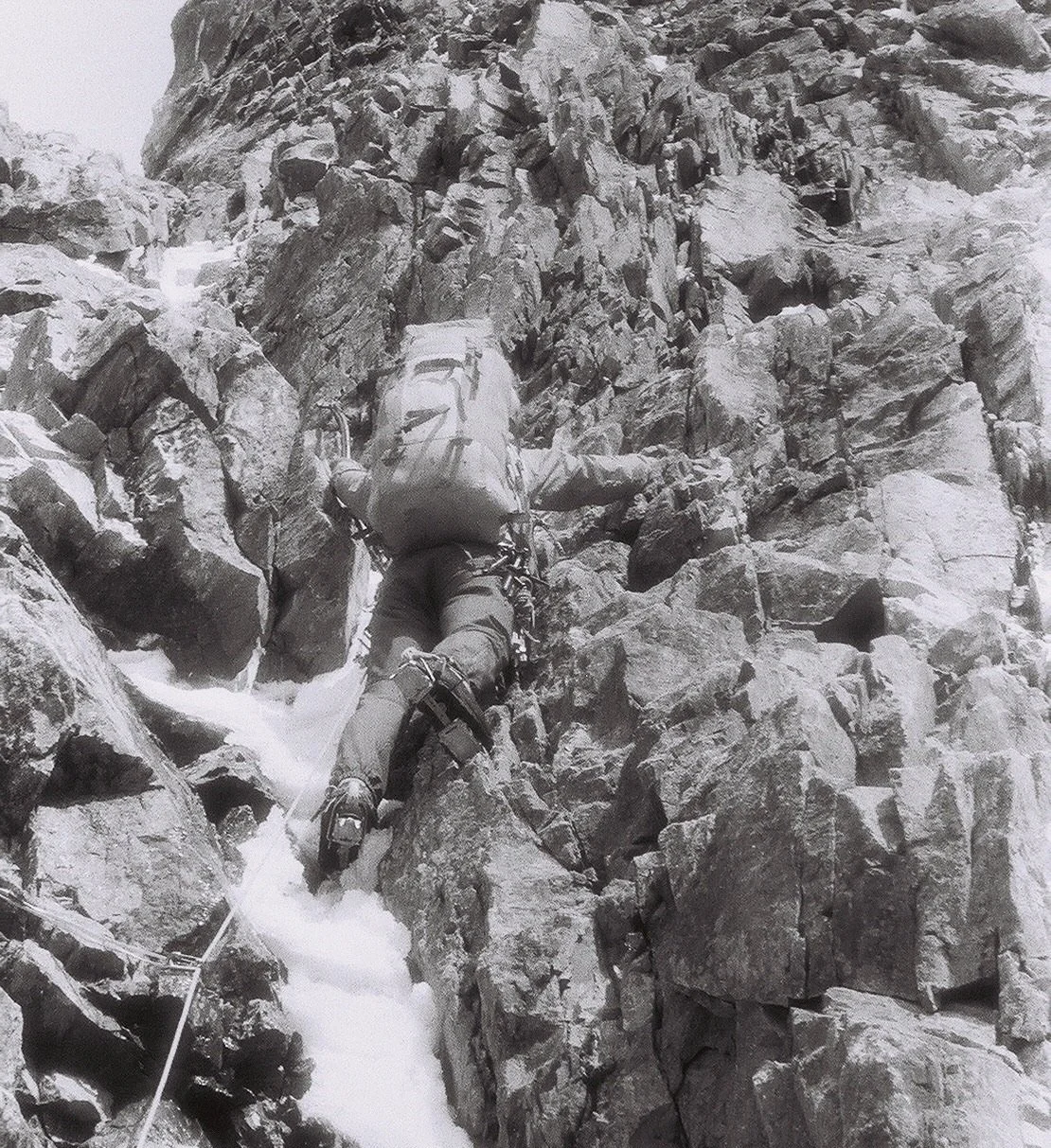
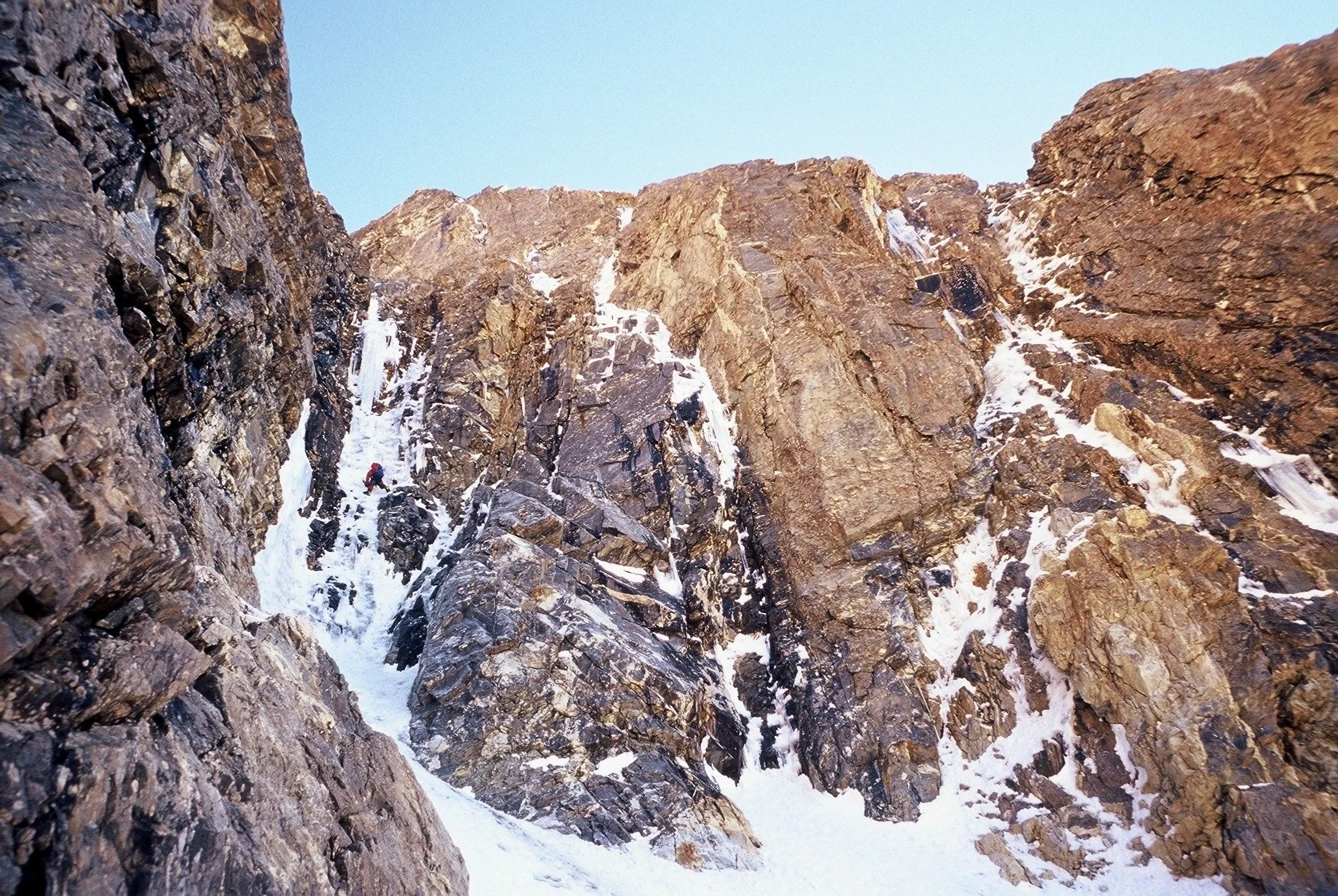
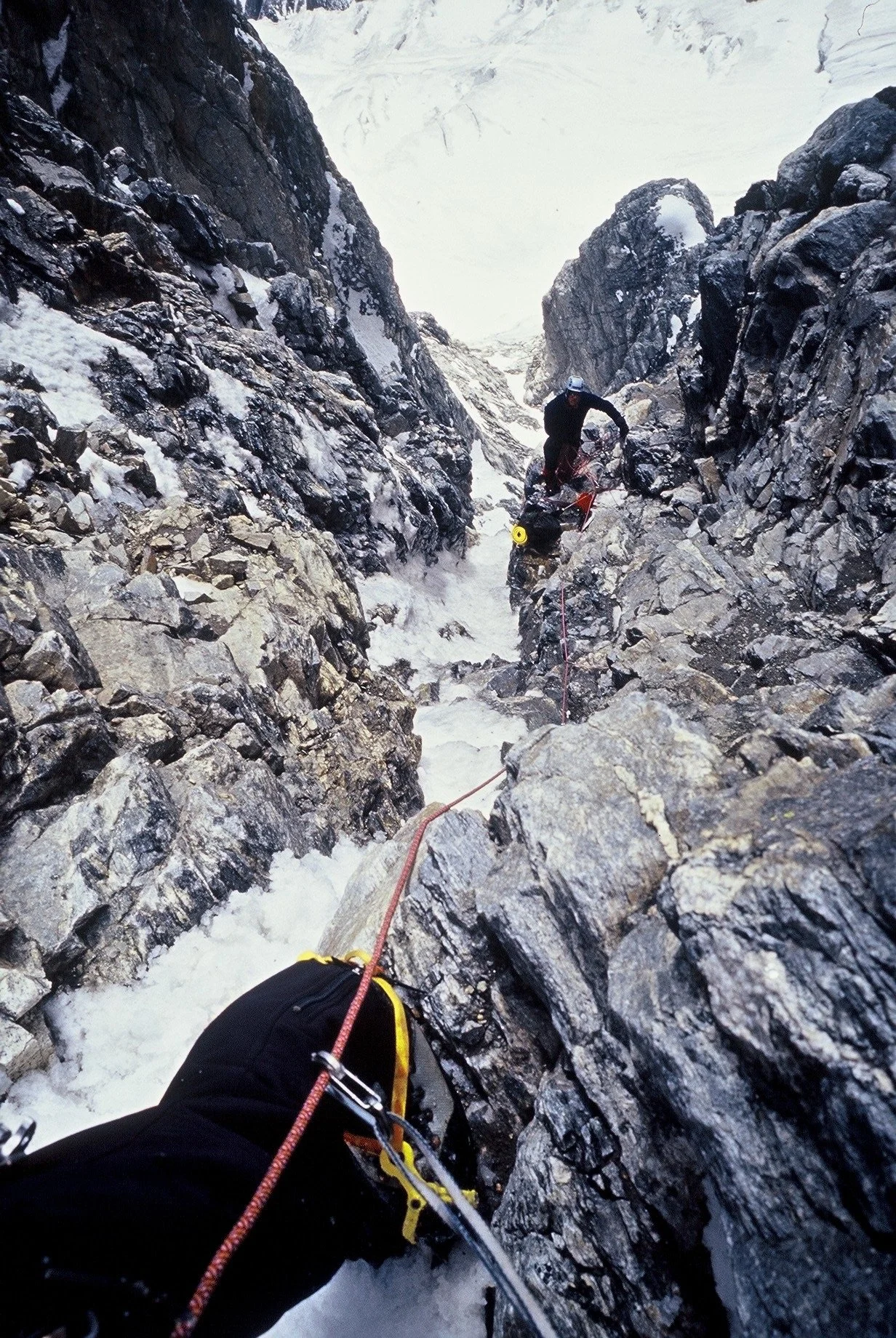
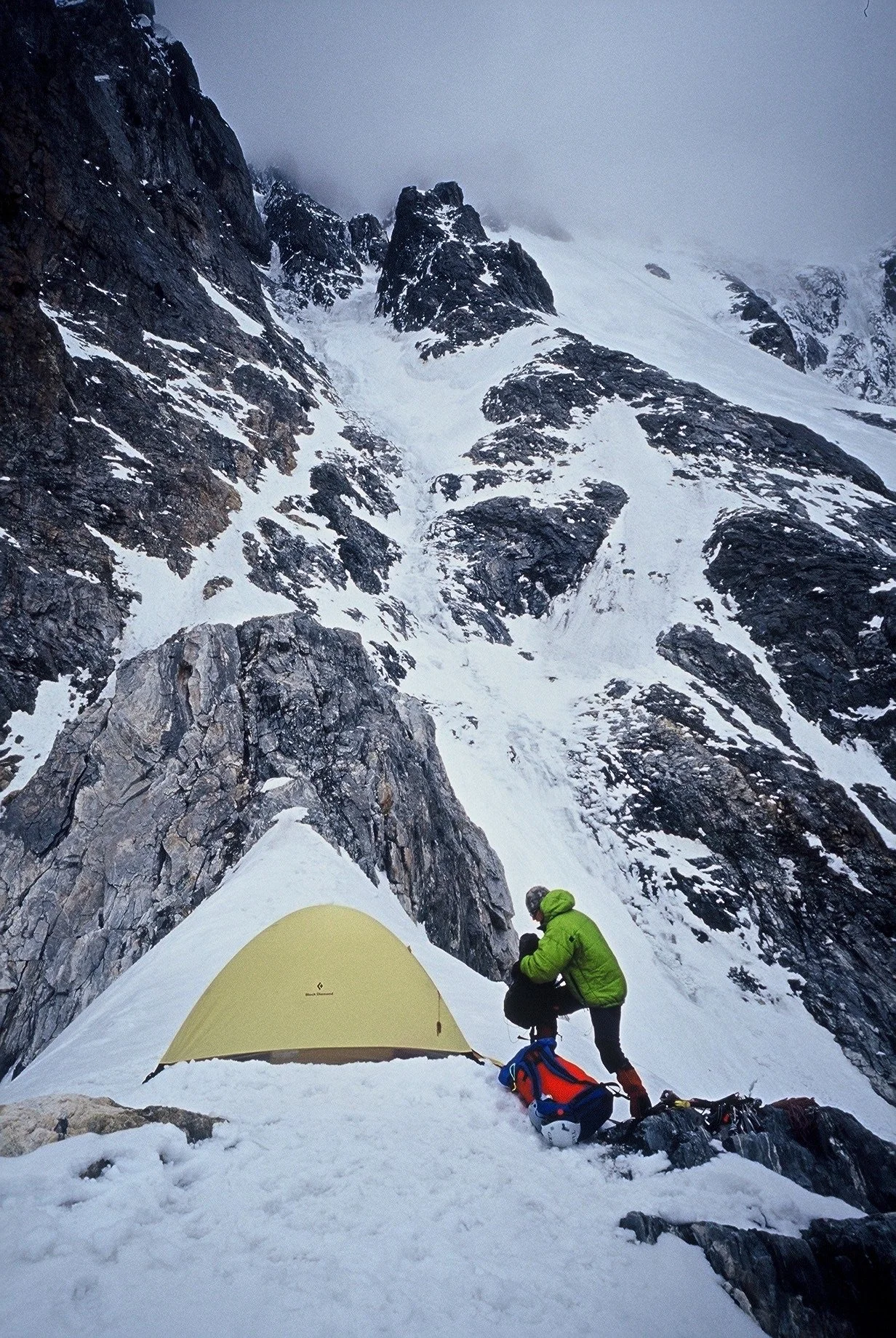
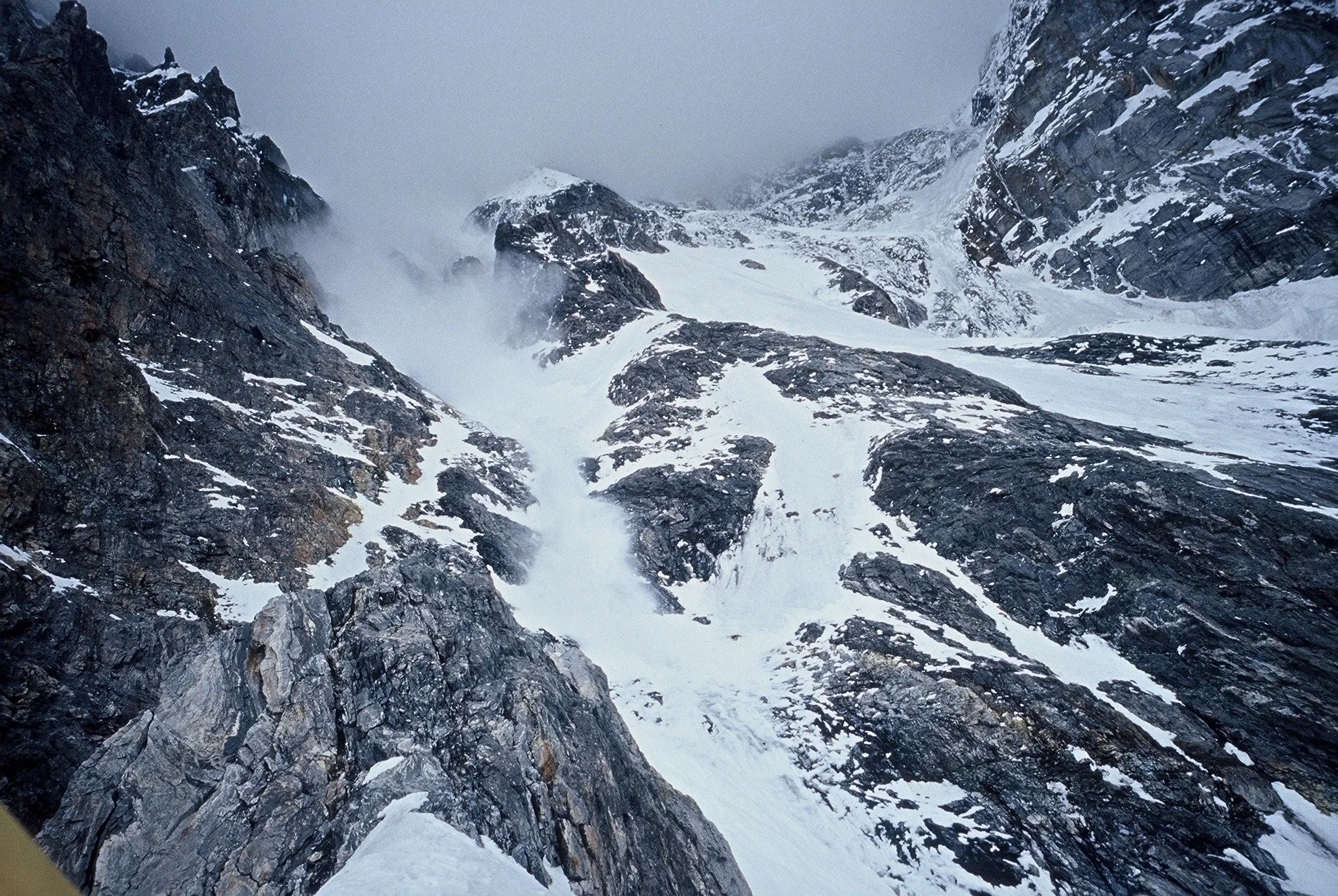
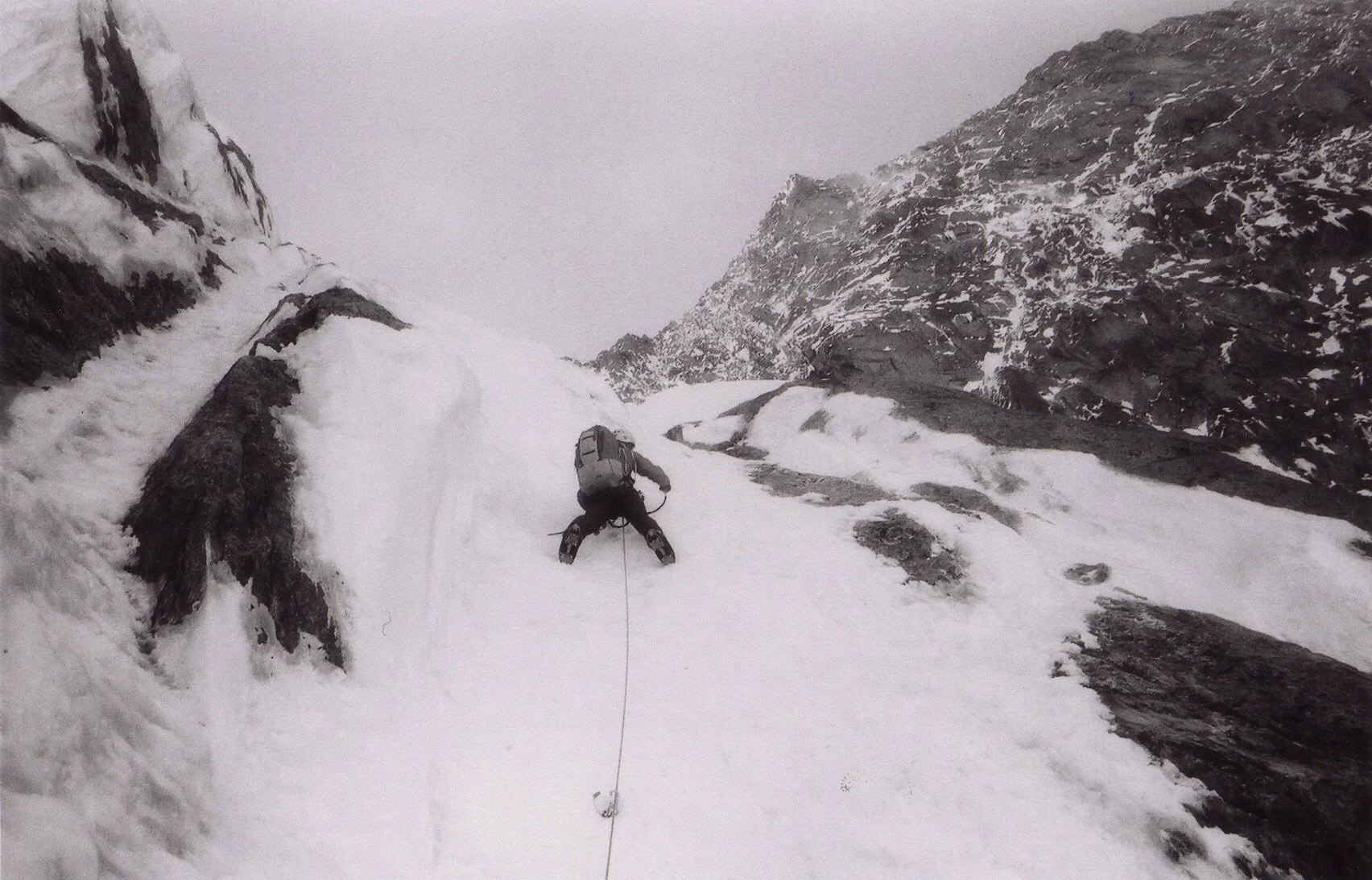
This was the most technically difficult section of the entire route (though the true crux was much higher up) and our shortest day. It climbed what appears to be a vertical water ice section leading into a gully, but was in fact a shell of ice mostly overlying sugar snow, other very aerated ice and rock. These first few pitches were very time consuming. It took a lot of cleaning and digging to get solid purchase and the ice was generally not solid enough to put in screws except for a few places (not that we had many to place). Once the sun hit the wall above there were frequent volleys of stones. We had several close calls at the belays, but the climbing was mostly protected by virtue of being on a steep wall. This was the only place we encountered rock fall.
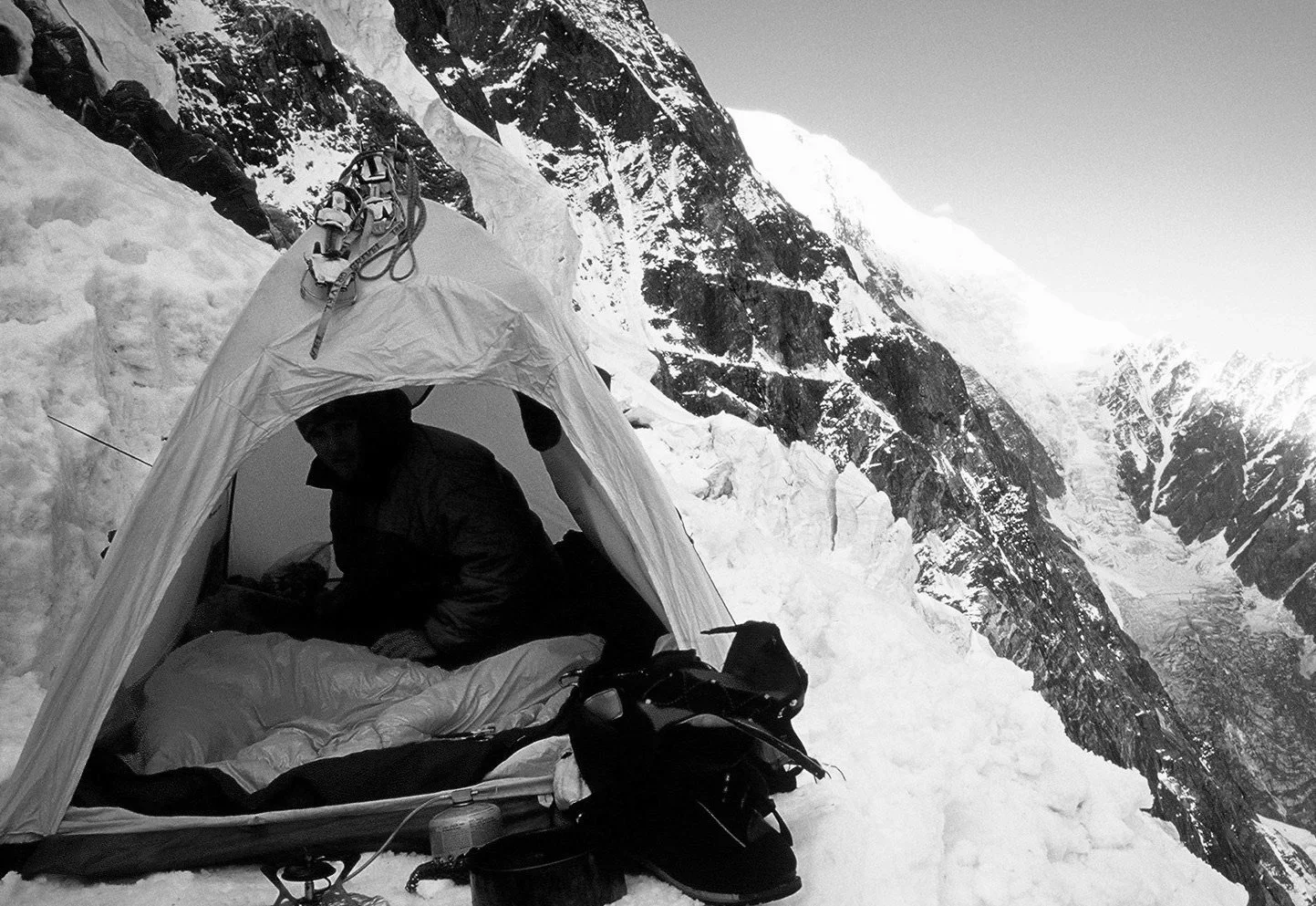
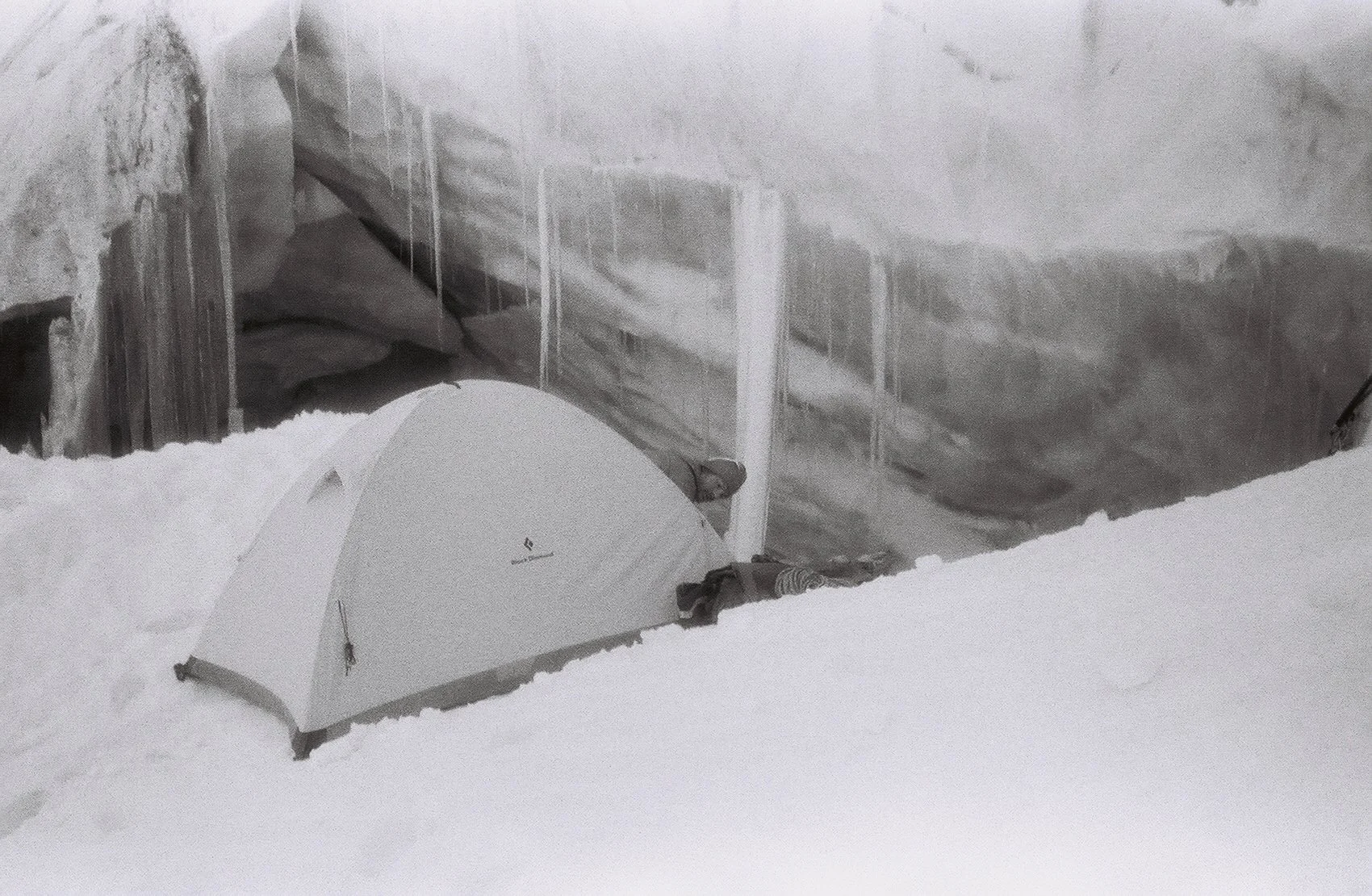
Above the initial steep ice, the gully yielded to low angle snow, ice and rock. Above this was the top of a buttress which stuck out from the mountain and offered some protection from above so we chose to bivy here even though we had not climbed much (maybe 1,500’?) and it was still early. We were at around 18,500’ and our weeks of waiting around at basecamp and not acclimatizing any higher were just starting to be felt. Safe and comfortable sleeping was a priority of ours for success on this climb. That said, BIG avalanche’s did come from above (as in one slide here) in the gully to our right. Some of the blast waves pelted our tent with shards of ice and snow. It was a bit nerve wracking to hear these at night, first off in the distance, than nearer, then feel the wind shake the tent, then the ice pellets hitting it and hoping nothing more would happen. We also knew we had to cross that gully the next morning.
September 3, 2005
This was a big day: it more than made up for the short one the previous day. It was also a day where I took few photos but fortunately Steve took plenty and got some great ones!
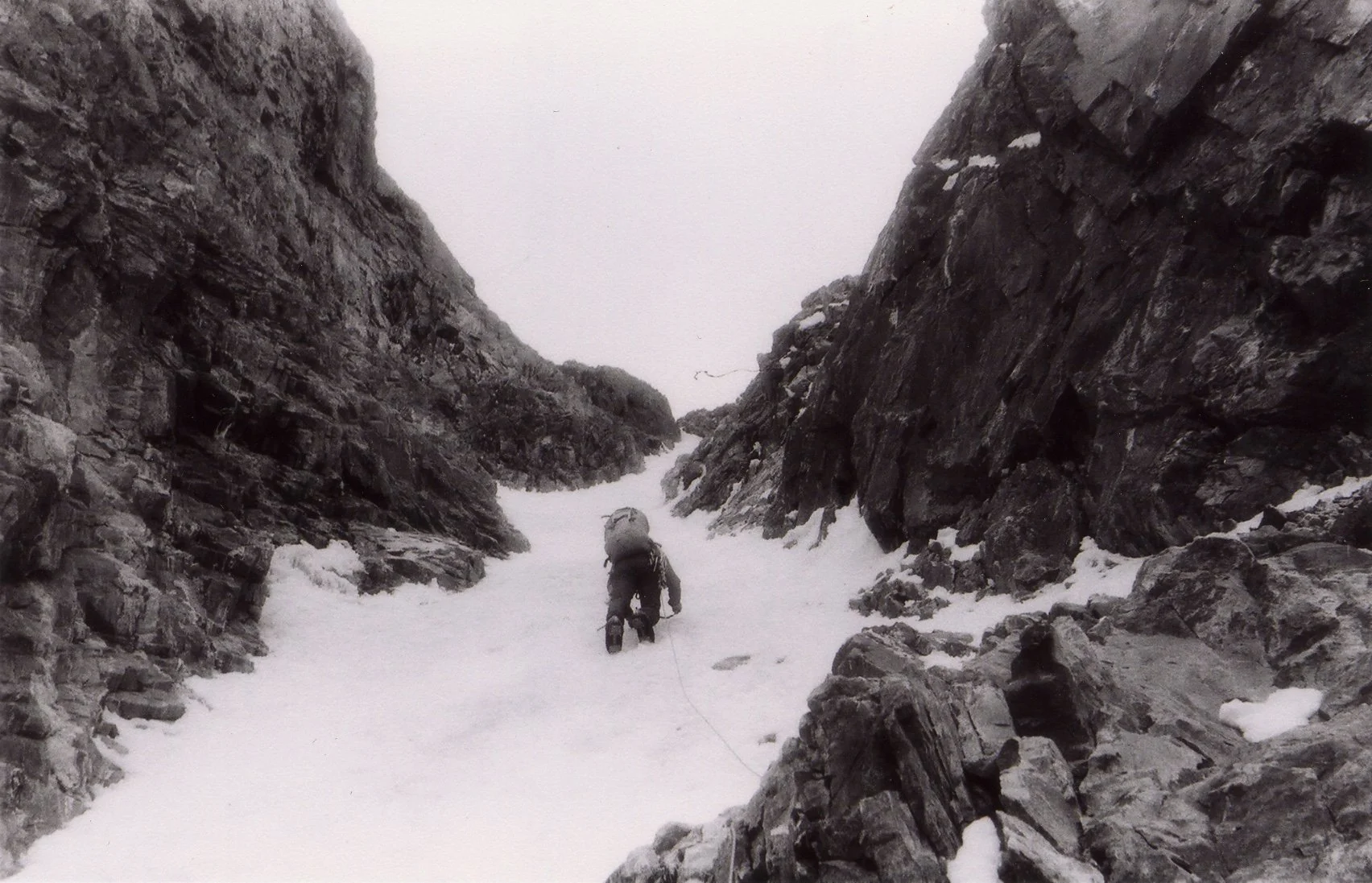
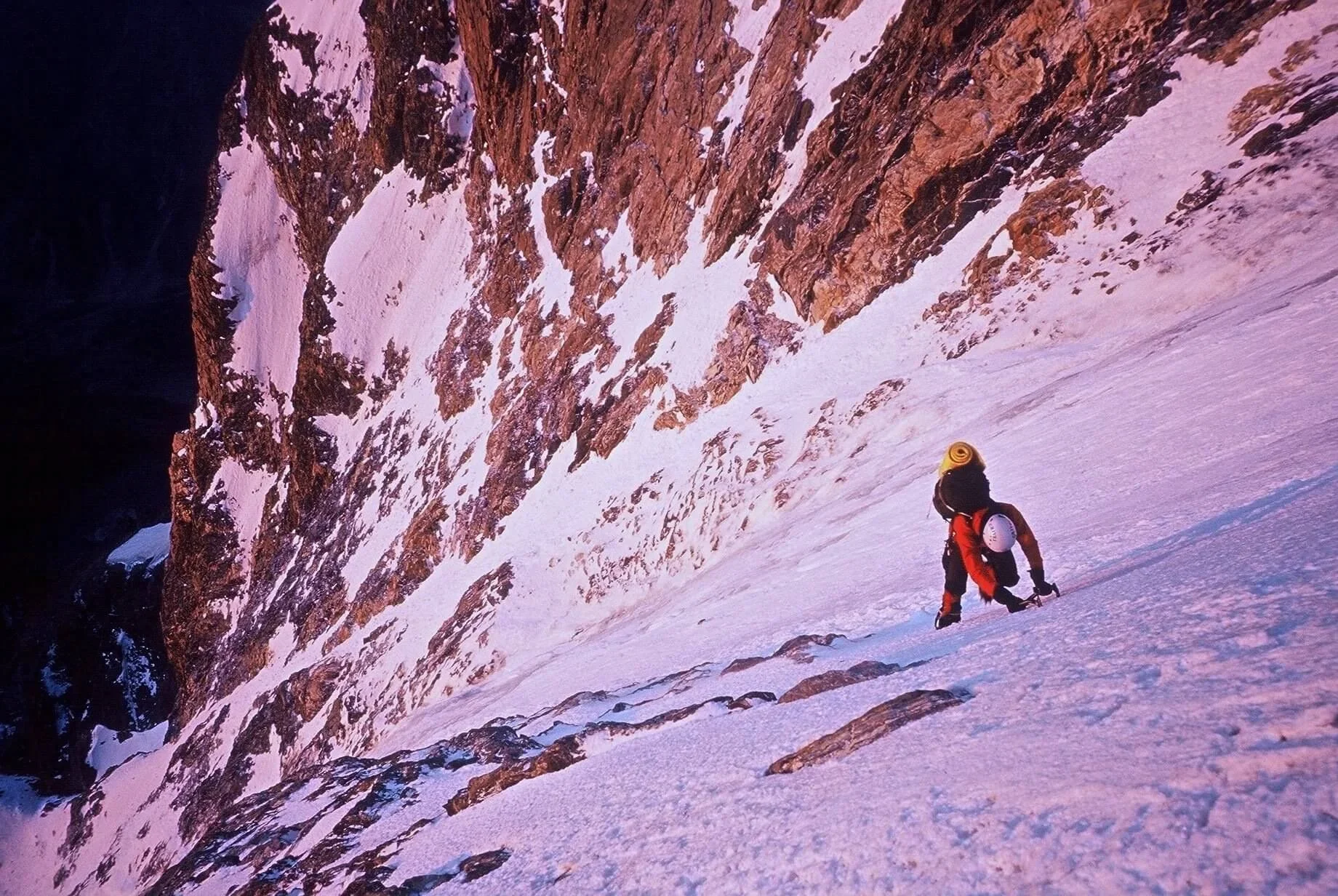
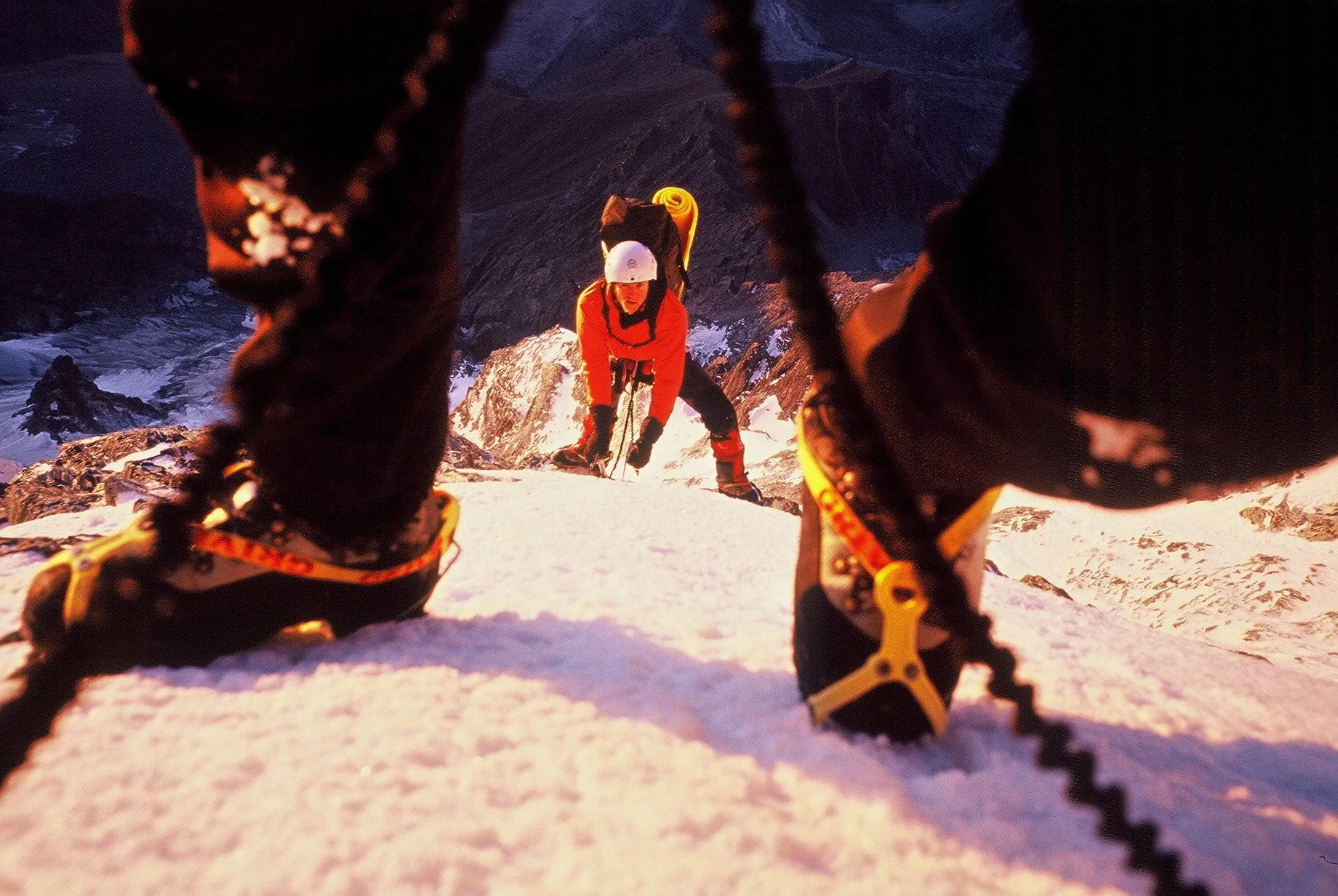
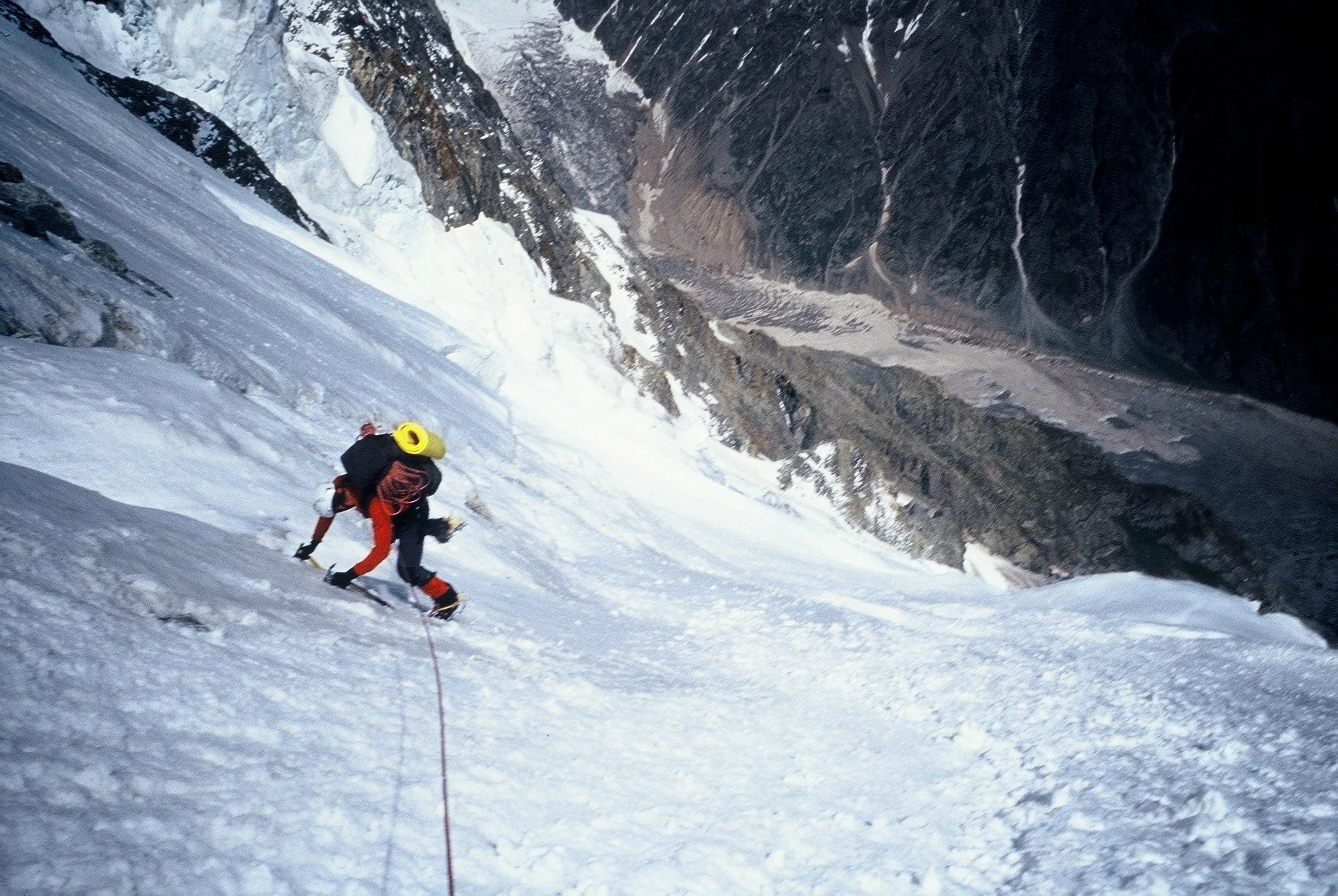
After quickly traversing across the gully from which the avalanches had been pouring down in the evening, we set out on a multi-hour quest onto a vast sea of moderate ice climbing. We were unroped on all of this, relying on our mutual trust and understanding that we would move thoughtfully though without overthinking the situation. Our success depended on full trust and commitment and that demanded extreme efficiency when we could afford it. Moderate ice was a place we could, and so we soloed together.
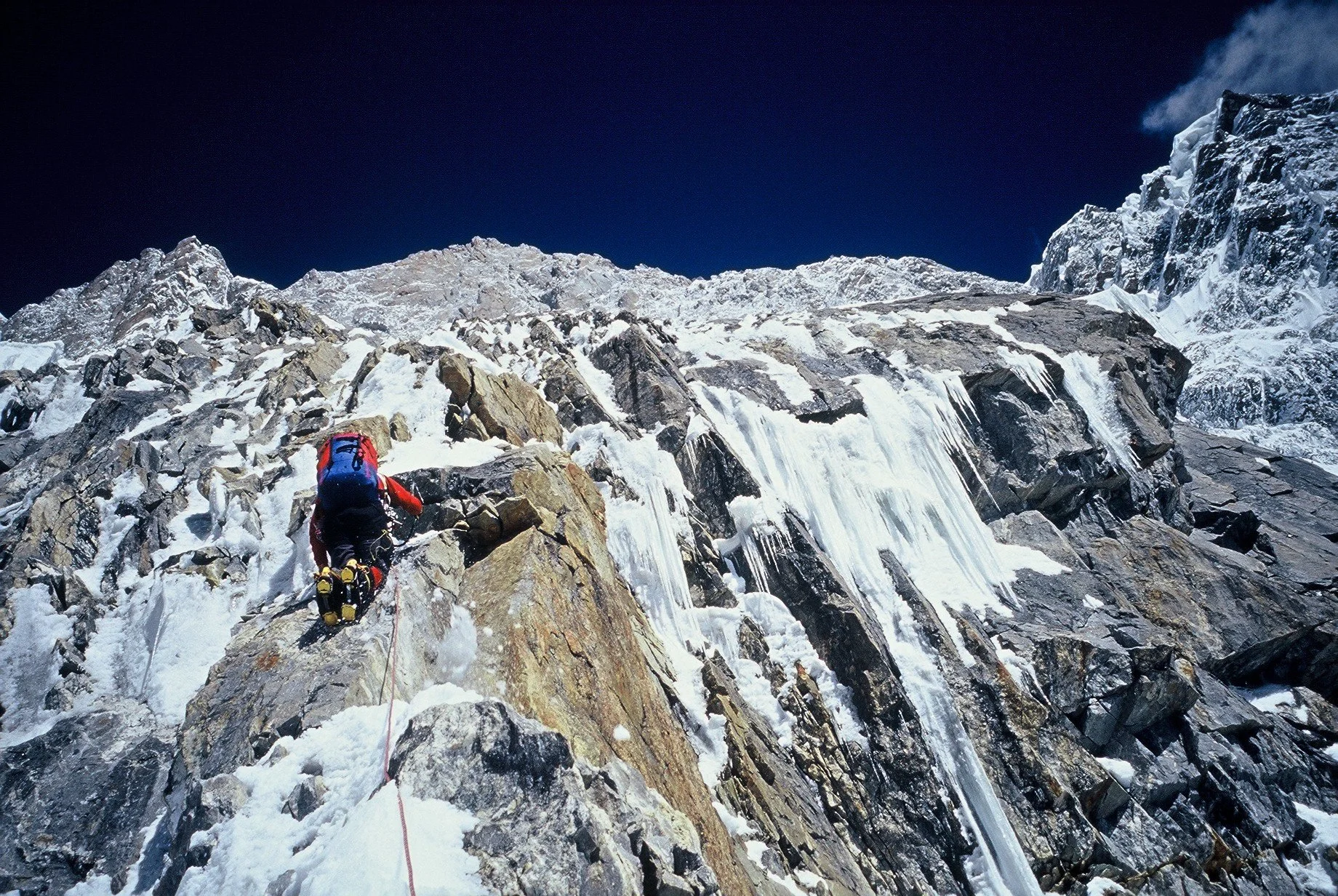
Eventually we arrived at another rock buttress at about 19-20,000’ which we climbed to avoid exposure on the sides from more overhead seracs. This had some of the most beautiful climbing on the entire mountain: great mixed movement up to about M5/6 on solid granite. Several pitches of this led to more 70-75° ice flutings which we continued to pitch out for I can’t remember how many pitches? At this point the altitude was very apparent to me and I had been neglecting my nutritional needs. I started to feel as though I had to submit to the mountain and retreat. I was bonking. Steve encouraged me to eat a bar and drink, after which I did indeed recover enough to continue. We climbed into the dark looking for passage to our right above the aforementioned seracs onto an upper glacier. We navigated the upper edge of some seracs and snow mushrooms in complete darkness and found our way onto the next glacial bay. We found a stable bergschrund and made camp sometime after midnight. We were tired and wet. I did not sleep well.
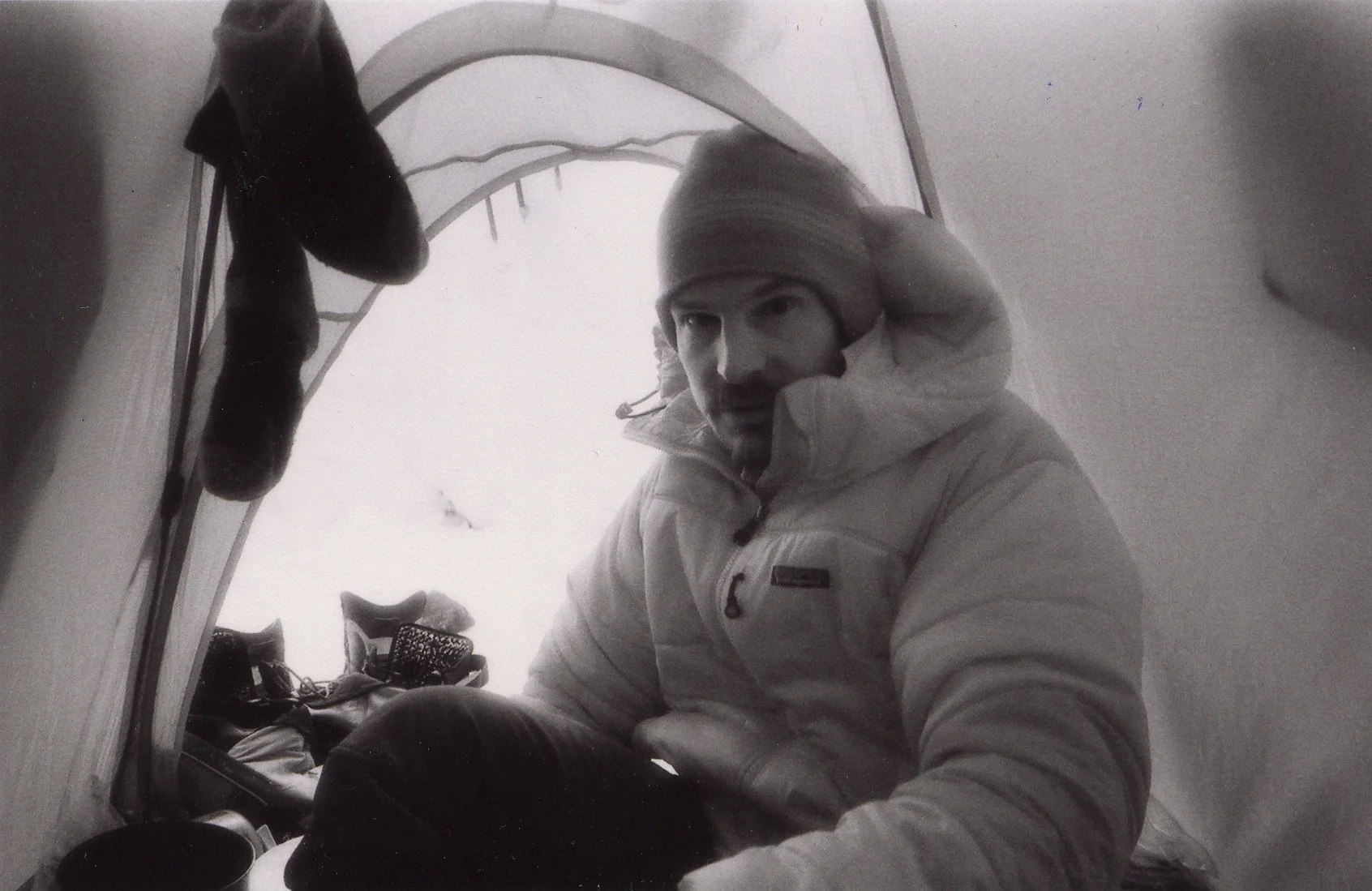
September 4, 2005
Day four would be a pivotal day on our ascent of the Rupal Face. The previous day took us over 16 hours got us to over 20,000’. We were not only exhausted from the effort but also due to all the complex terrain covered, very committed. Both success and failure would have to be upwards. For us to get down, we’d have to at least get to where this section of the mountain overlooked the 1970 Messner route at around 24,000’. At this point I was also experiencing much difficulty with sleeping due tongue altitude.
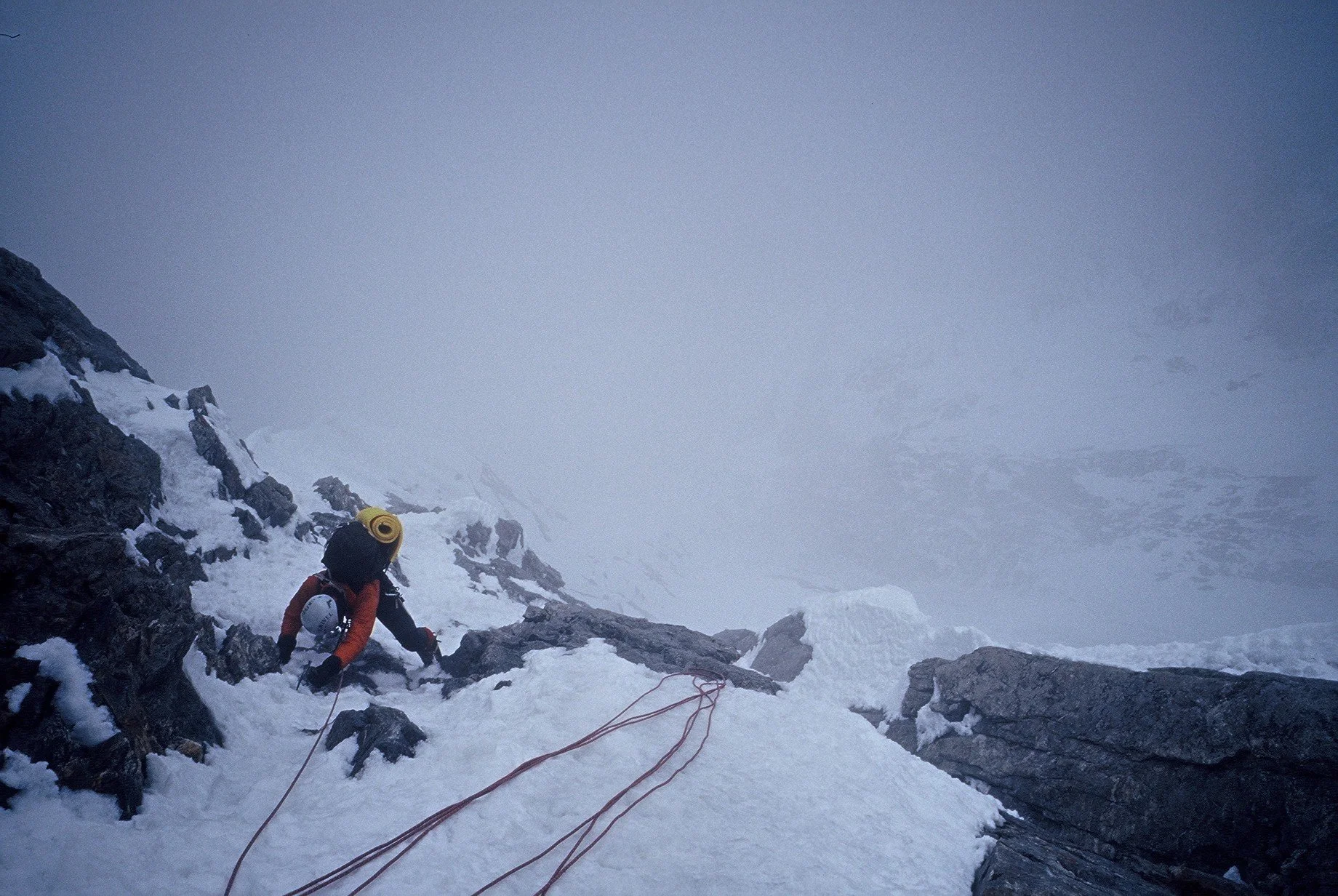
We slept in to late in morning to get some much needed rest and got a late start to our day. The terrain immediately above our bivy, which we could not see the night prior, started out easy enough: 50-60° snow and ice leading into a large slabby rock headwall with a hidden corner. That section was our big unknown. The rock terrain require aid and would be far too technical to climb with the meager rack we had. We needed there to be a free climb able passage in the hidden corner. The commitment made the decision easy: just keep going until we couldn’t. After soloing and simuling the easy terrain we got a glimpse into and around the corner. To our unexpected delight, hidden from view from basecamp, was a 300’ piece of water ice that covers the slab and would allow for relatively easy passage into the upper portion of this glacier.
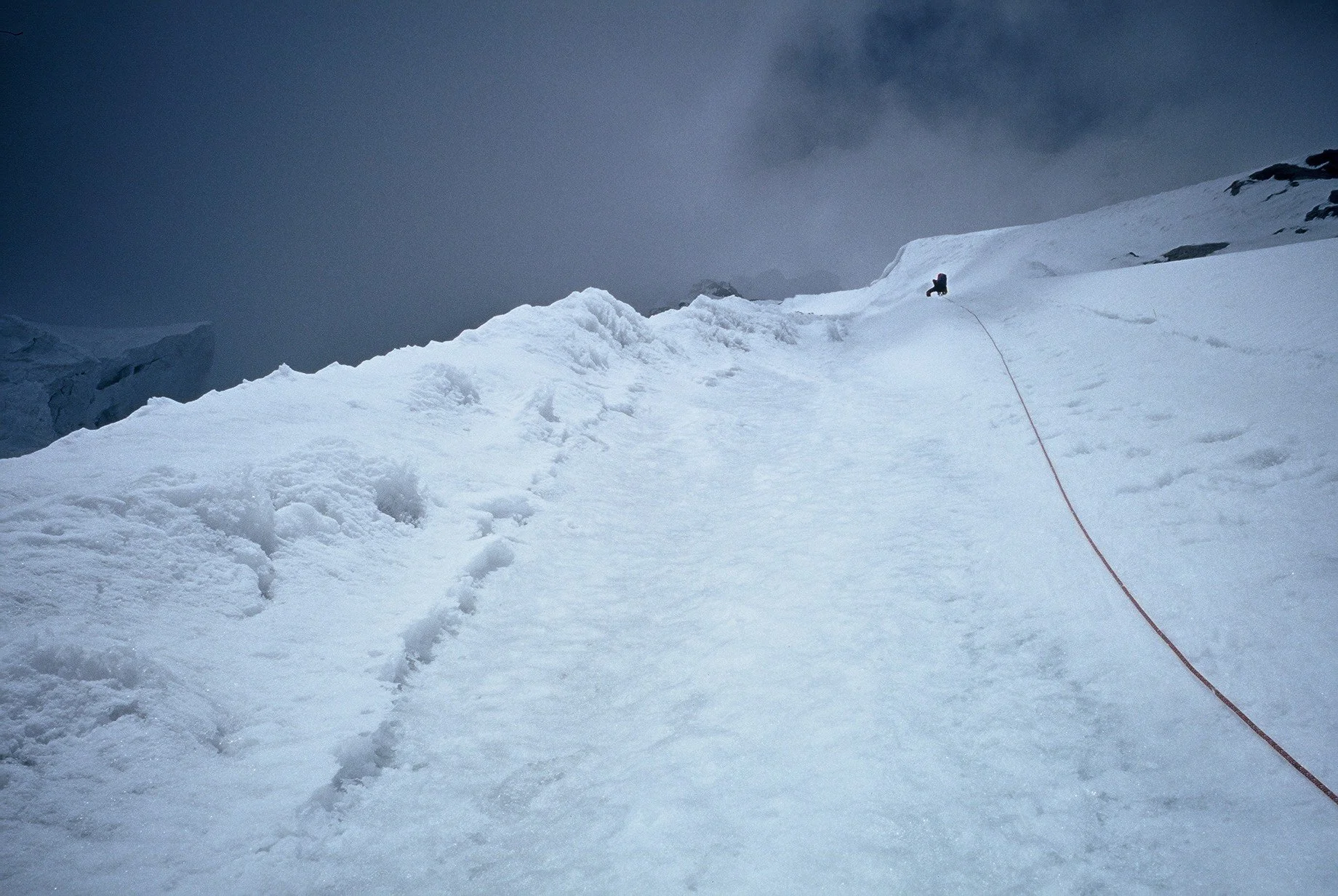
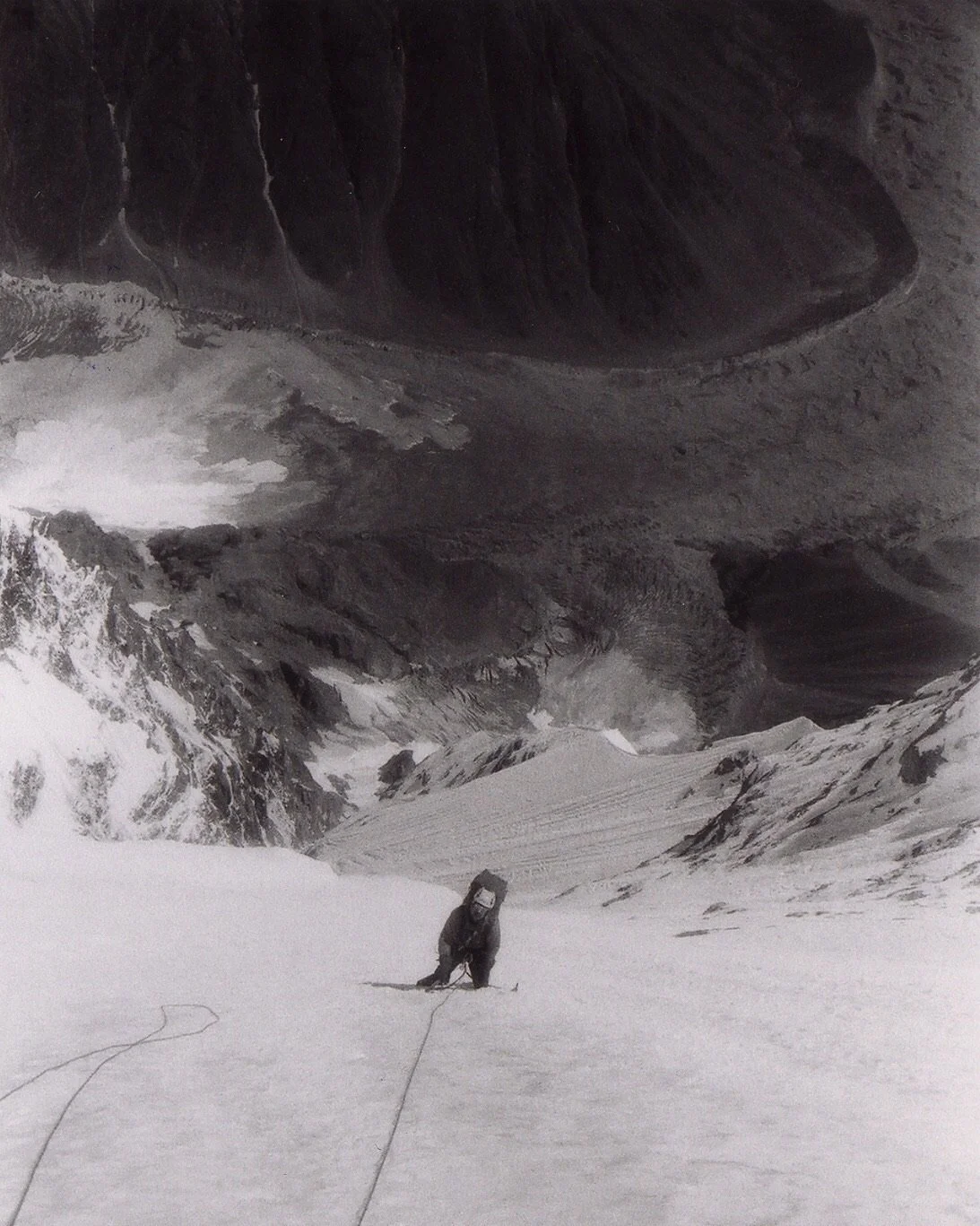
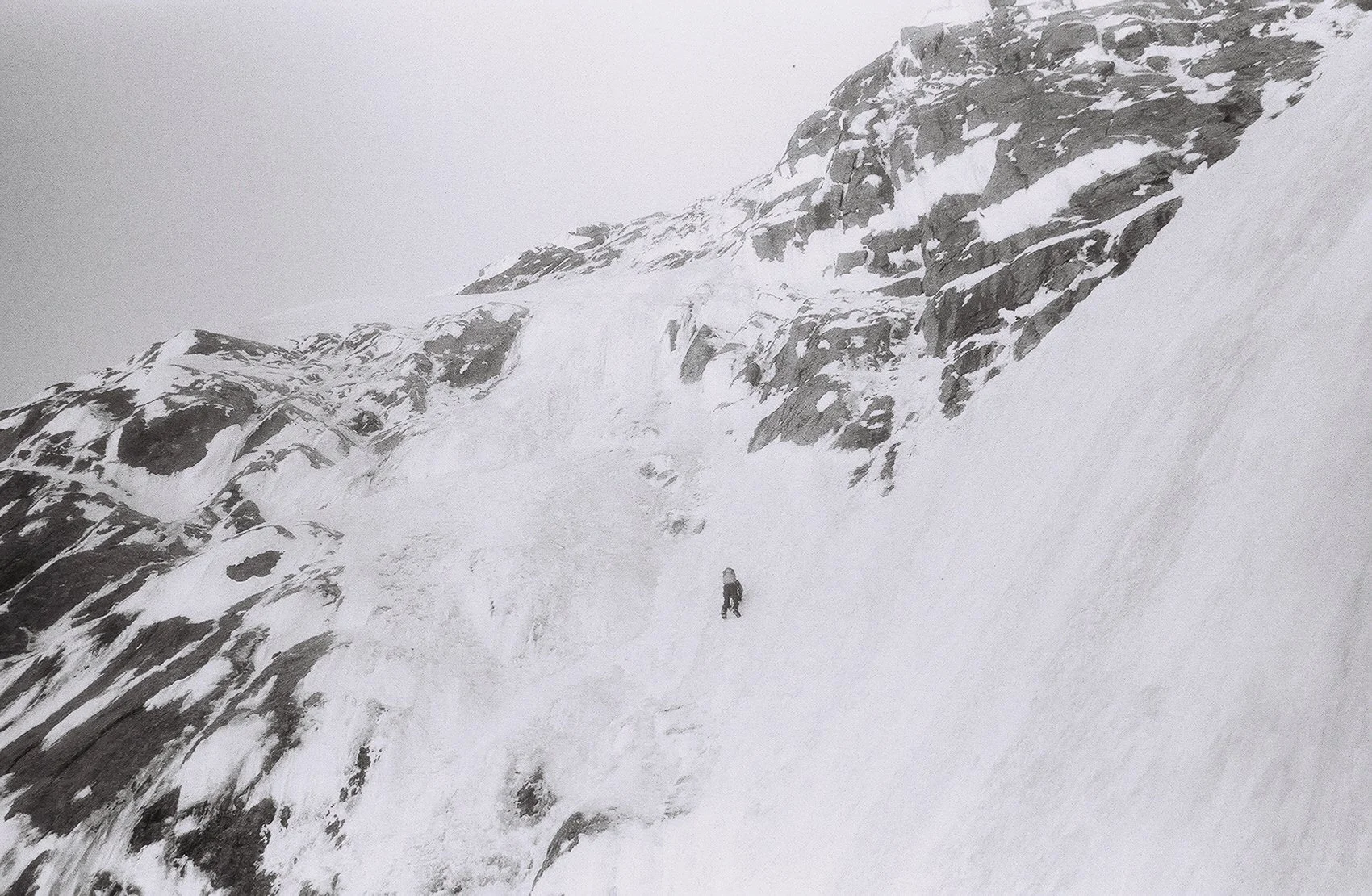
Steve was fueled by elation and hit the gas as you can see from the image of him far up ahead on the lower portions of the ice flow. We were moving pretty slowly at this point and with the late start, it was getting late in the day again as we crossed this section. We just needed to find a good bivy site and we could call it a day. What looked like a ledge was not and we kept moving upwards in hope of finding either some flat ground or snow, which could be easily flattened. It was all ice…
Eventually, as darkness descended, we aimed toward the ridge on the right seeing cornices and knowing there would be snow there. The final portion of the climb to the ridge was steep and had some snow covered ice. We simuled and had one screw between us for the last pitch which Steve led. As he tunneled into the bottom of the cornice a large portion broke off nearly knocking him from his stance and came crashing down very near me.
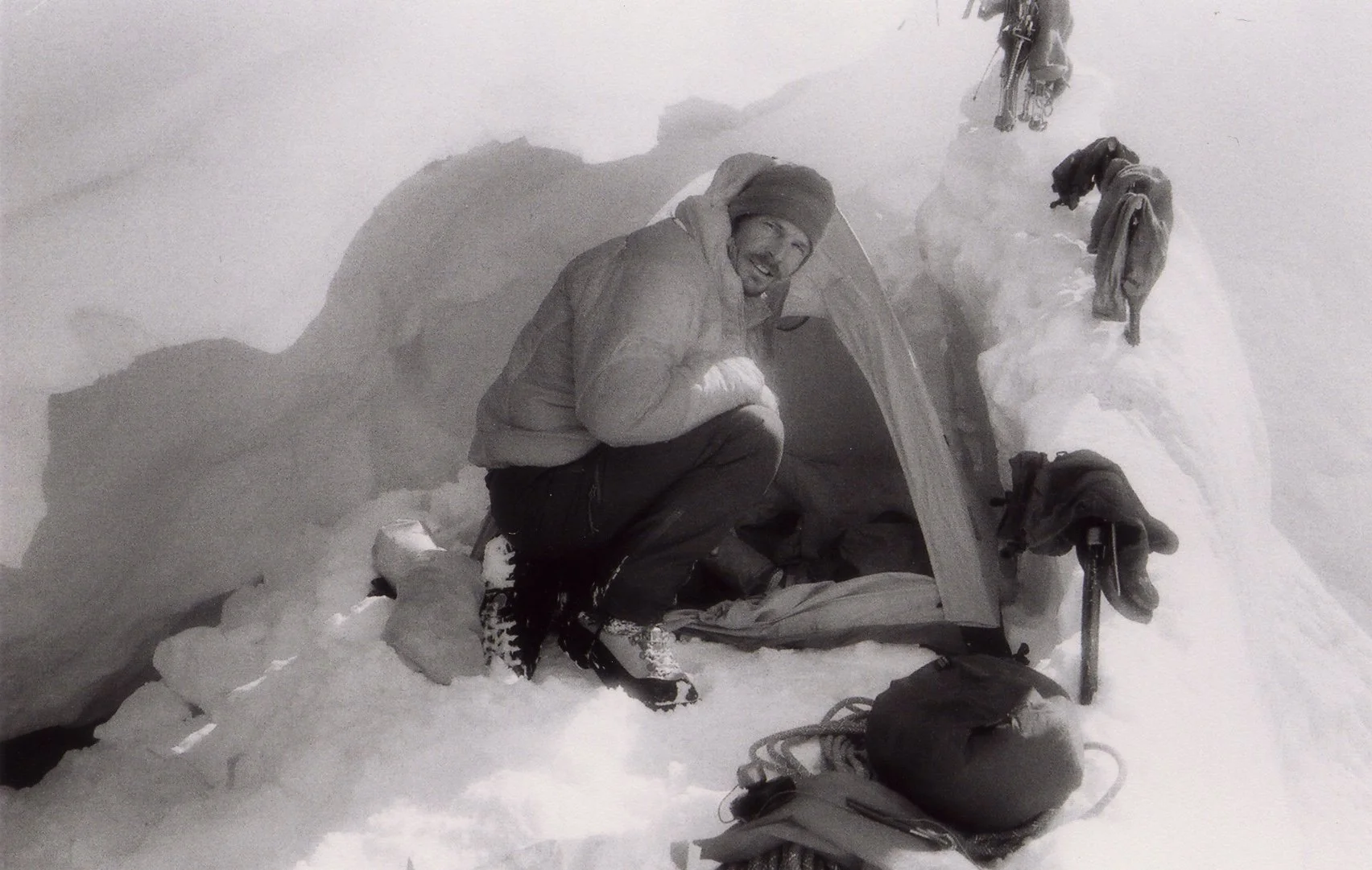
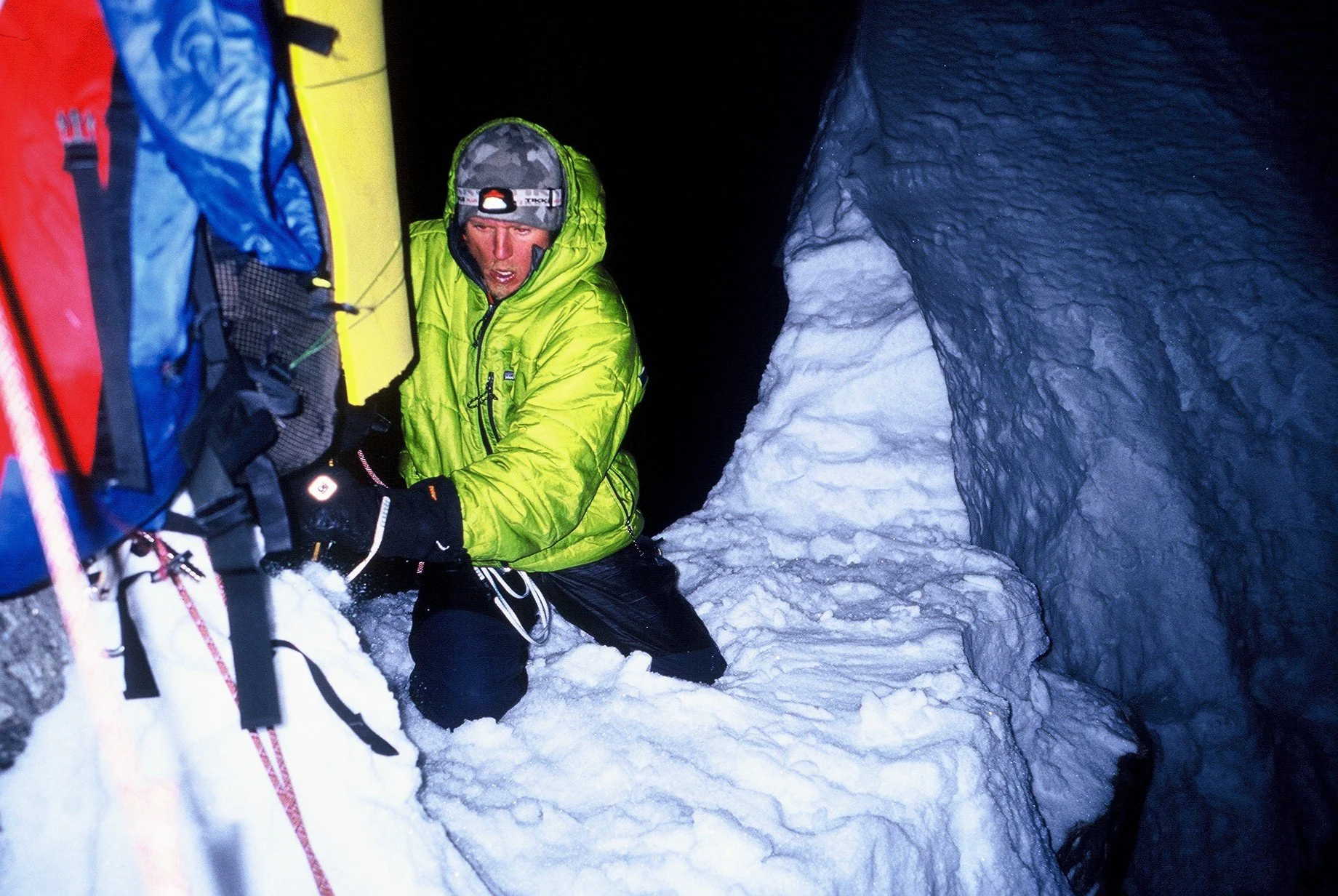
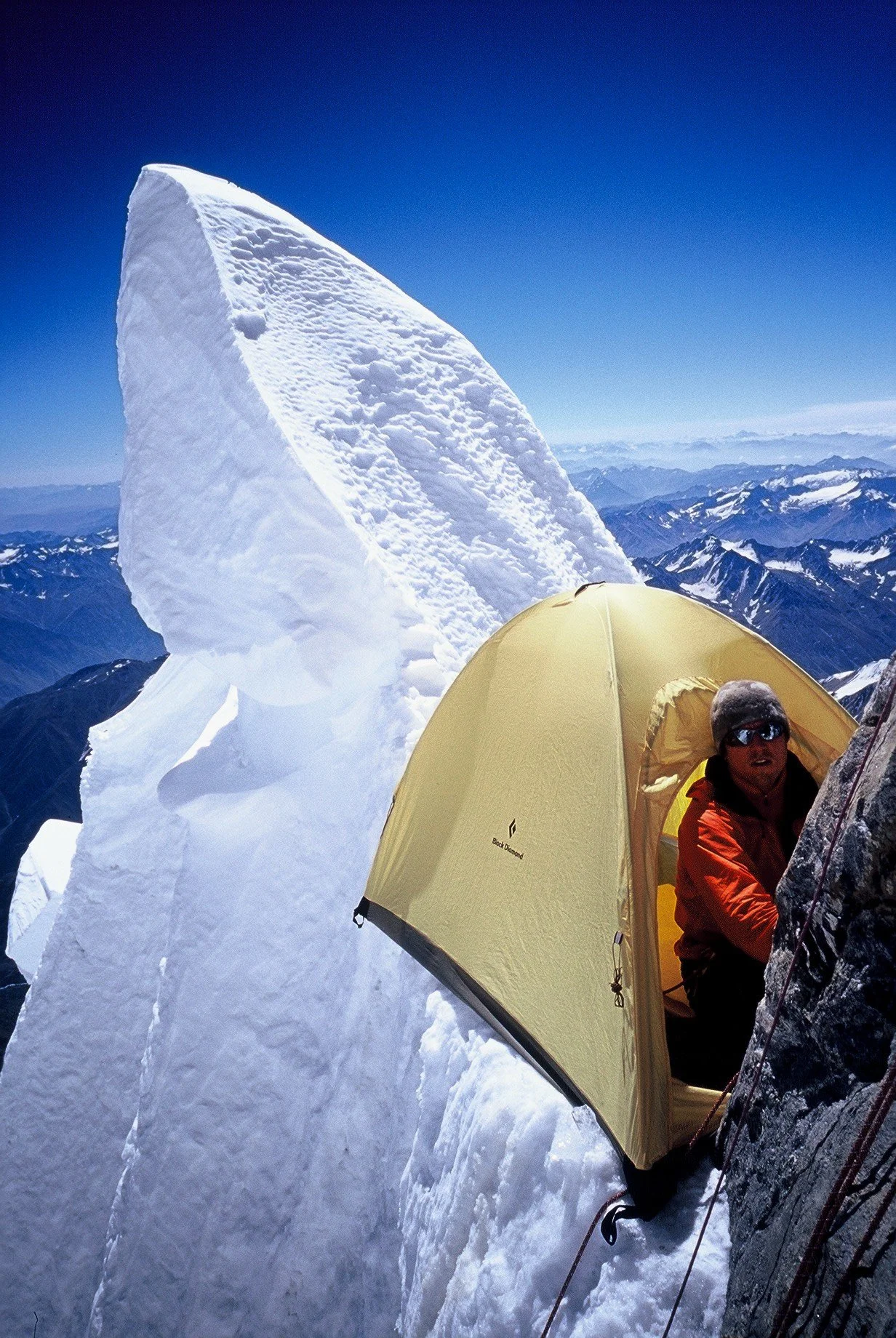
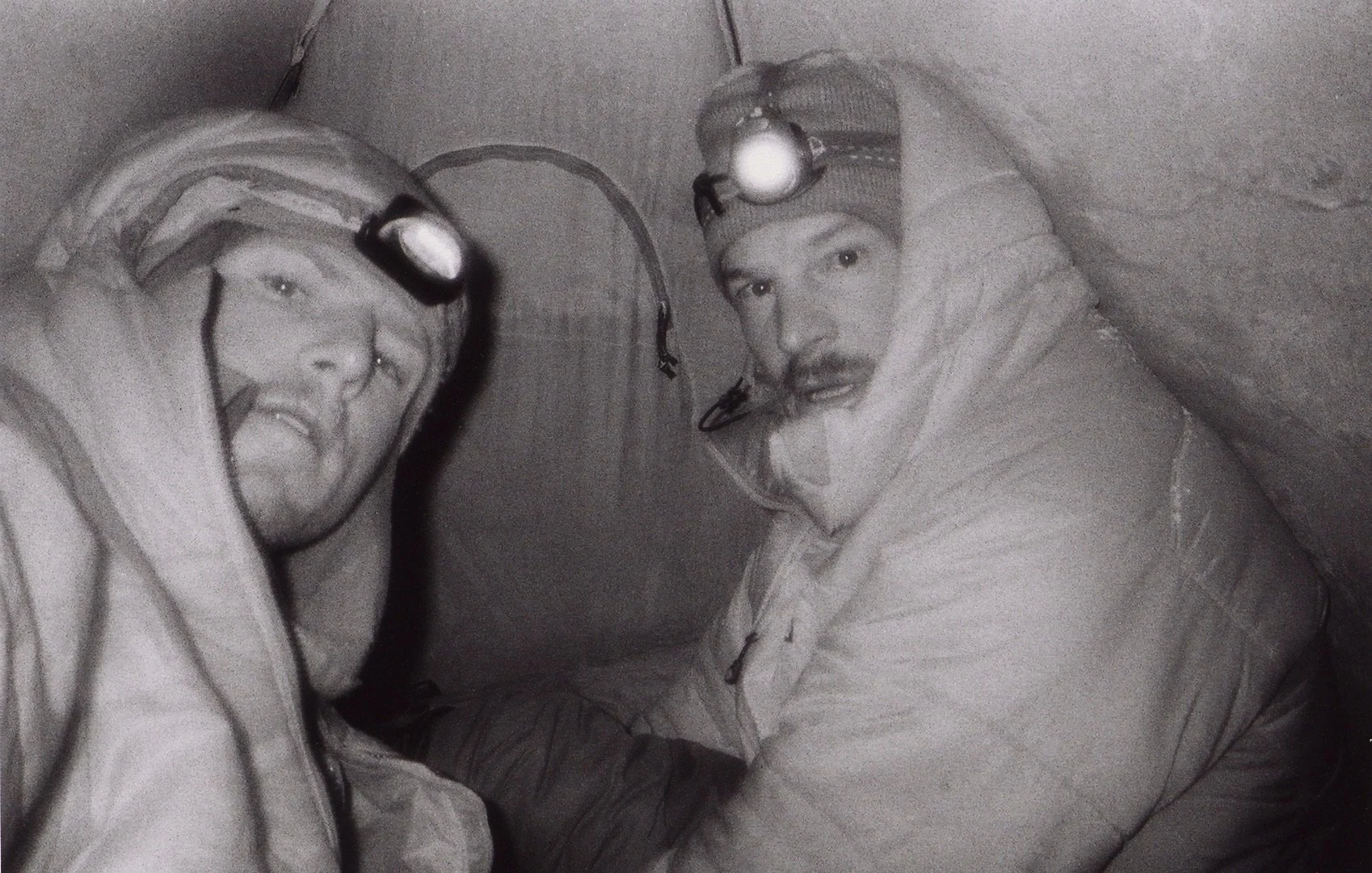
As we crested the ridge it was apparent that it was very narrow and though snowy would take much excavation to dig down enough to get platform wide enough for our tent. We worked for over an hour and created a place almost big enough. We got in, melted snow, refueled and tried to sleep. Due to the precarious perch we were on, we stayed tied in all night.
September 5, 2005
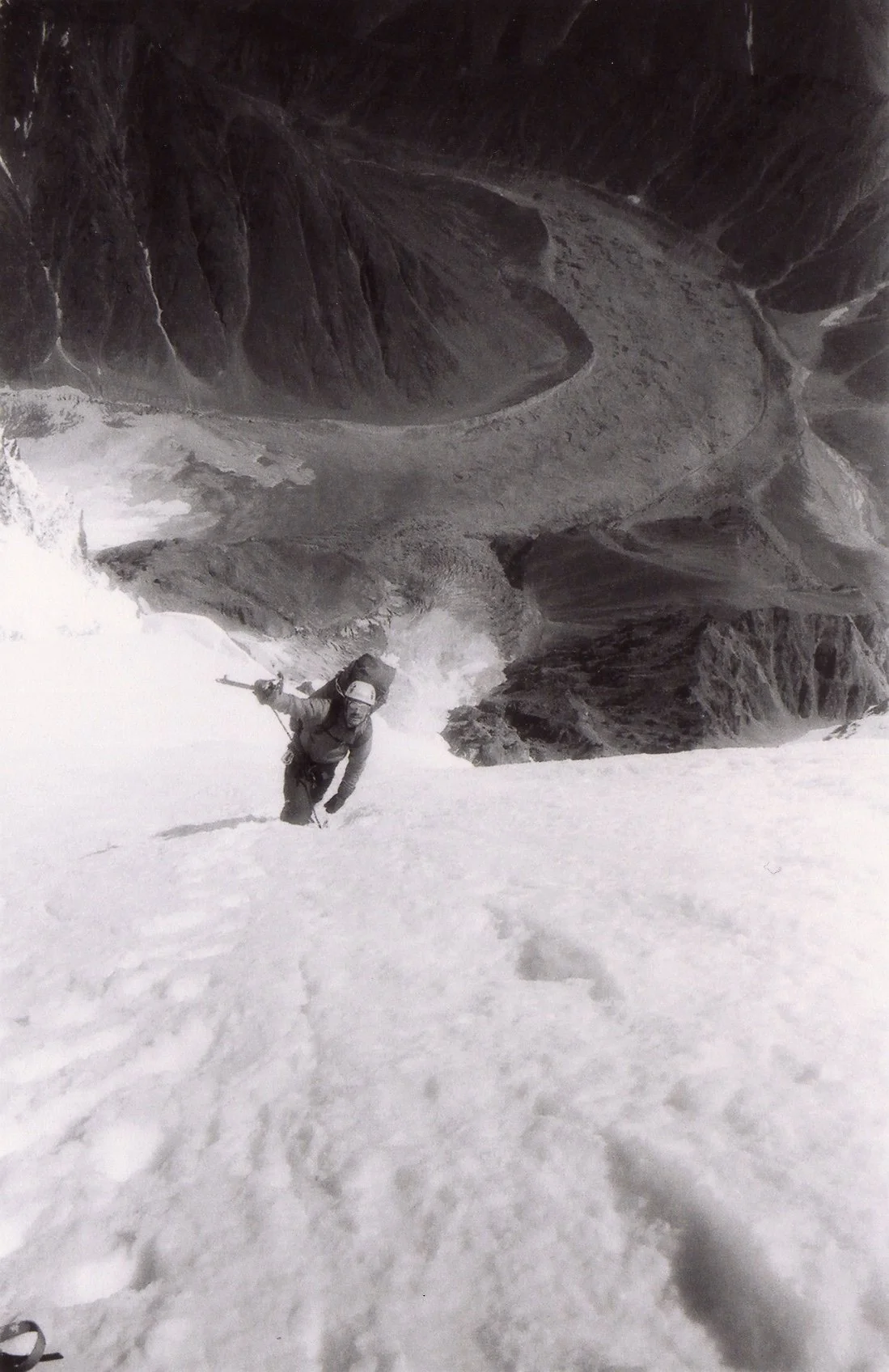
Our fifth day on the face started with a better understanding and view of our tremendously exposed camp site! It was an exquisite position and place to be! We rappelled back down into the face and proceeded up the gut of the gully leading to the upper basin which we had been ascending, nearing the top of a wall overlooking the Merkl Icefield on the 1980 route. Making it to that point meant there was a downward escape option if needed.
The recent nights had been rough to get quality sleep. I would fall asleep and then become woken up gasping for air. My body wanted to slow down but my brain wouldn’t let it. It was like torture being woken so frequently when I wanted to sleep so badly. This took its toll on our pacing. Though now in relatively easy terrain, we would each take 3-4 breaths between each step. We simuled 3 pitches and then would swap leads. Eventually the pitch yielded and we put the rope away.
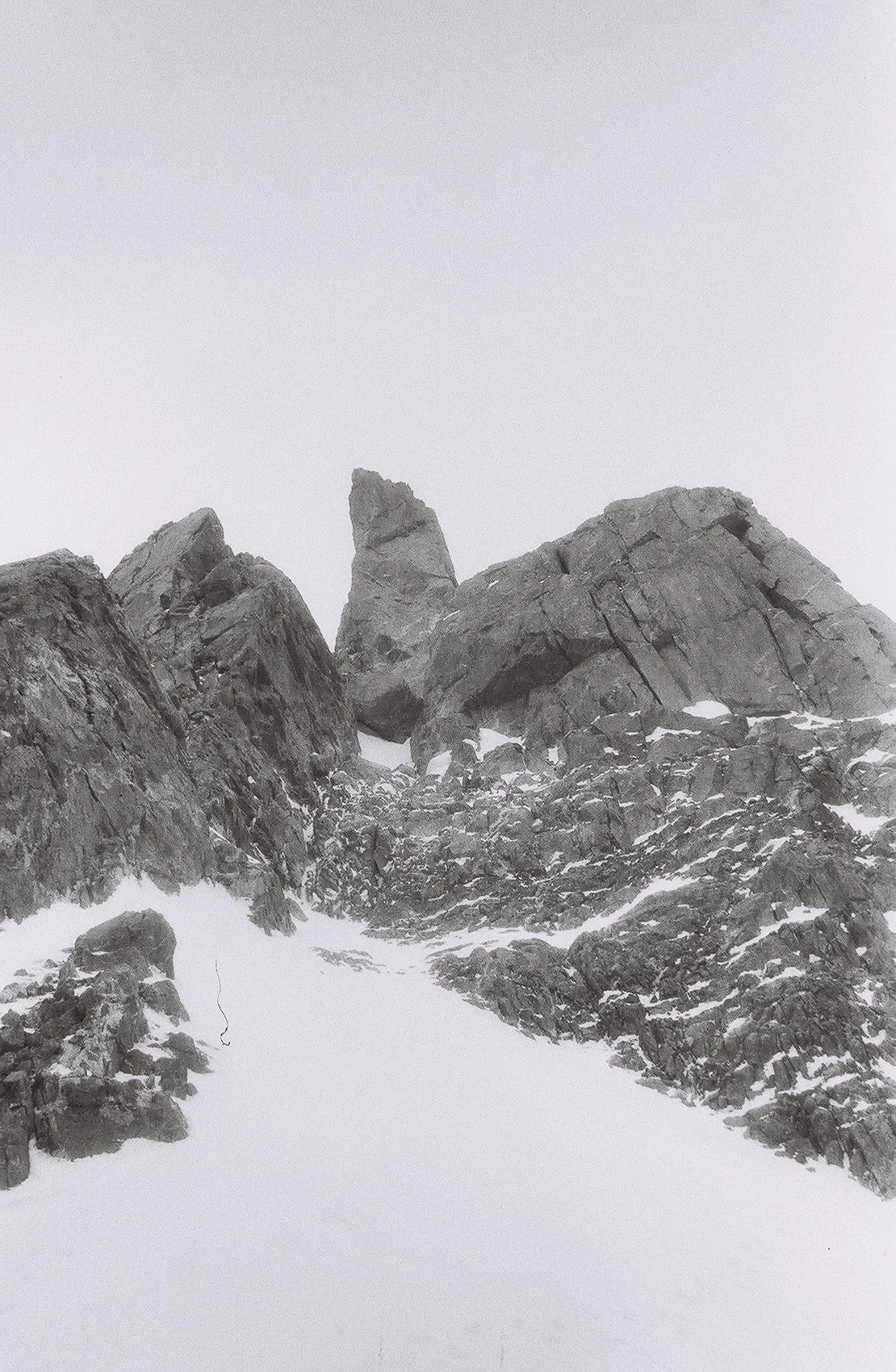
Late in the are arrived at around 23-24,000’ and near a 1,000’ cliff above the Merkl Icefield. We were below a beautiful rock tower guarding access to steep snow and ice slopes which would lead us to an intersection with the 1970 route very near the south summit. We found a slight ridge feature to dig into and make a more pleasant bivy site that the previous one. We were both now fully exhausted from effort and altitude. We got into the tent, made water and our last dinner meal, set our alarms for 1:30am and tried to sleep.
September 6, 2005
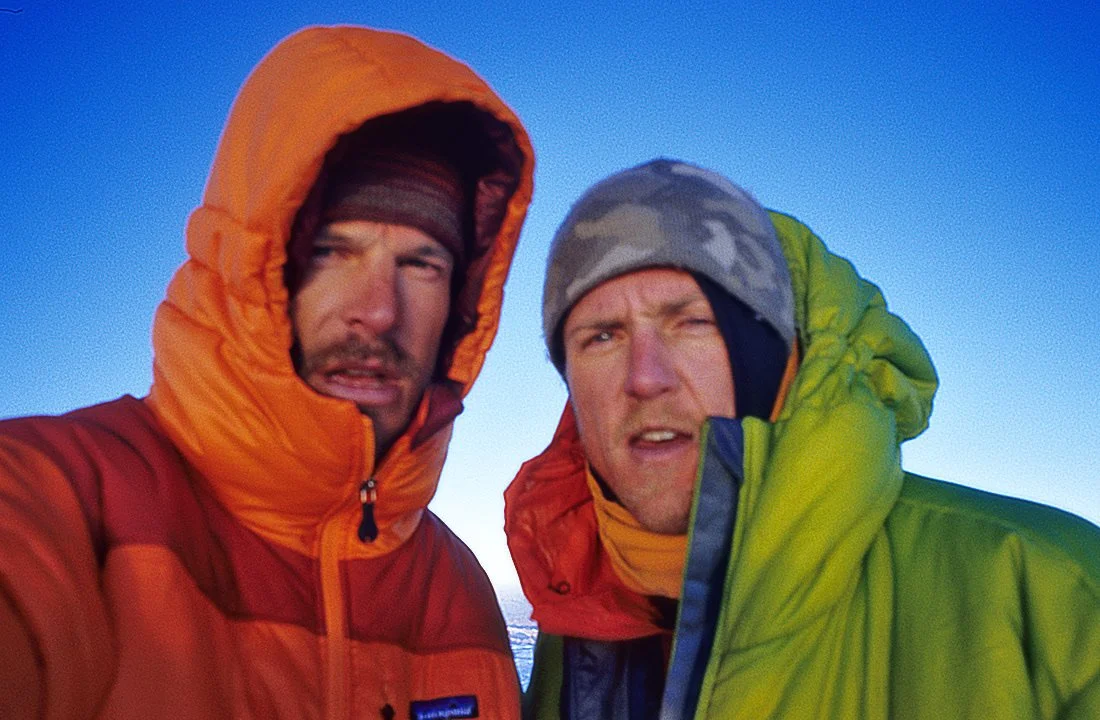
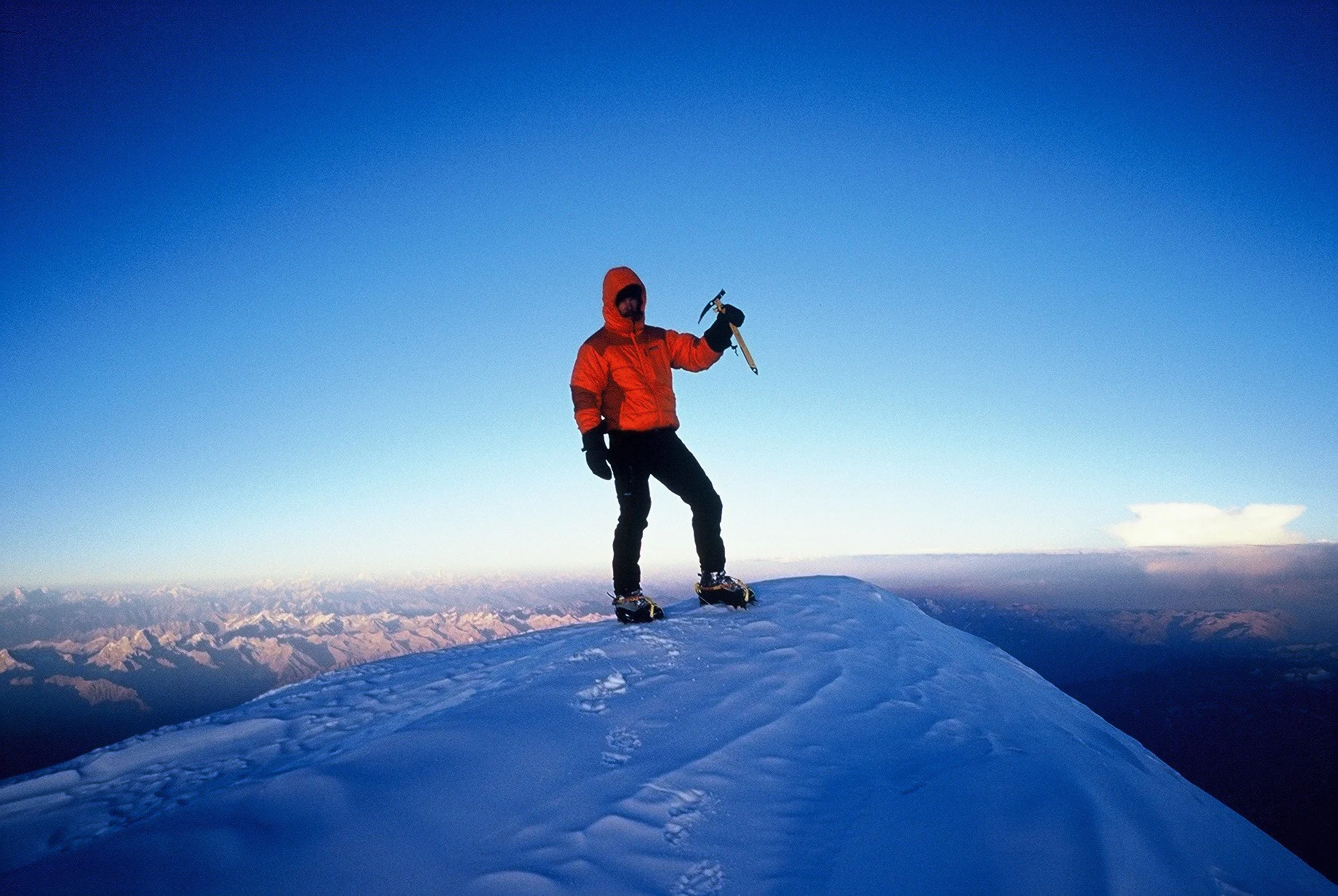
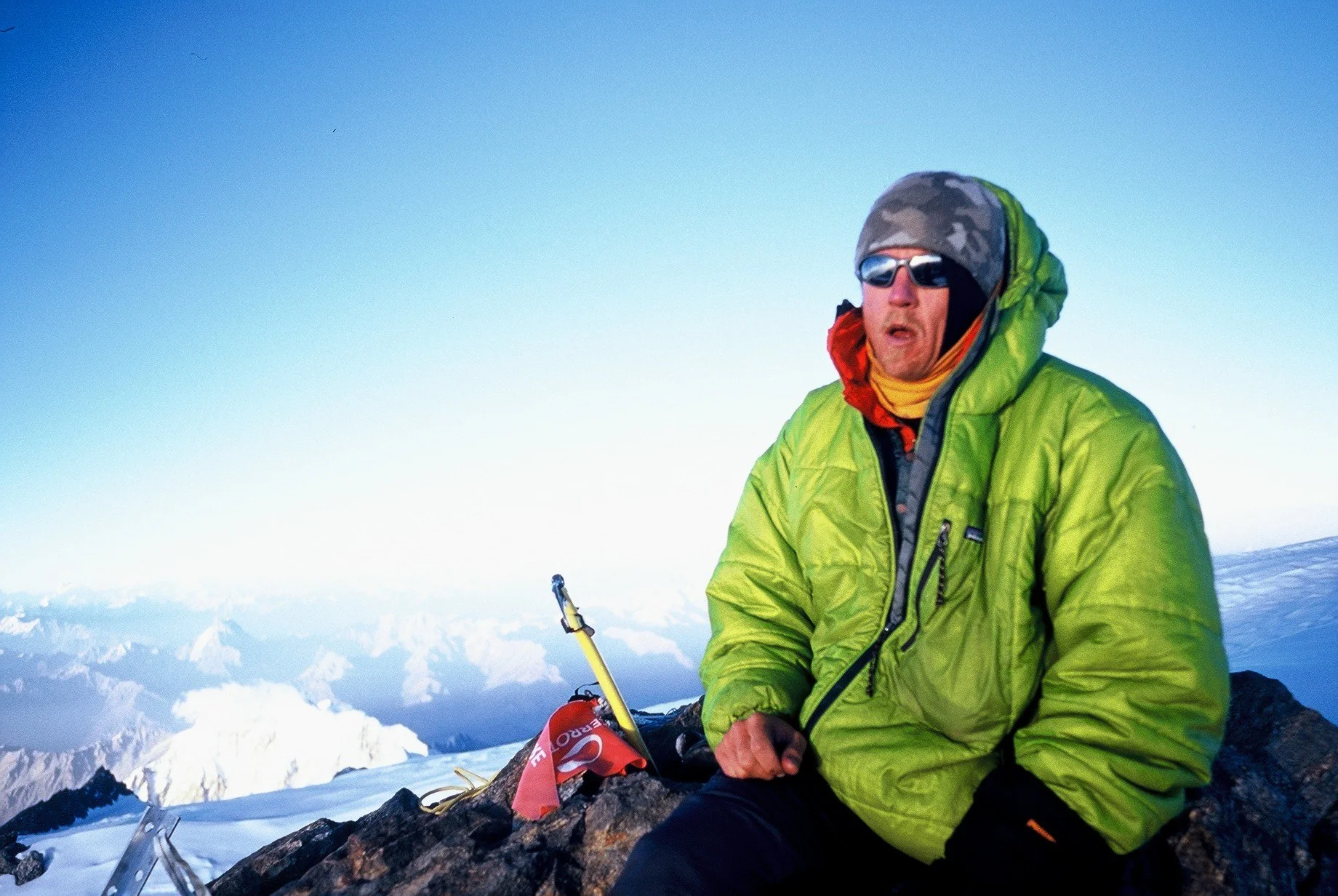
For as tired as I remember being on that day, I sure took a lot of pictures. Some of the last few are my favorites.
This was our summit day. After another sleepless night (for me) It went from 1:30am until 1:30am the next day. We climbed some relatively easy rock right above our bivy to get around the spectacular rock tower above us and into slopes where we would intersect with the 1970 route to the summit. After climbing the rock, we left as much gear as we could and took one 5mm cord and a few ice screws to use for rappelling down.
The day is a bit of a jumble in my mind due to the wild state of exhaustion we were in. The most vivid memories of that day for me are:
wallowing in facets trying to move upwards
struggling to fight off the desire to fall asleep while on steep terrain
watching an amazing lightning storm in the distance over the Punjabi plains
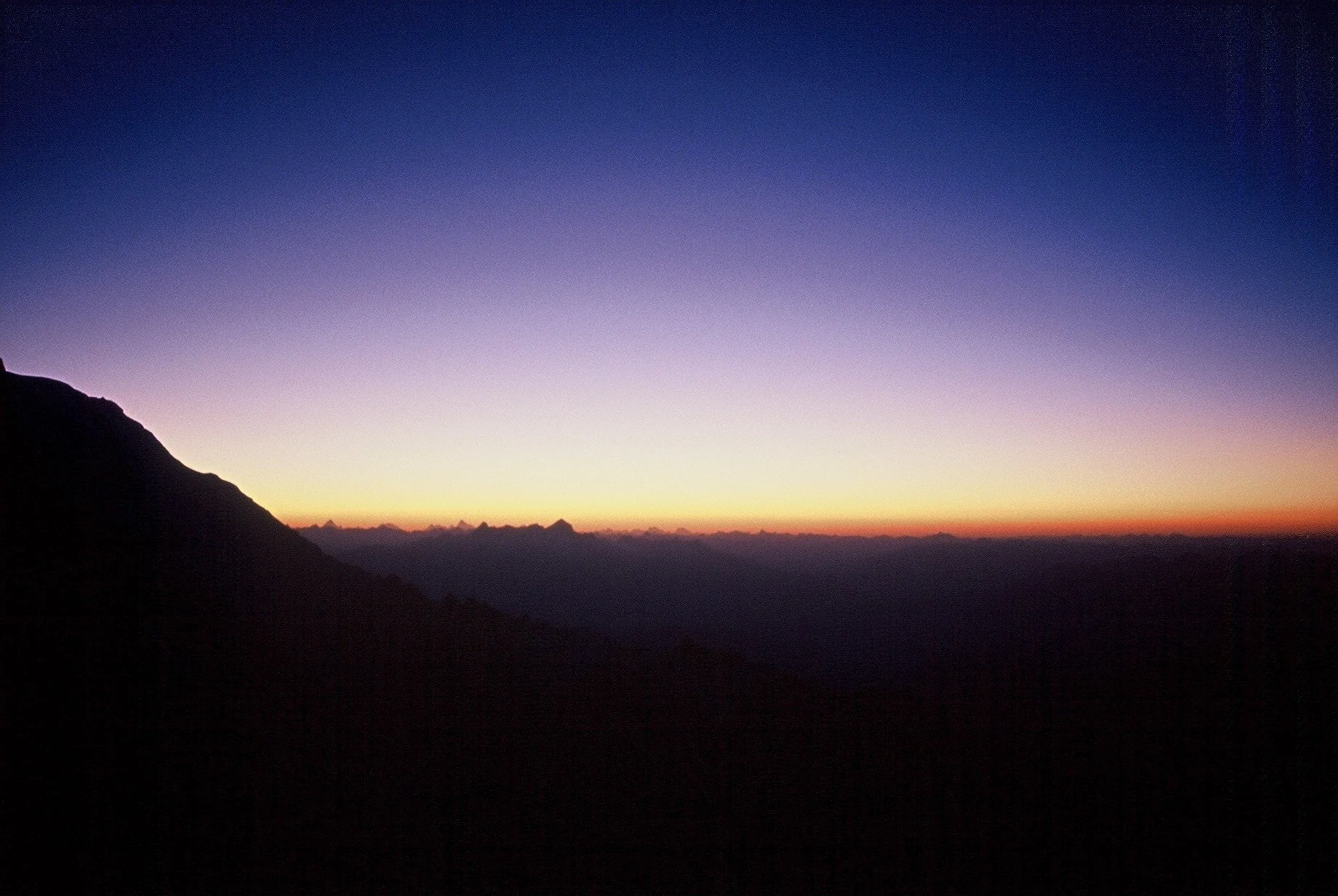
seeing K2, Broad Peak & Masherbrum at dawn & far off to the East
reaching the south summit and being able to lay down and fall asleep for a short nap
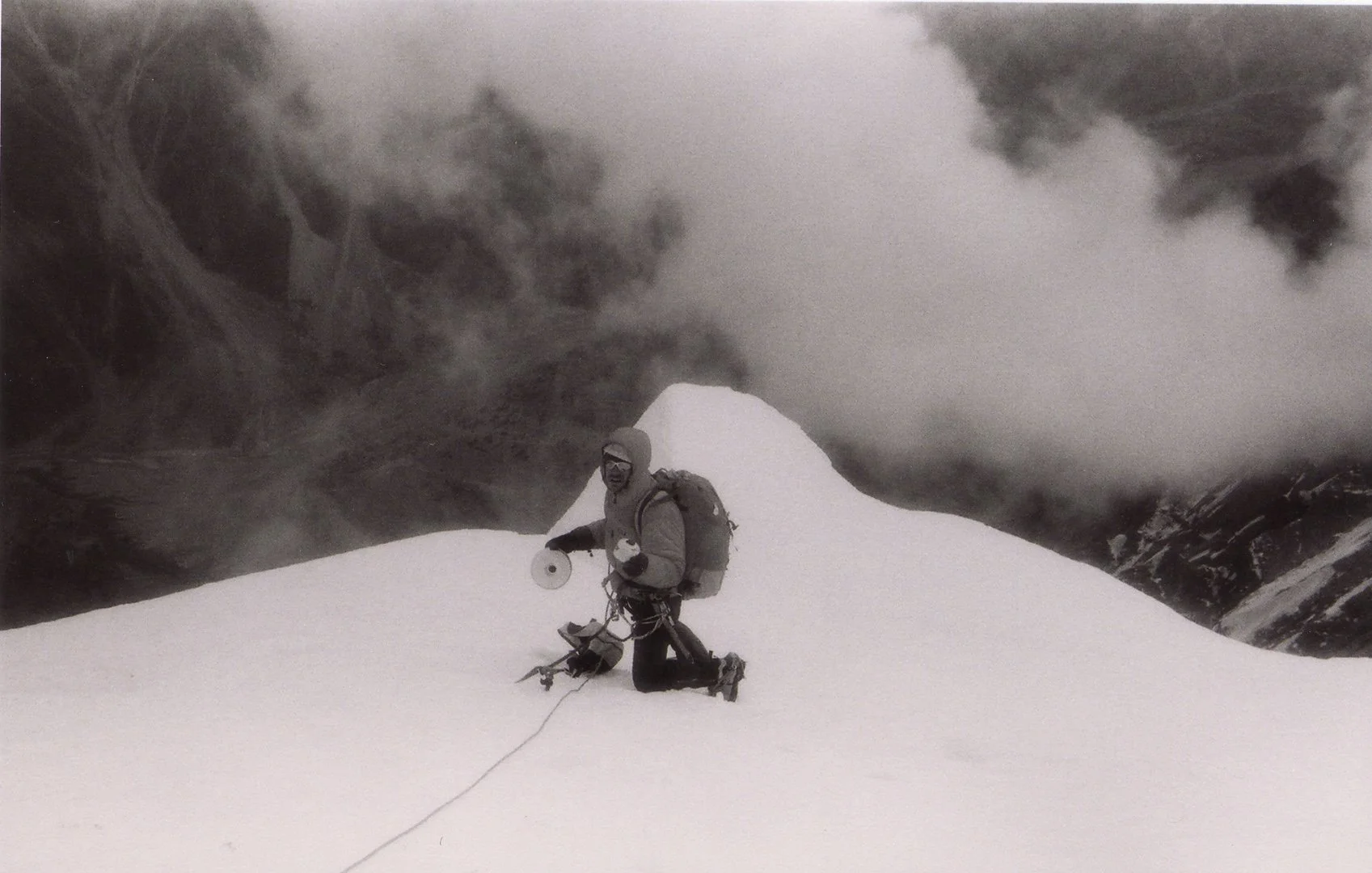
walking over to the short summit slopes but taking what seemed like forever to ascend them (one of the slides captures the moment well - Steve kneeling down in total exhaustion trying to climb the final bit to the top)
having a relatively quiet and uneventful summit celebration (knowing we had a big task ahead getting back down)
the beauty of Nanga Parbat’s long shadow being cast over the land far below
dropping the rope on one rappel (we found it a short ways down)
hearing drumming and seeing fires in the valley below (at the time we though we were hallucinating, but found out later that was really going on)
Twenty years on, these few memories still are burned clear as day in my mind, though I’m aware of the fallacy of our memories: they may not be as accurate as we believe. They remain a warm reminder of a powerful experience for me. I was awake for 24 hours that day; much of which I’ve only faint suggestions of a memory. Arriving back at camp Steve was able to promptly return to sleep. It took me longer as I lay there thinking about what we had to do next: rappel down a 1,000’ wall to the Merkl Icefield
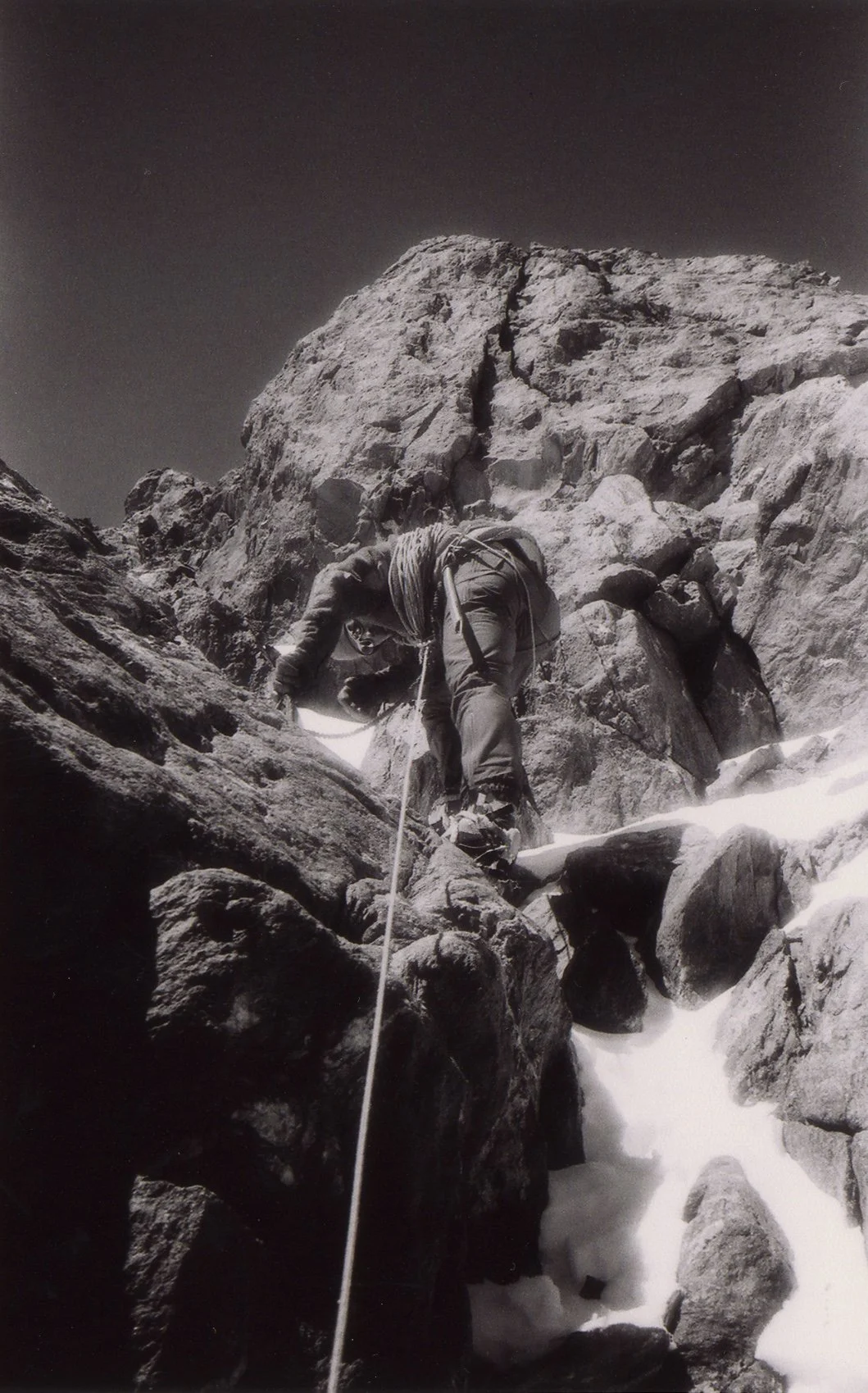
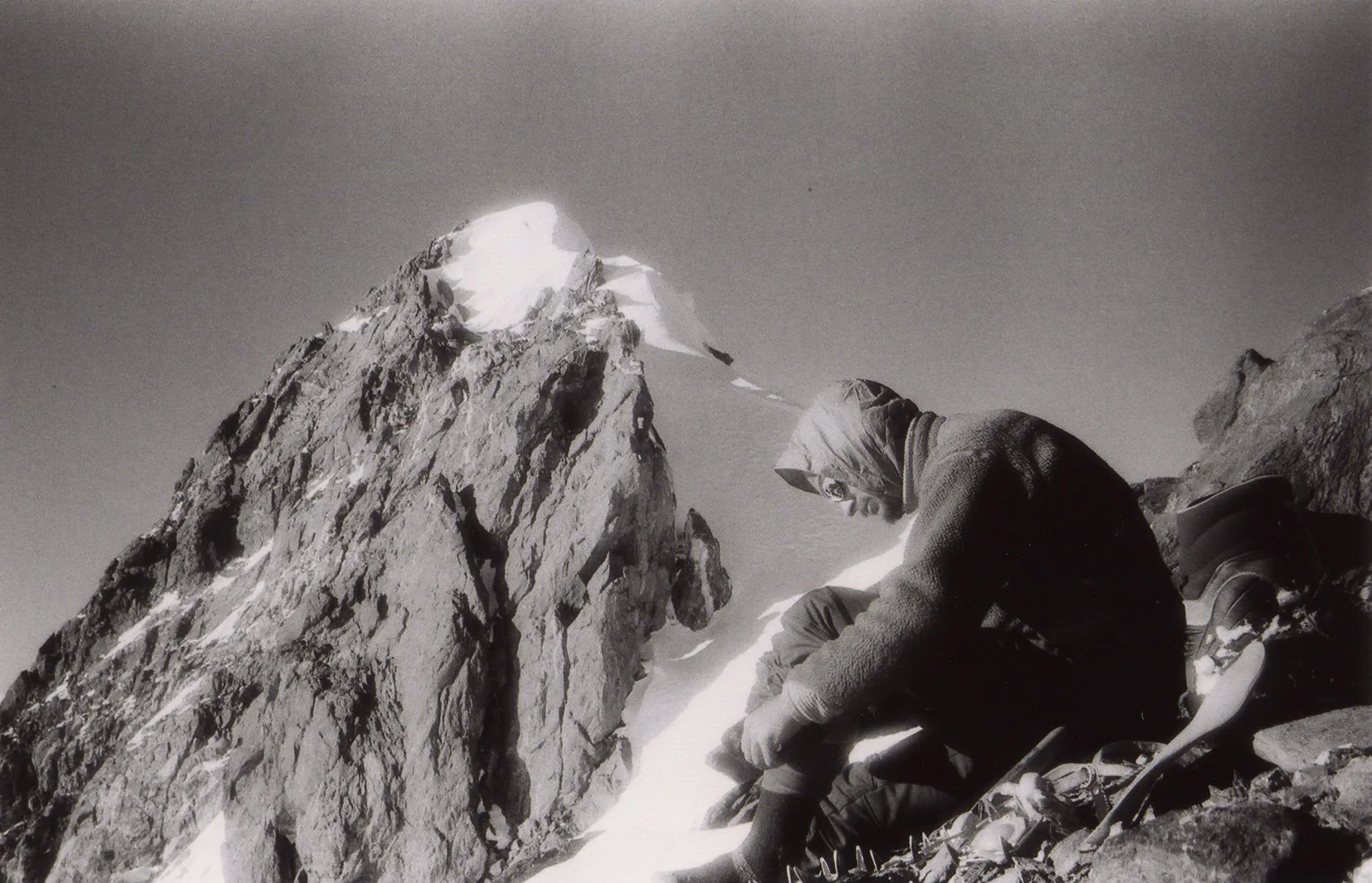
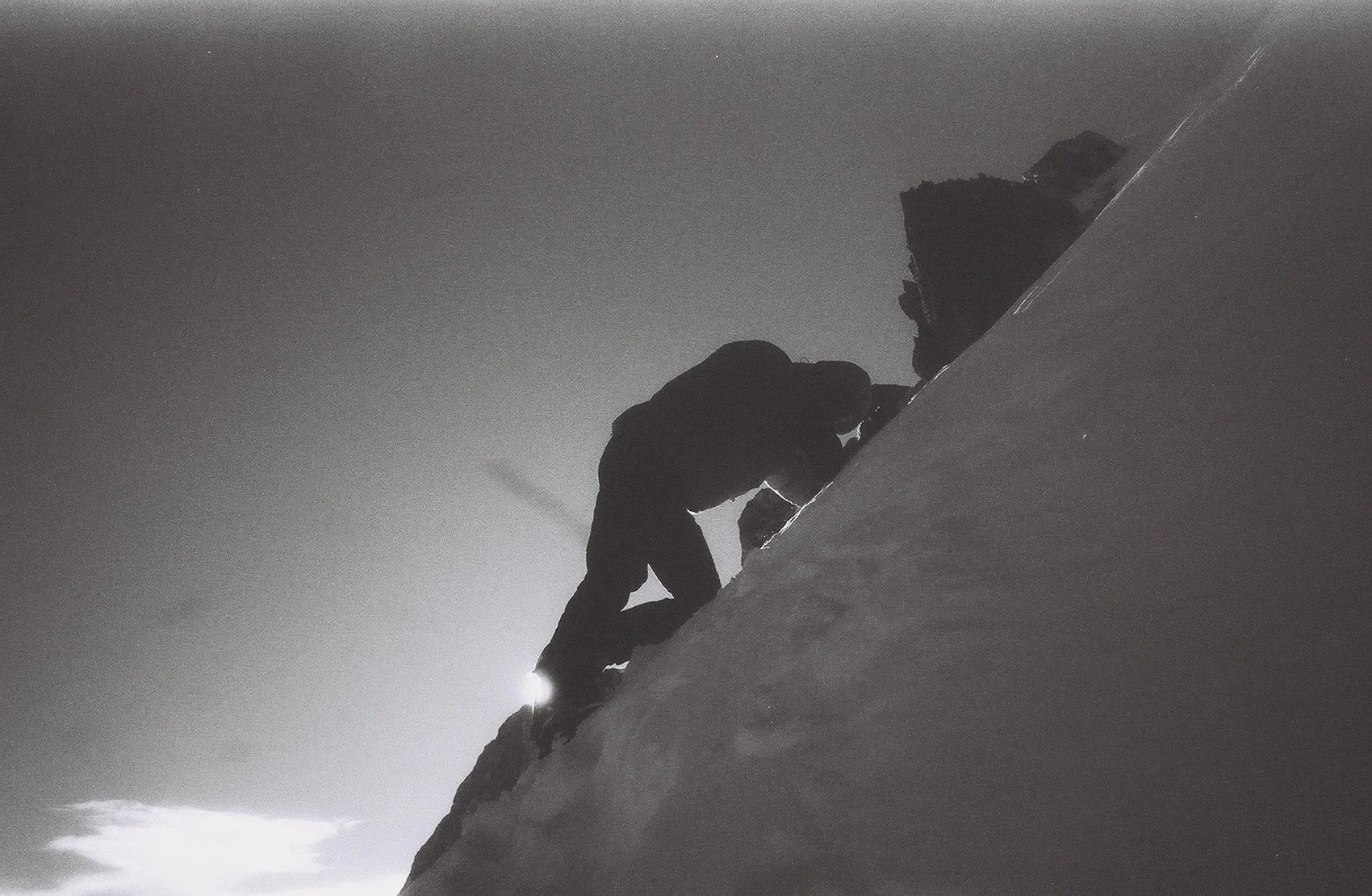
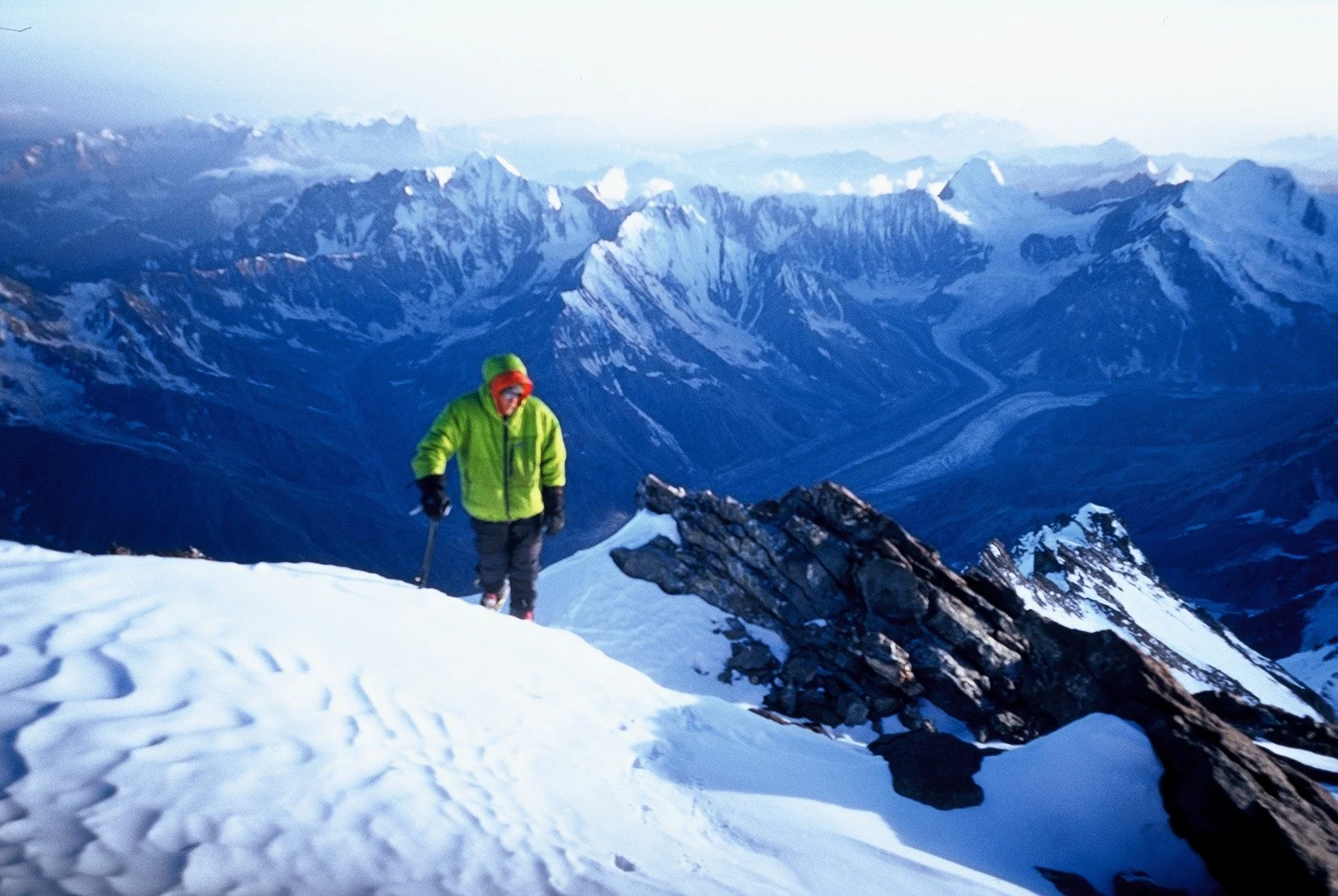
September 7, 2005
With our late return to camp in the early hours of the day, we slept a bit later this morning. We were both completely exhausted but still at over 23,000’ and over 10,000’ above the warm comforts of our basecamp in the Rupal Valley. We intended on descending the 1970 route, but were perched on a cliff about 1,000’ above it. With our small rack we began our downward quest to get to what we hoped would be a somewhat mellow but long line of descent. A Japanese team had ascended the 1970 route several months earlier. We actually saw some vestiges of their footprints up high near the summit. For unknown reasons, they had abandoned much of their camps set up in the Merkl Icefield. We could see them from our camp. It was an attractive lure towards the perception of being closer to safe ground.
We made or first rap anchor with what appeared to be a solid single RP. As Steve started to weight it, it shifted so we decided to back it up. Two nuts gone, half a dozen left. Five more rappels to the Icefield. A few of the rappels took a while to find and secure solid anchoring so our arrival into the Icefield wasn’t until the afternoon. The tents that were still there were in disrepair, and filled with a lot of useful equipment that we just left and kept going. At first it was relatively easy walking and down climbing, but soon enough we were forced to continue rappelling, mostly from ice threads. The valley looked so close and I was sure we’d get there by dark. I was wrong.
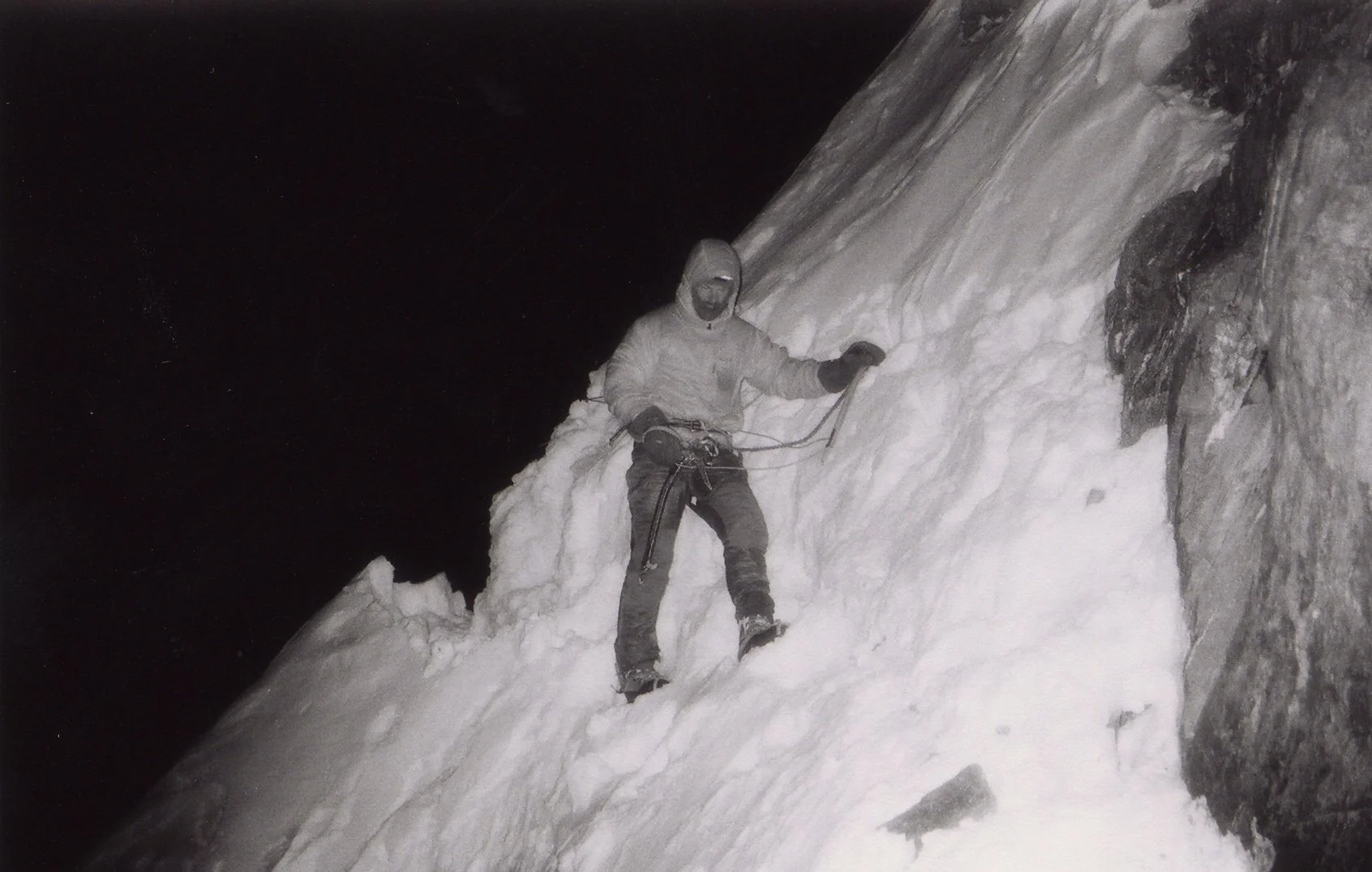
As darkness descended we were then below 20’000’ feet and the climate was warmer. After a while I needed to remove my hat (I now realize it was an unnecessary item with the multiple hoods I had) from under my helmet. In doing so, I dropped my headlamp, which was our only working one at that point. We were trying to find somewhere safe and flat to bivy for the night and could not see anything. I thought that if I took a photo, my camera’s flash would allow a glimpse. I tried and it just blinded us. Nonetheless we found something that would work at 18,000’.
September 8, 2005
This was our eighth and final day on the Rupal Face and wasn’t without some excitement. We woke to find that we had actually stumbled upon a nice, safe and flat bivy site. The snow around was quite dirty which explained the gritty water in our bottles from melting snow the evening prior.
We still had 6,000’ to descend to base camp, however the air now felt rich, warm and invigorating! We continued to face-in down climb most of this terrain. As we reached the lower glaciers there was a lot of surface melting and loose rock on top of the ice. Steve was down below me at one point and saw above a large volley of rocks were coming down. He yelled for me to move to my right. I was so exhausted I just froze in place and to my (and his) surprise they fell to my right.
Once off the glacier we scrambled down slabs and talus until eventually finding a clear running stream. I remember the water tasting like an incredible elixir at the time after a week of eating and drinking everything out of the same plastic water bag. This, tasted like the nectar of the gods! Better yet, we knew we had succeeded in our return to humanity. We were soon greeted by our wonderful Pakistani support staff! They had warm fries and more refreshments for us. They carried our packs back to camp.
We had a small celebration in camp but had to get going ASAP since our flights were in a few days and I had to conduct a guides exam back home in less than a week!
The trek out proved to be memorable as well.
September 9 - 11, 2005
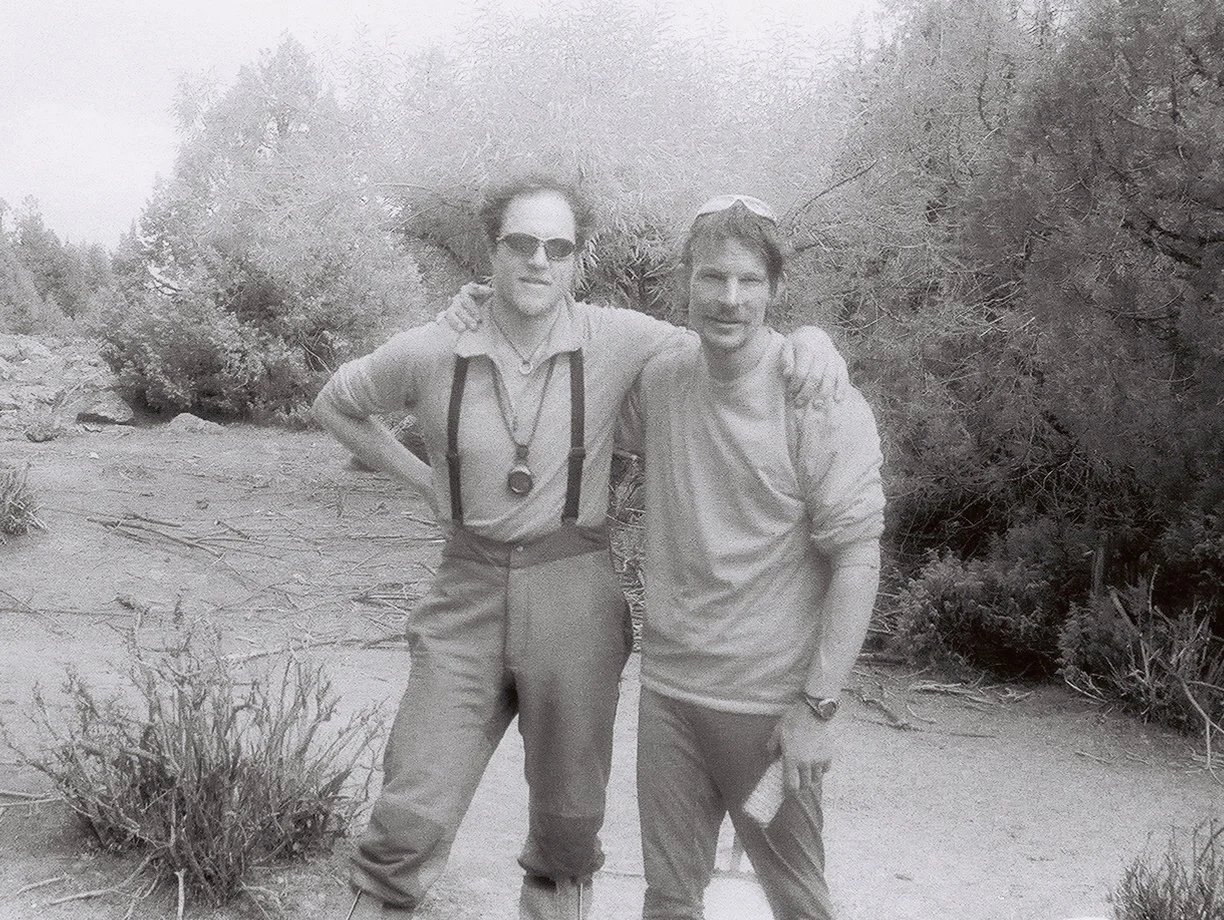
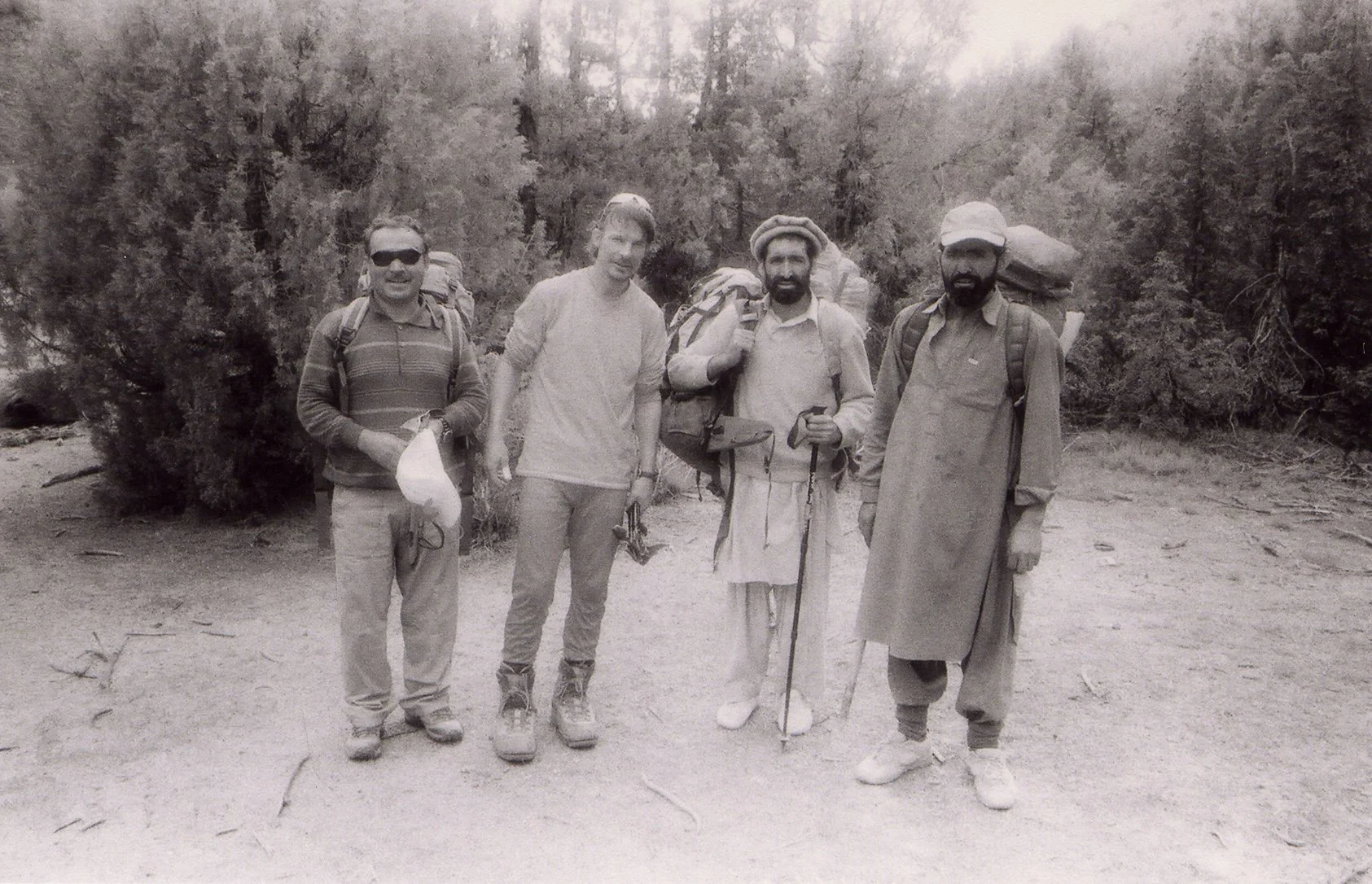
We slept HARD when we got back to camp. Our camp staff cooked us an amazing meal, though we were too tired to eat much. We smuggled in a bottle of Scotch (alcohol is illegal in Pakistan) and enjoyed a few sips with our basecamp mate Colin Haley. He had been attempting the Schell Route on his own and had just returned.
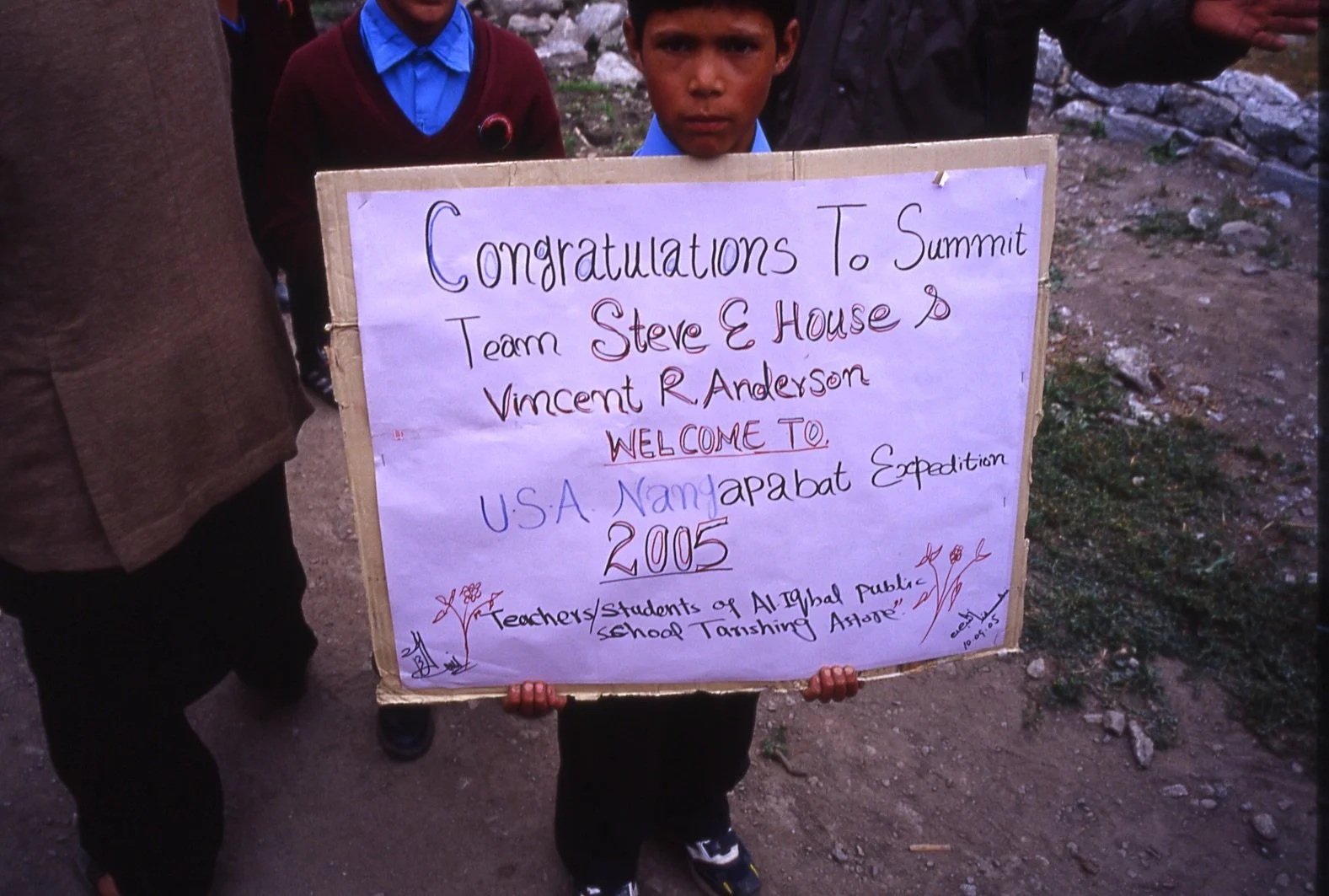
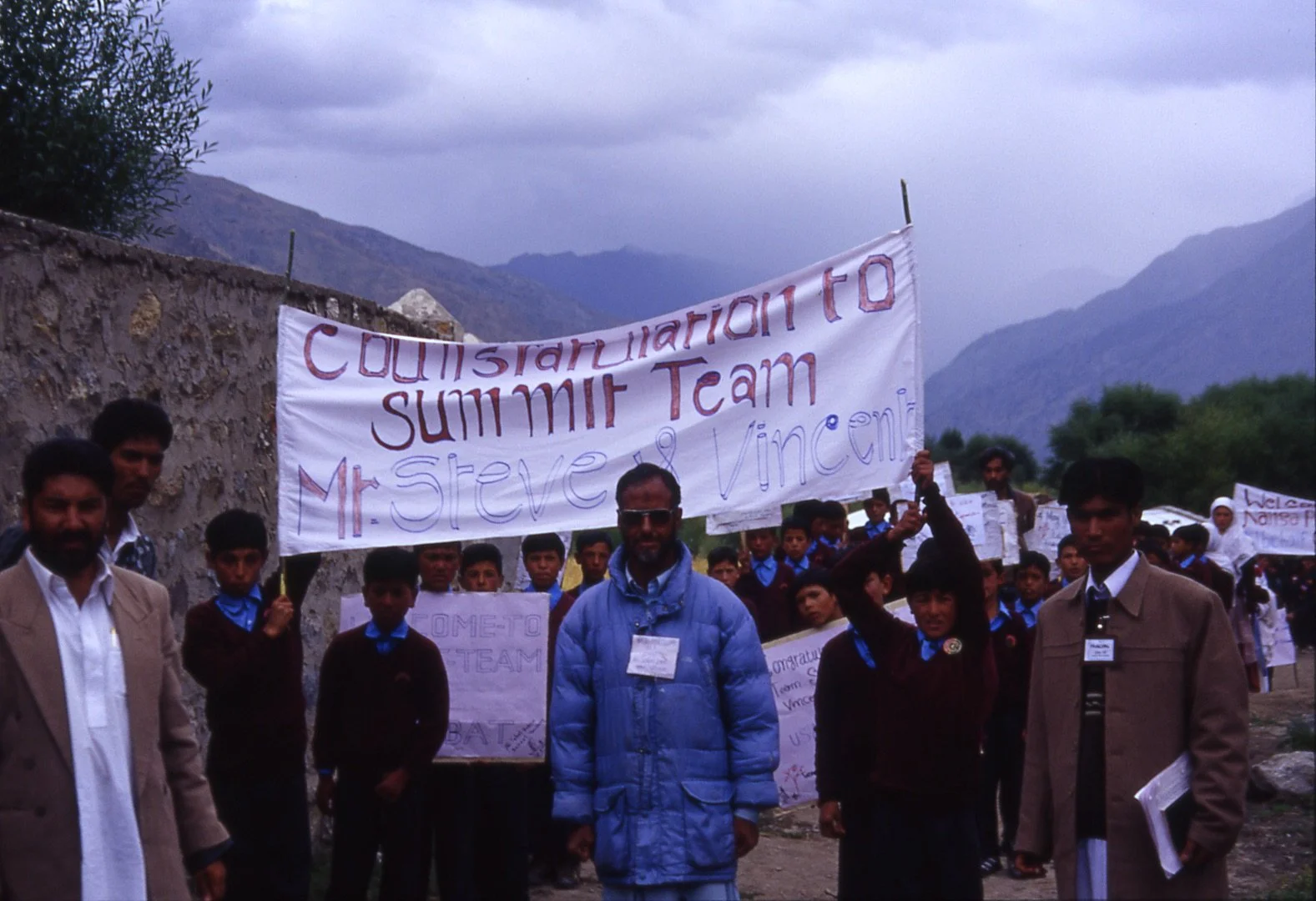
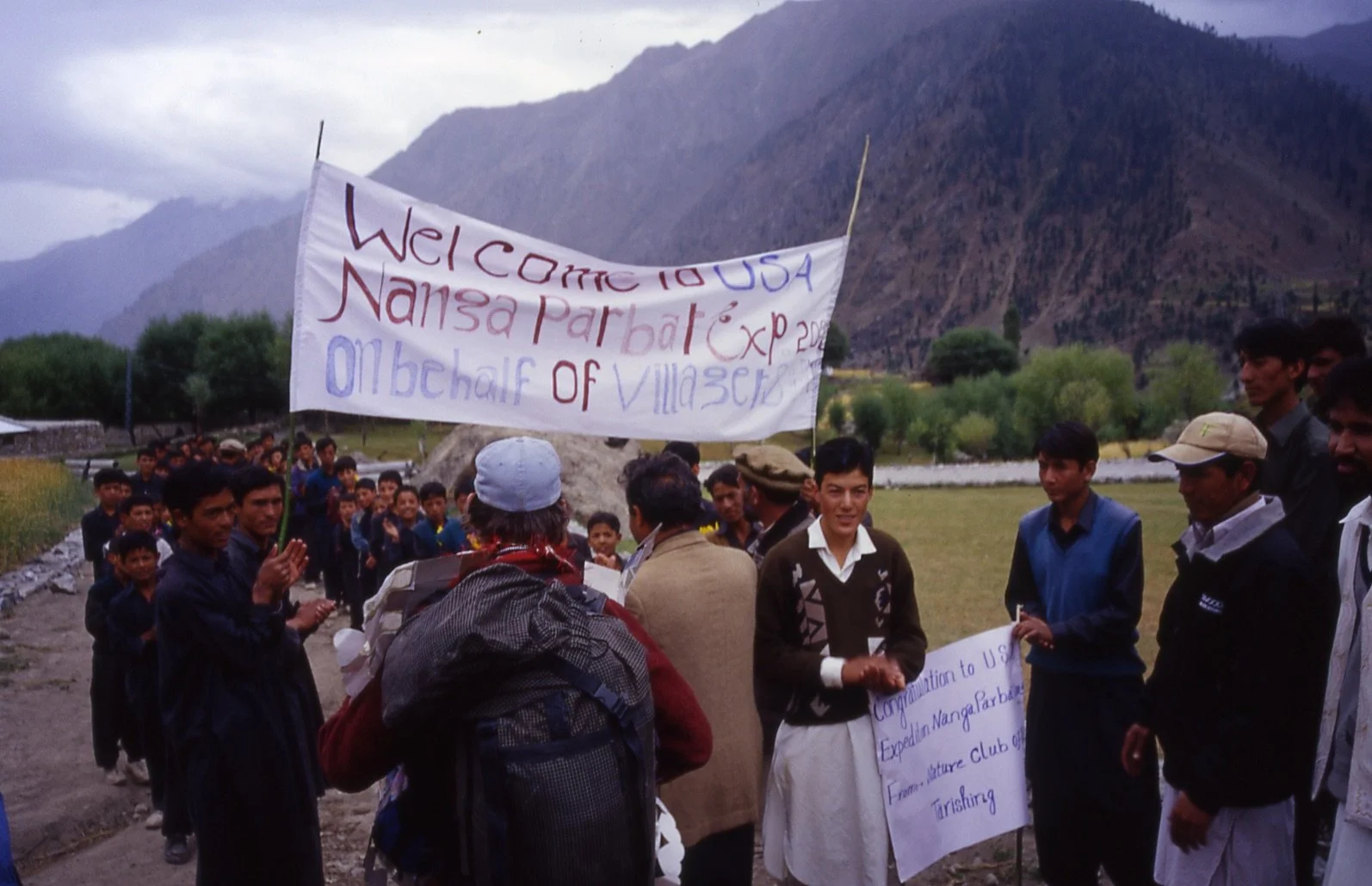
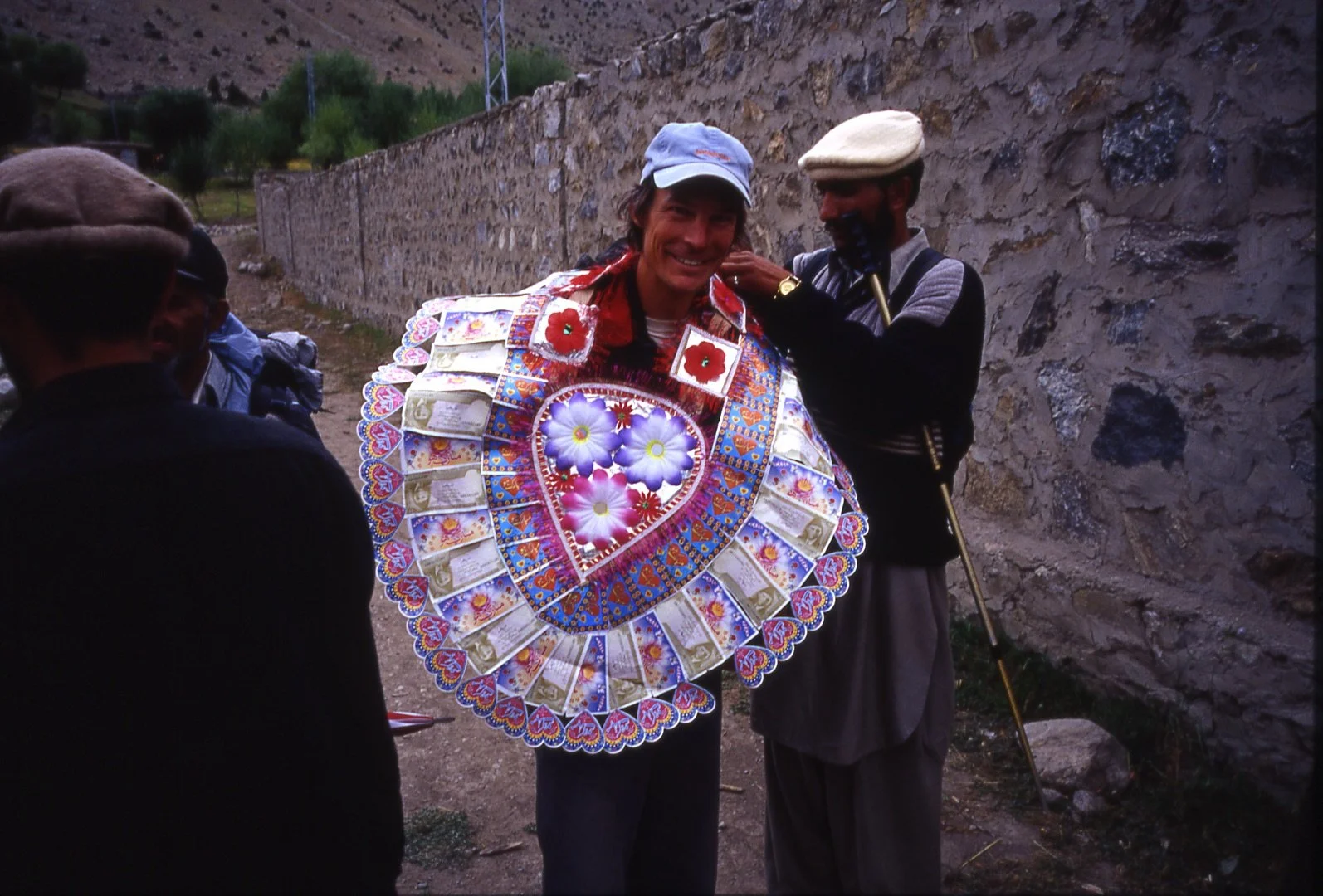
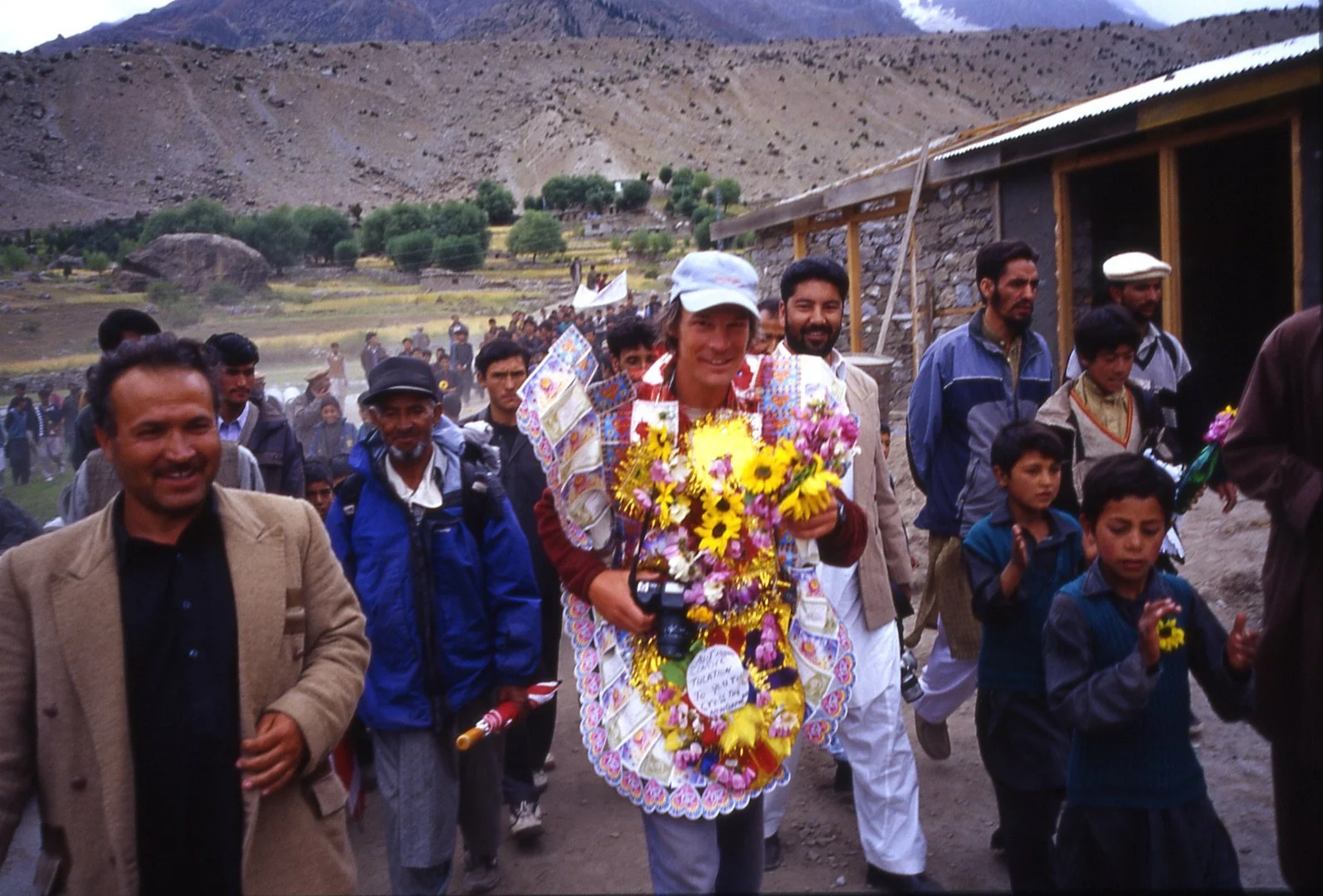
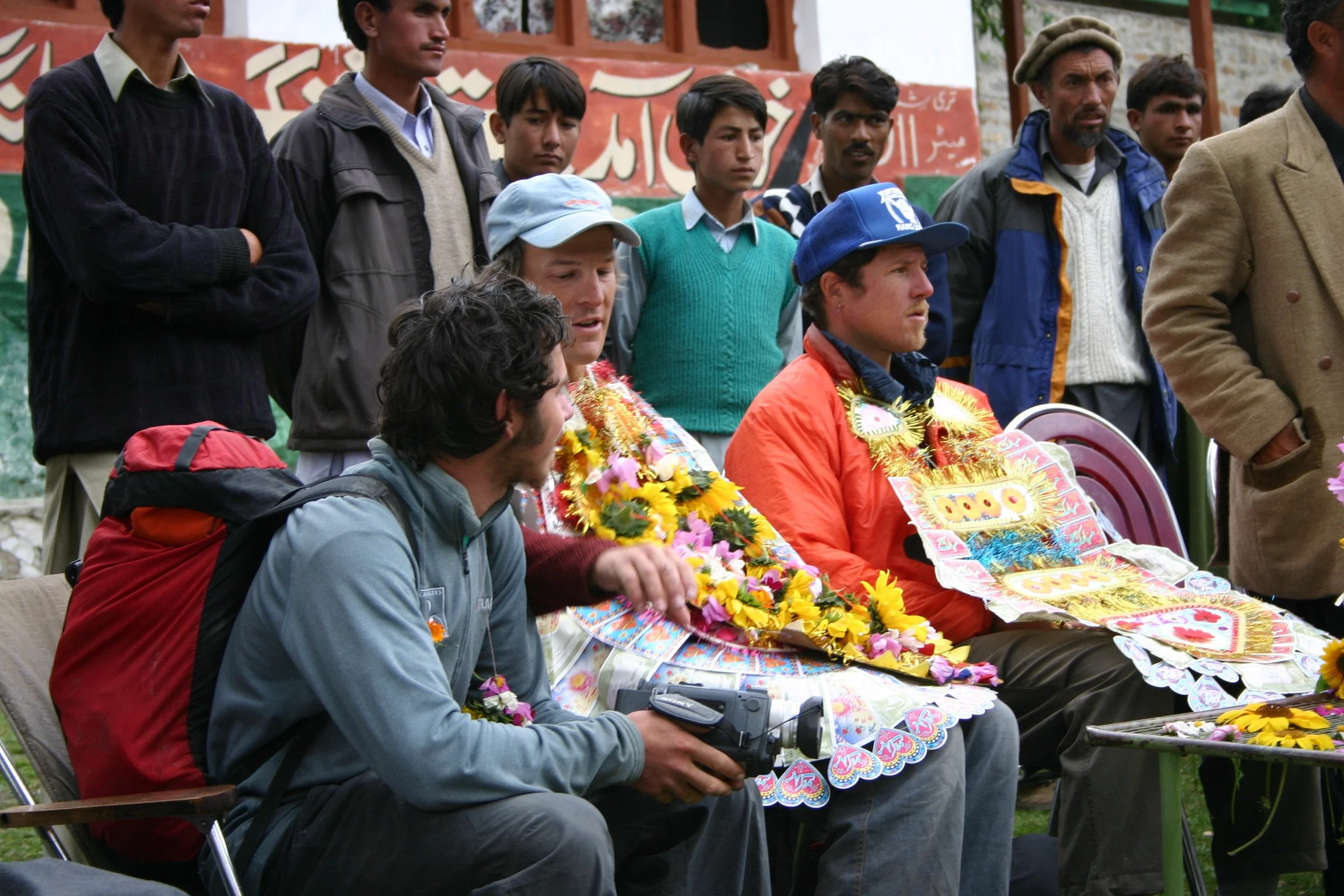
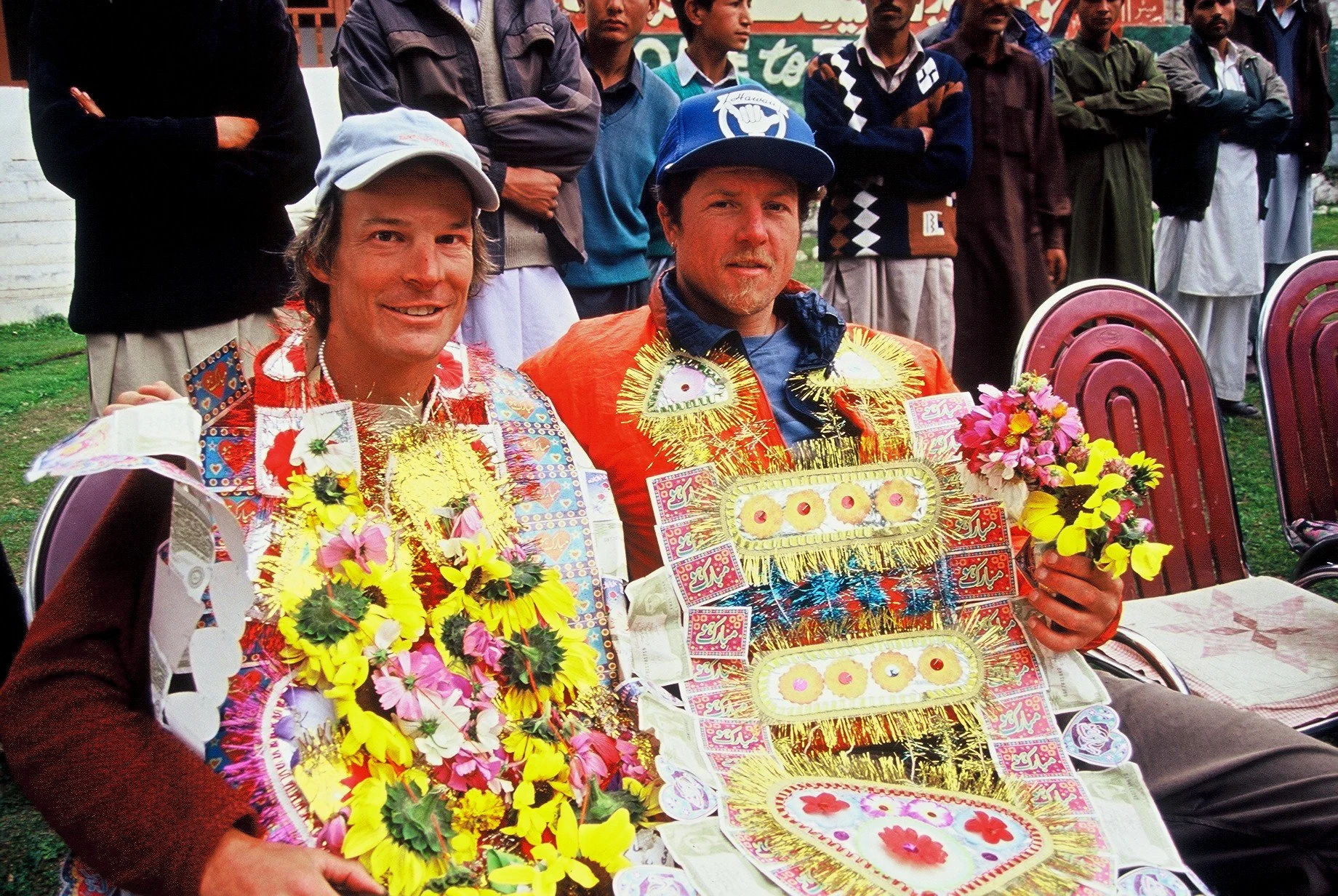
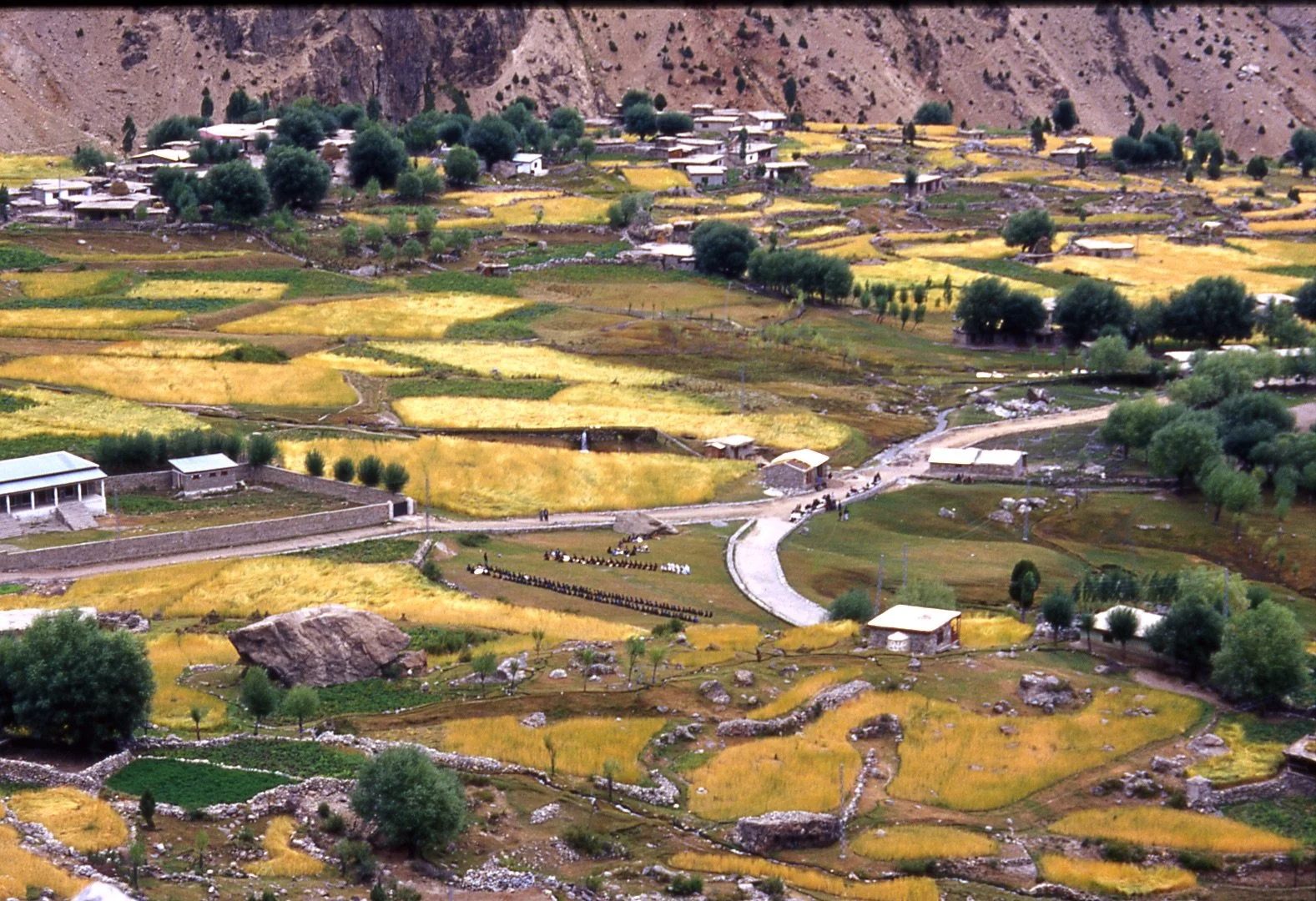
Walking out to the village of Tareshing was brutal: I was so far gone I could only manage short bits of walking before having to stop. Upon our arrival, the town people there, having heard about our ascent, planned a wonderful celebration for us. They were really psyched for us! After a night there, we continued towards Islamabad in hopes of me catching my flight back home. We made a brief stop at an Internet cafe to get in touch with people we know and tell them about our adventures.
I was able to make my fight and stopped in Switzerland for a layover. My good friend Caroline George met me and took me sport climbing which completely kicked my ass! I boarded another set of flights to Denver, then immediately drove for two days to Washington where I was just in time to start the AMGA alpine exam on which I was working as an examiner. It took me a while to adjust!