
Intro To Mountaineering Course
Learn Fundamental Mountaineering Skills On Mount Baker
Mountaineering combines rock climbing, glacier travel, snow climbing, route finding, and mountain sense into one demanding and rewarding discipline. Skyward Mountaineering's five day Introduction to Mountaineering Course is designed for beginners who want to learn the skills necessary to travel and climb independently in glaciated mountain terrain.
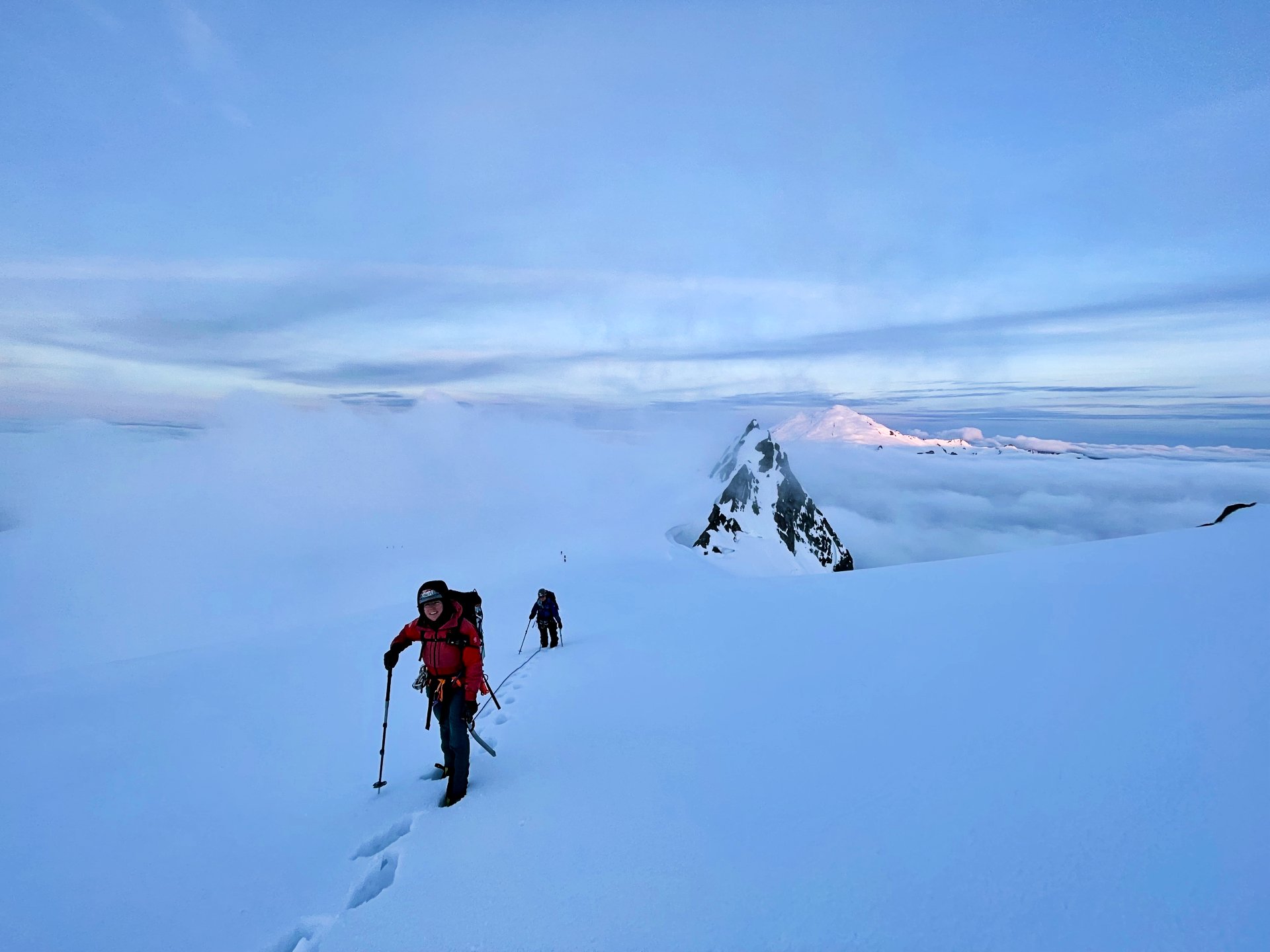
Based on Mount Baker in Washington's North Cascades, the course combines hands on instruction with a five day itinerary focused on modern mountaineering techniques. You'll learn rock climbing fundamentals at Mt. Erie, establish an overnight alpine camp, practice snow climbing techniques with an ice axe and crampons, glacier travel, build snow and rock anchors, practice crevasse rescue, and apply your new skills during a summit climb on Mount Baker’s Coleman-Deming route.
The goal is not simply to reach the summit. It's to give you a practical foundation in modern mountaineering systems, decision making, and climbing movement so you can continue developing toward more ambitious alpine objectives.


Course Description: Introductory glacier mountaineering course with AMGA certified guides.
Prerequisites: No previous climbing or mountaineering experience required.


Schedule: 5 days with overnight camping in the mountains. See open enrollment dates below or choose custom dates.
Group Size: Small ratio course with a maximum of 3 climbers per guide.
Location: The Intro To Mountaineering Course is based on Kulshan (Mount Baker), Washington.
Elevation: 10,781ft/3,286m
Pricing: $2,495 per climber.


Learn Technical Mountaineering And Glacier Travel Systems
This course is designed for people who want to learn how to move safely and efficiently in glaciated mountain terrain. You do not need previous climbing or mountaineering experience. The course is a good fit if you:
Want to learn the fundamentals of mountaineering
Want to learn glacier travel and crevasse rescue
Are interested in learning basic rock and snow climbing techniques
Want to develop the skills to eventually climb independently with partners
Are interested in climbing glaciated peaks and alpine objectives in venues such as the Cascades, Colorado, Alaska, or internationally
The course is physically demanding and includes long days carrying a loaded overnight pack. While no previous climbing experience is required, participants should be prepared for sustained mountaineering and climbing over several consecutive days.
Plan Your Intro To Mountaineering Course
What You’ll Learn On Our Intro To Mountaineering Course
Mountaineering Equipment: Learn how to select, pack, and use the equipment required for a multi-day mountaineering objective. We'll discuss clothing systems, footwear, crampons, ice axes, ropes, protection, and camping equipment.
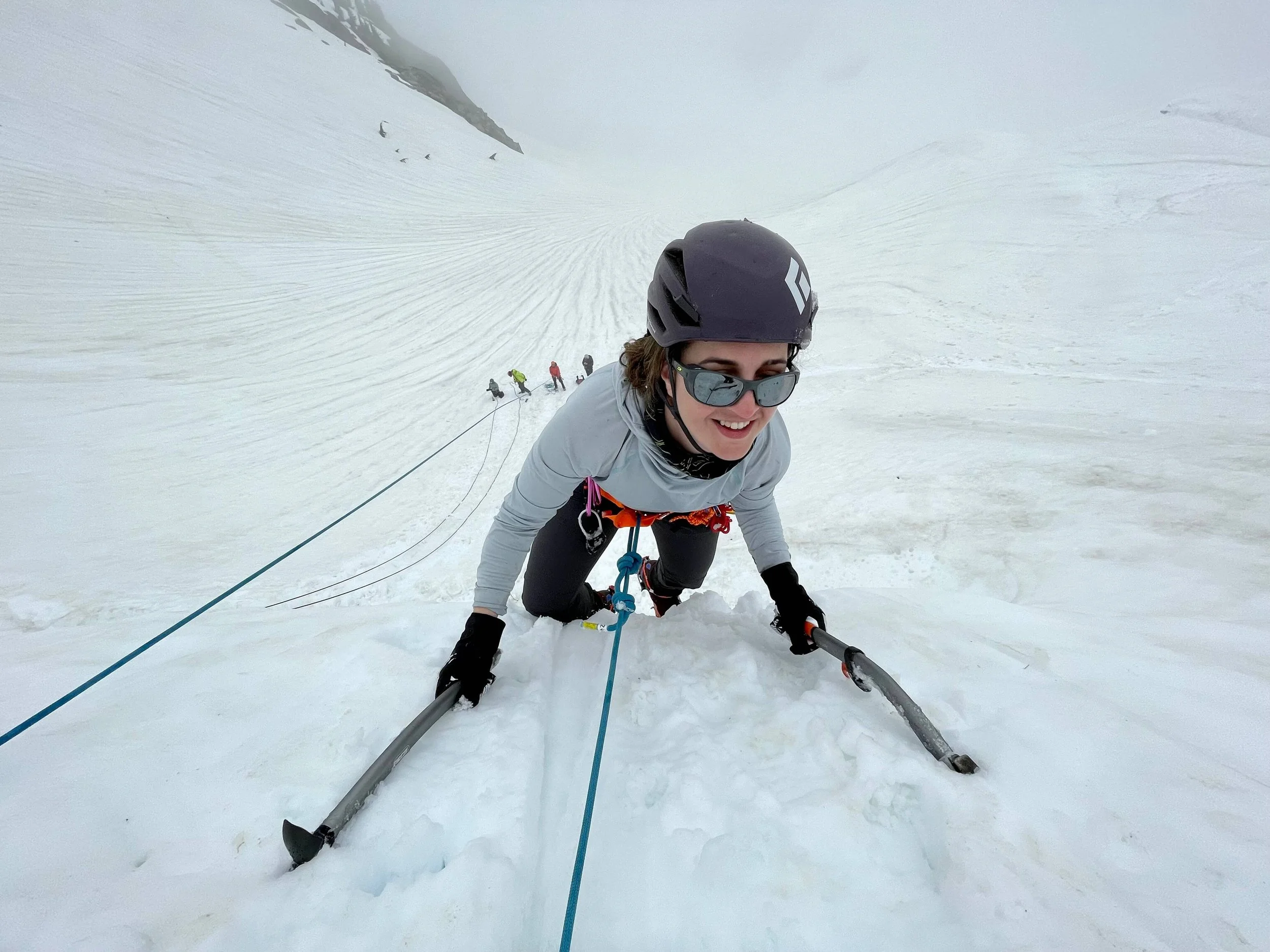
Crampon and Ice Axe Technique: Learn fundamental movement techniques for snow and glaciated terrain, including efficient crampon technique and how to self-arrest. Practice climbing steep snow with crampons and an ice axe while learning how to evaluate snow conditions and select appropriate techniques for the terrain.
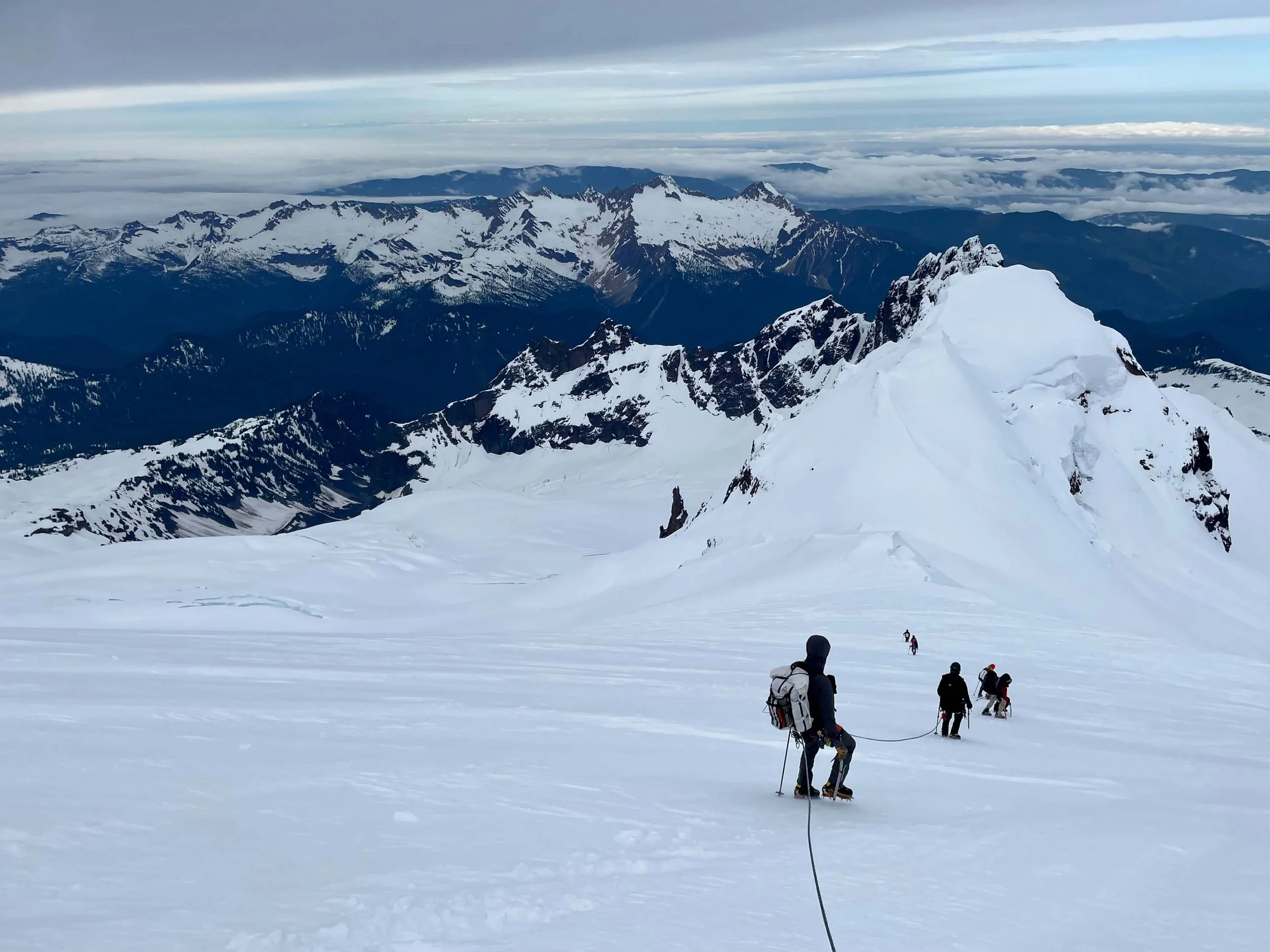
Glacier Travel: Learn how to travel safely as part of a rope team on a glacier. Instruction includes team spacing, terrain awareness, crevasse identification, movement techniques, and basic glacier travel systems.
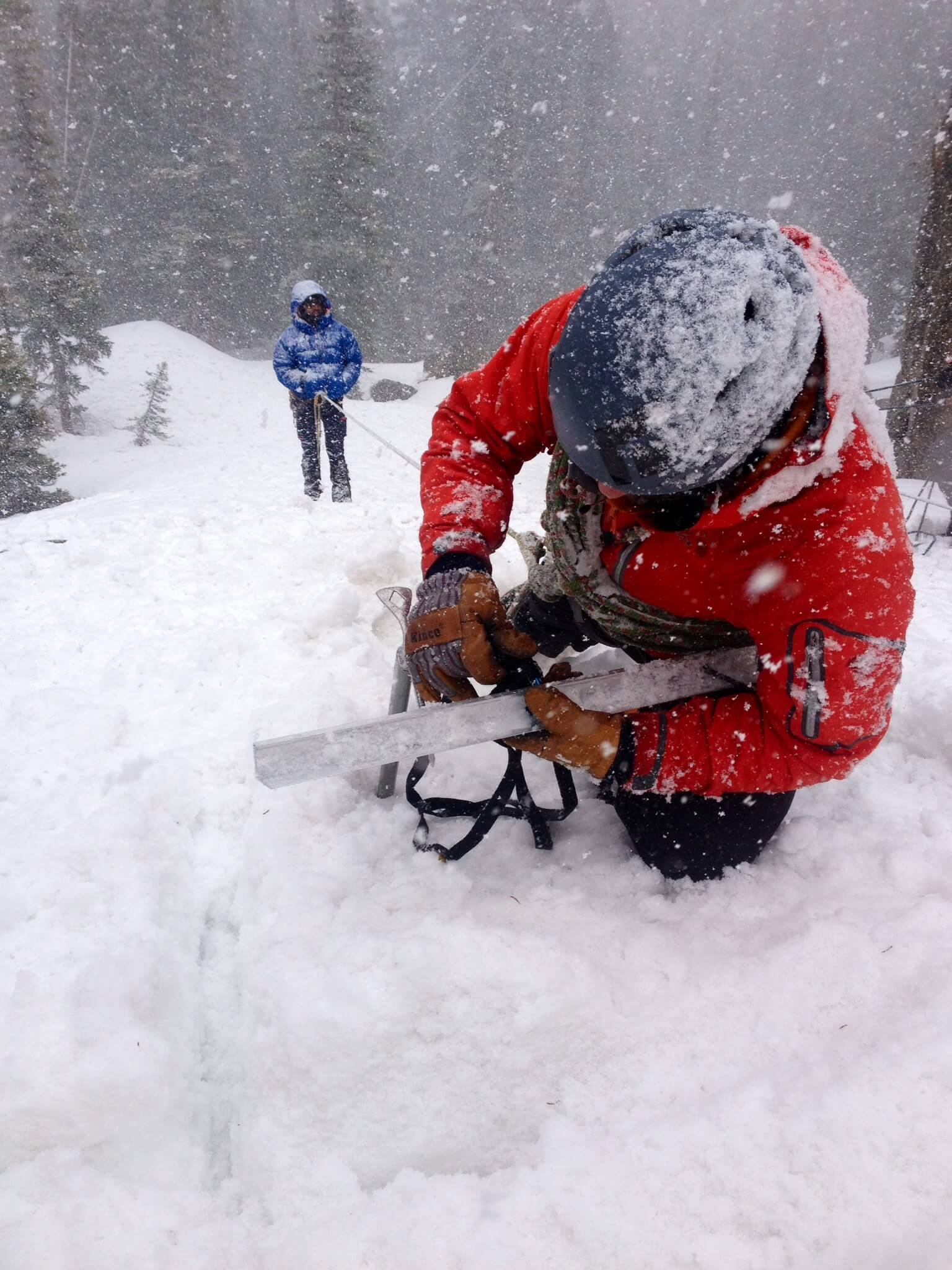
Snow Anchors: Learn how to construct and evaluate snow anchors for belaying and rappelling.
Crevasse Rescue: Practice the systems used to respond to a crevasse fall, including building rescue anchors and hauling systems.
Rock Climbing Movement: Develop fundamental rock climbing skills and learn how climbing techniques apply to technical mountaineering terrain. We'll cover movement, belaying, rappelling, knots, and ascending fixed lines.
Rock Anchors: Learn fundamental rock protection, such as nuts, camming units, and pitons, and how to build various rock anchors using traditional protection options, bolts, trees, and boulders in technical mountaineering.
Belaying and Rappelling: Develop the technical systems needed to belay and rappel safely on rock, snow, and alpine terrain.
Alpine Camping: Learn how to select and maintain a campsite in a winter or alpine environment, including tent anchoring, Leave No Trace principles, snow management, cooking, and organizing camp efficiently.
Mountain Sense: Learn how weather, snow conditions, terrain, route finding, and team dynamics influence decisions in the mountains. These skills are essential for eventually becoming a self-sufficient mountaineer.
Introduction To Mountaineering Course Itinerary
-
Meet your guide at Mt. Erie in Anacortes, Washington. We'll begin with a gear check, discuss your goals, and introduce the climbing systems you'll use throughout the course.
You'll spend the day learning fundamental rock climbing movement, knots, belaying, rappelling, and how to ascend a fixed line. We'll emphasize how these skills transfer to technical mountaineering.
At the end of the day, we'll set up camp nearby at a state park and review the plan for the following morning.
-
Travel to the town of Glacier, WA and park at the Heliotrope Ridge trailhead where we begin the approach toward Hogsback Camp below the Coleman Glacier on Mount Baker.
After arriving at camp, we'll discuss alpine campsite selection and setup, Leave No Trace principles, glaciology and mountain terrain, and weather forecasting.
The goal is to establish an efficient basecamp that will set the team up learning skills on the nearby glacier and a summit attempt over the remaining days.
-
Spend the day developing fundamental snow climbing and glacier travel techniques.
You'll practice crampon and ice axe movement, glacier travel, snow climbing, and snow anchor construction. We'll also spend time on the Coleman Glacier learning how to identify and navigate crevassed terrain.
-
Dedicate the day to crevasse rescue systems and practice.
You'll learn how to respond to a crevasse fall, build rescue anchors and construct several efficient hauling systems for different scenarios.
Back at camp at the end of the day, we'll review the plan for summit day and prepare equipment and food for an early alpine start.
-
Wake before sunrise and begin the climb by headlamp. Travel across the Coleman-Deming Glacier while navigating crevasses and gradually gaining elevation toward the summit. The route includes sections of steeper snow and culminates with climbing the Pumice Ridge and Roman Headwall toward Mount Baker's summit.
After the summit attempt, we descend to camp, pack up, and hike out.
The exact summit route and schedule depend on current conditions.
Why Learn Mountaineering on Mount Baker?
Mount Baker, known as Kulshan by the indigenous Nooksack tribe, is an exceptional training ground for beginner mountaineers because it offers a concentrated introduction to many of the skills required for larger alpine objectives. The Coleman-Deming Glacier provides access to glaciers with large crevasses, steep snow, alpine camping, and a straightforward summit objective within a relatively compact climbing area.
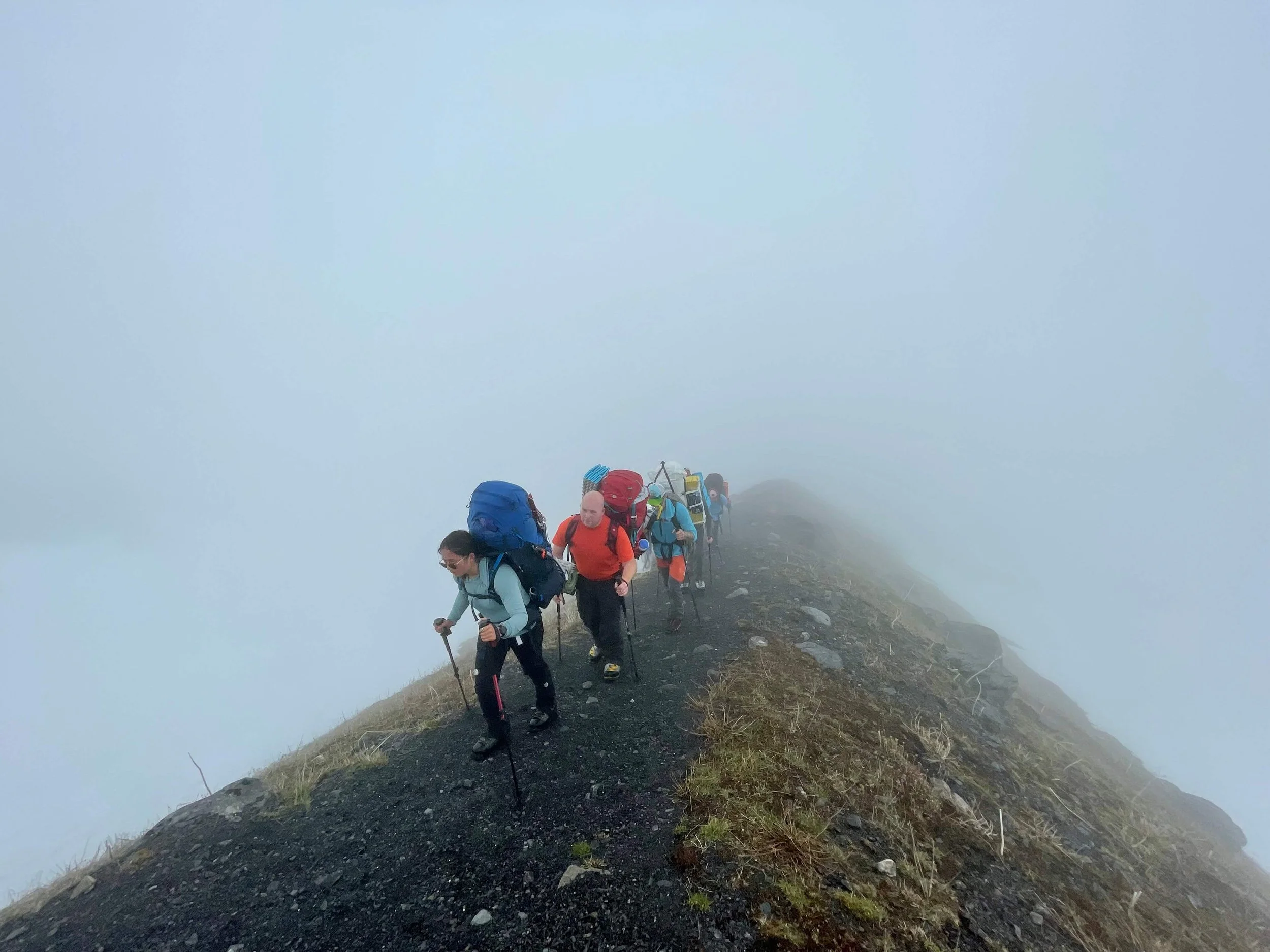
The course begins at lower elevations with rock climbing instruction at Mt. Erie before moving progressively into the glaciated terrain of Mount Baker. That progression is intentional.
The course culminates with a summit attempt on Mount Baker after several days of instruction and practice, you'll apply your new skills during a pre-dawn alpine start and climb toward the summit via the Coleman-Deming Glacier route.
The summit day brings together the skills you've developed throughout the course: glacier travel, crampon and ice axe technique, route finding, rope management, and movement on steep snow. You'll navigate crevasses and climb toward the summit as the sun rises over the North Cascades.
Frequently Asked Questions
-
No, the course is designed for beginners and does not require previous climbing or mountaineering experience. Climbing techniques, glacier travel and crevasse rescue are core parts of the curriculum and are taught on the course.
-
You don't need previous climbing experience, but you do need to be prepared for several consecutive days of physical activity in the mountains.
The course involves hiking with an overnight pack, traveling on snow and glaciers, climbing at altitude, and spending long days outside. Summit day can involve an early alpine start and many hours of continuous movement. Before the course, you should be comfortable hiking for several hours while carrying a moderately heavy pack and prepared for sustained uphill travel.
If you're unsure whether your current fitness or experience is appropriate, contact us before booking. We can help you determine whether this course is a good fit and suggest a training routine to help you prepare.
-
The course is based on Mount Baker, also known as Kulshan, a 10,781 foot glaciated volcano in Washington's North Cascades.
The course includes a summit attempt, but reaching the summit is never guaranteed. Weather, glacier conditions, and team readiness determine whether we can successfully summit Mount Baker.
-
The course lasts five days, including one night of camping in a state park after a day of rock climbing instruction and three nights of camping on Mount Baker. The course typically establishes an alpine basecamp near Hogsback Camp below the Coleman Glacier.
-
That depends on your goals and experience. After completing the course, you can continue developing your skills through technical alpine climbs, glaciated objectives, or additional mountaineering courses with Skyward Mountaineering. Many students continue learning with our Intro To Trad & Multipitch course or the Fundamentals Of Winter Alpine Climbing course.
Your guide can help you identify an appropriate next objective.