
Castleton Tower Rock Climbing
Climb One of Moab's Most Iconic Desert Towers
Castleton Tower is one of the most iconic desert towers in the American Southwest and a classic destination for multipitch rock climbing near Moab, Utah. Rising dramatically above Castle Valley, the tower offers spectacular views of the La Sal Mountains, Fisher Towers and Colorado River while providing some of the finest sandstone crack climbing in the region.
Skyward Mountaineering offers guided climbs on Castleton Tower and nearby desert towers throughout Castle Valley for experienced climbers. Choose from 5.9 introductory crack climbing routes such as Kor-Ingalls or North Chimney, or more challenging routes such as the North Face.


Multipitch rock climbing on desert towers in Castle Valley, with routes ranging in difficulty from 5.9 to 5.13.

Intermediate difficulty, previous multipitch rock climbing experience is required and climbers must have good crack climbing experience.

Full day (8 hours) of hiking and climbing. The best season for climbing Castleton Tower is late February - late May and mid September - late November.

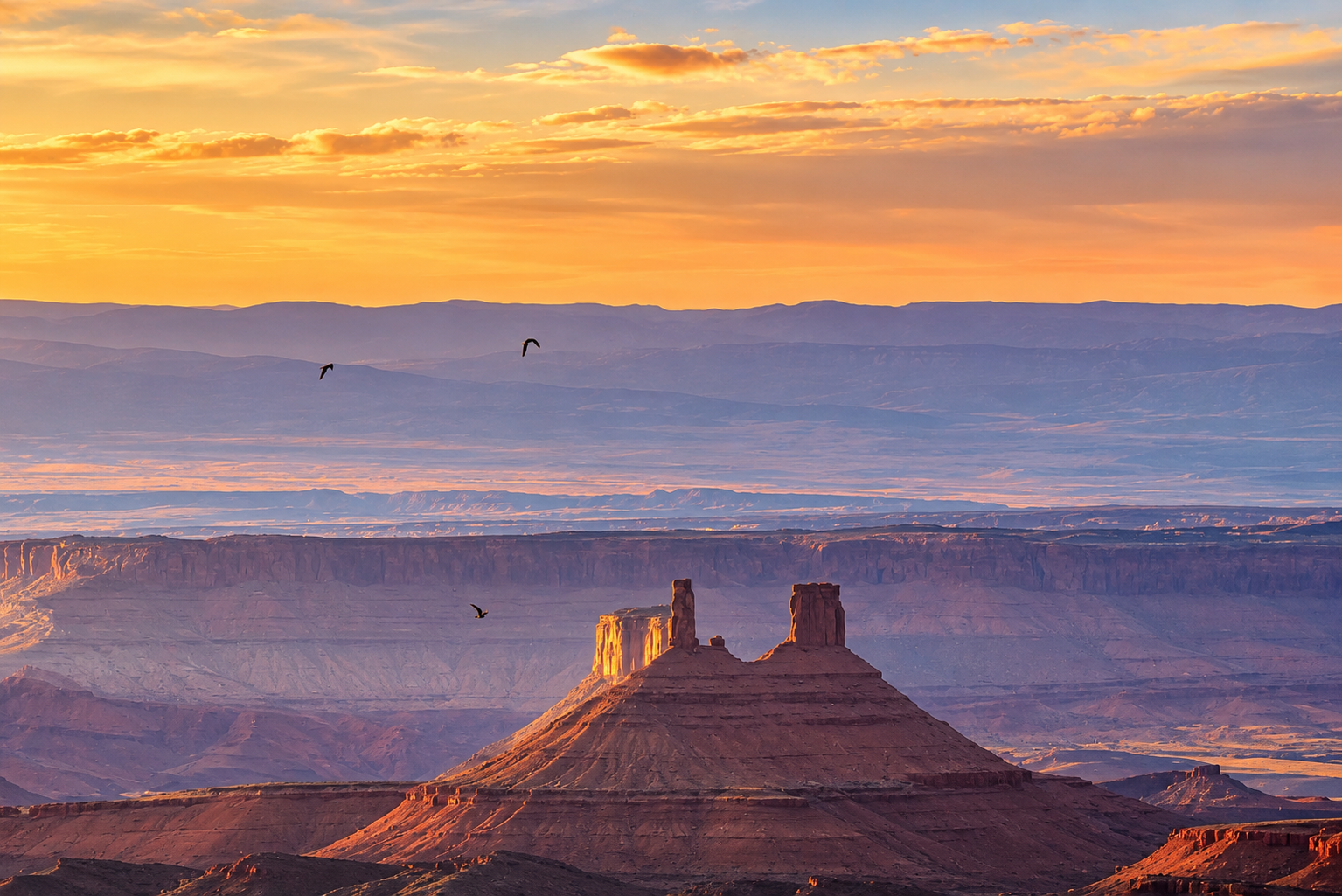
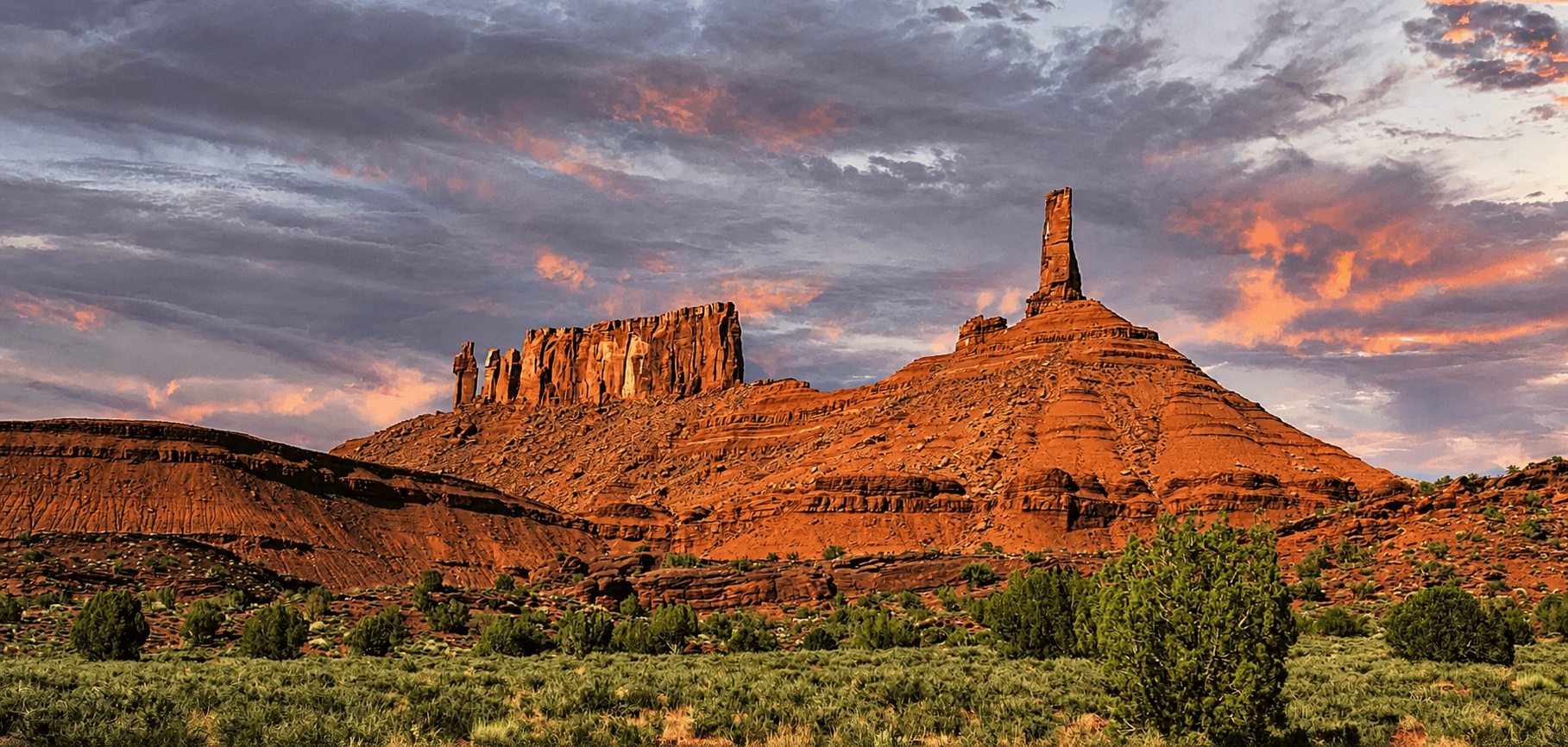
Castle Valley outside of Moab, Utah. Castleton Tower is a 400 ft (120 m) tall freestanding spire.
Multipitch Desert Crack Climbing On Castleton Tower
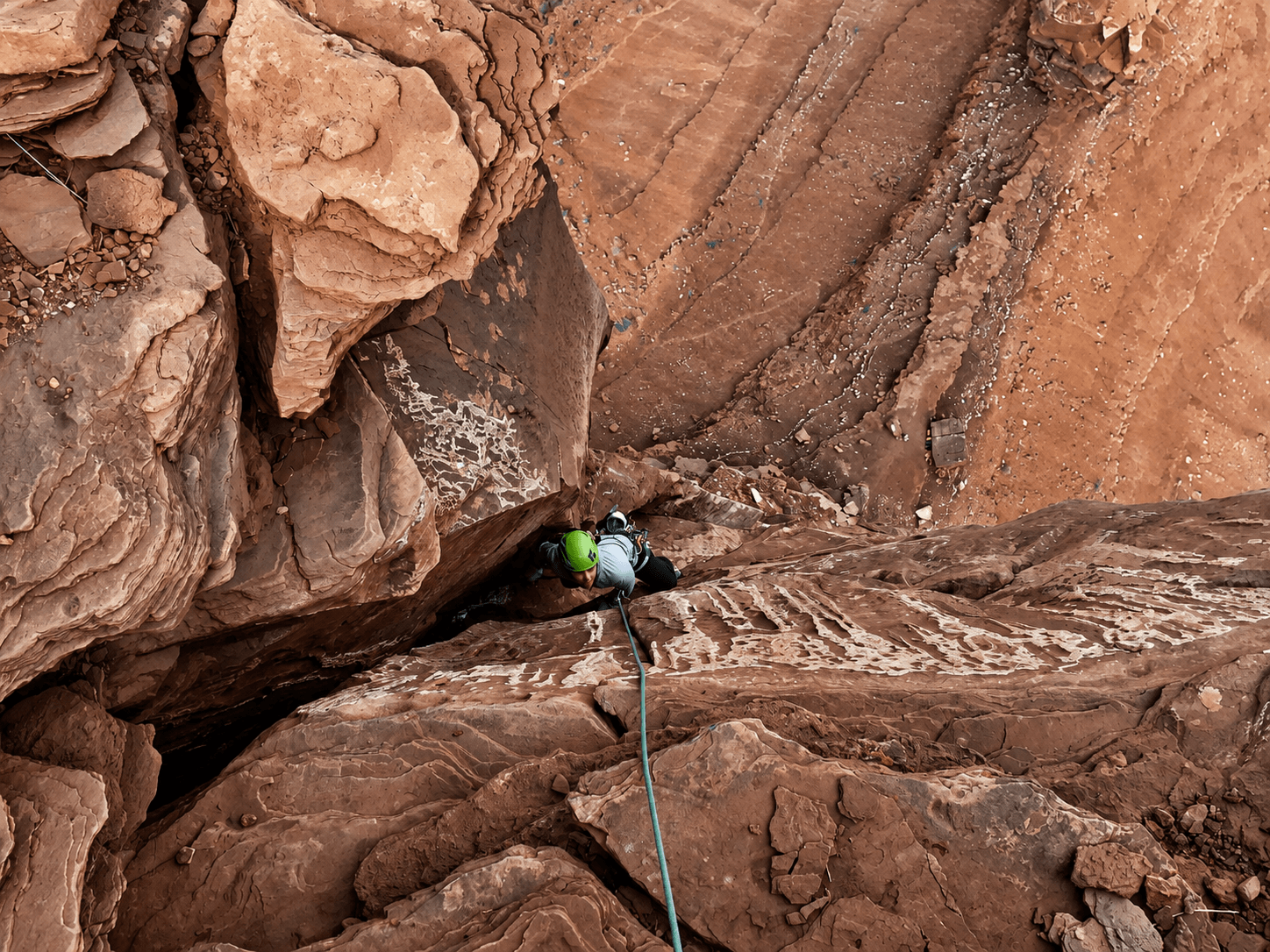
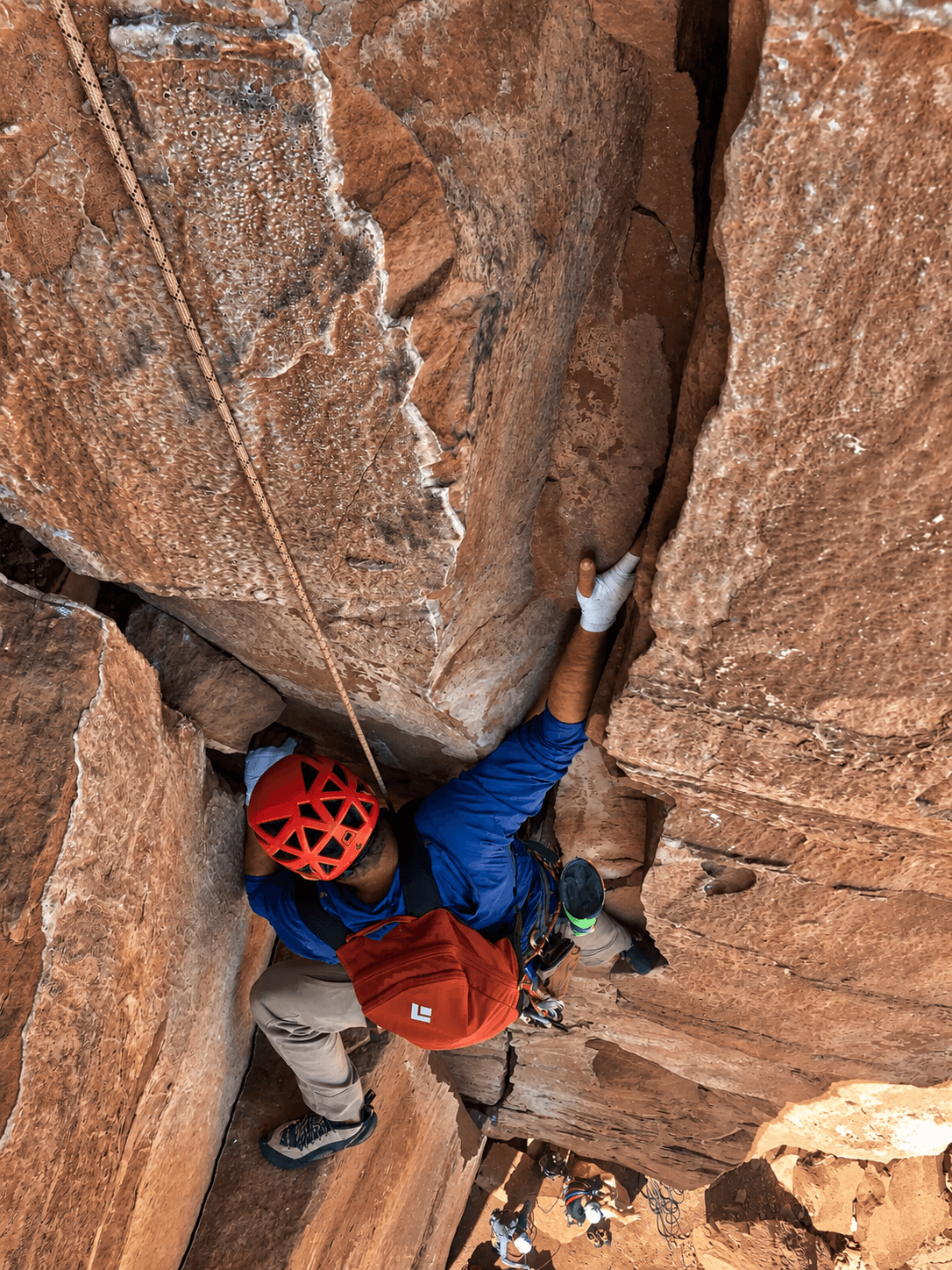
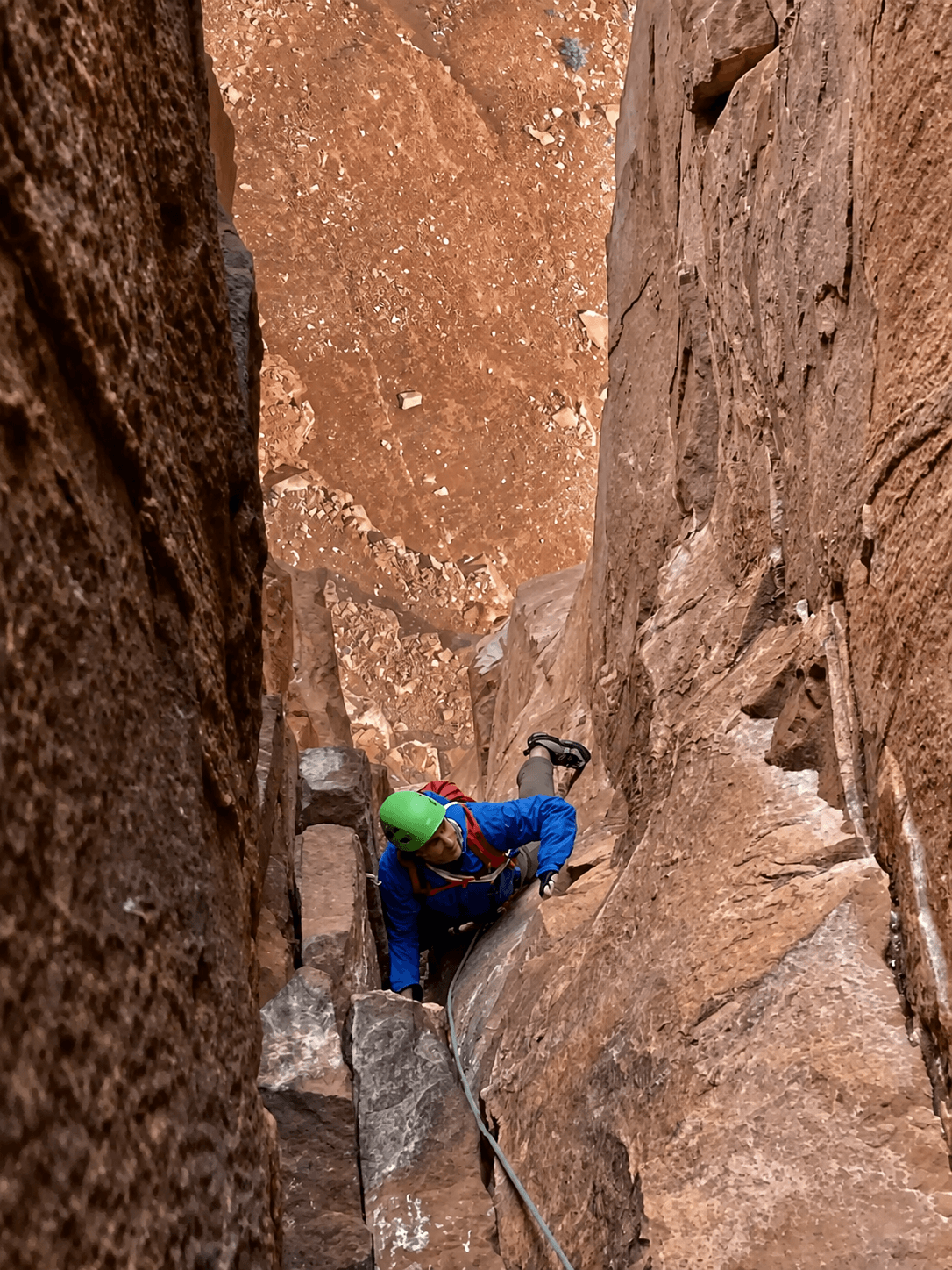
Castleton Tower is a premier destination for traditional multi-pitch crack climbing in the Moab desert. The tower's Wingate sandstone features hand cracks, finger cracks, offwidths, chimneys and sections of technical face climbing, making route selection and efficient movement especially important.
Our guides can help you choose an objective that matches your experience while providing coaching on crack-climbing technique, route finding, efficient belaying and multi-pitch systems. If you want to improve your crack climbing before attempting a desert tower, we can also build a dedicated instruction day at one of Moab's nearby crags into your itinerary.
Best Routes On Castleton Tower & Nearby Desert Towers In Castle Valley
Classic Routes On Castleton Tower
-
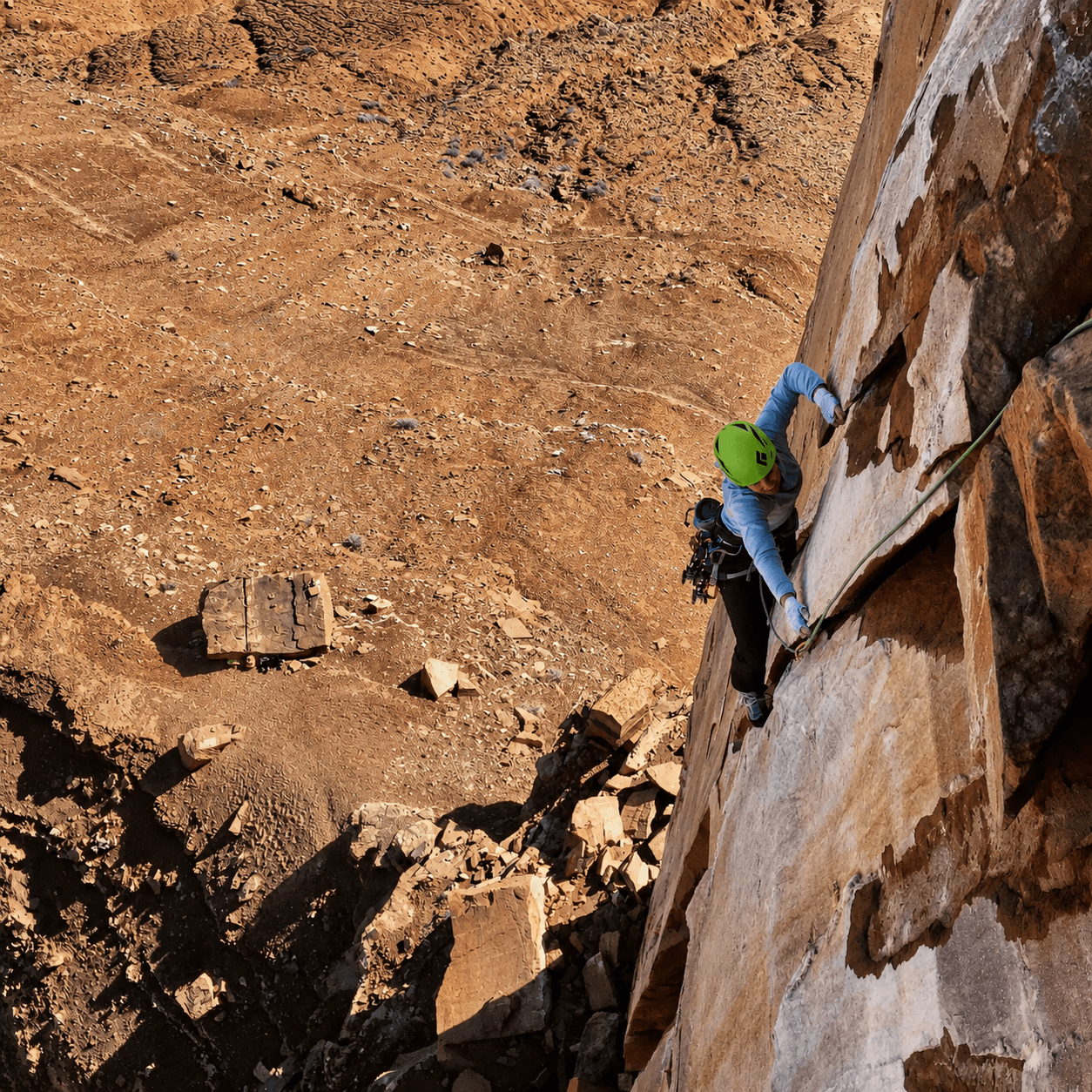
The North Chimney is one of the most popular routes on Castleton Tower a favorite of famous first ascentionist, Fred Beckey! The route climbs a combination of steep hand cracks, chimney, face climbing and a short offwidth section over several pitches to an incredible summit.
Pitch 1: Steep twin hand cracks in a right facing corner system. Challenging right off the ground, but climberss are rewarded by a long pitch with excellent jamming.
Pitch 2: A short offwidth section above the belay station leads to fun crack climbing in a chimney.
Pitch 3: Fun crack climbing in a chimney to bypass a roof and join at the notch of the Kor-Ingalls route.
Pitch 4: An exposed, short hand traverse to the summit of Castleton Tower.
-
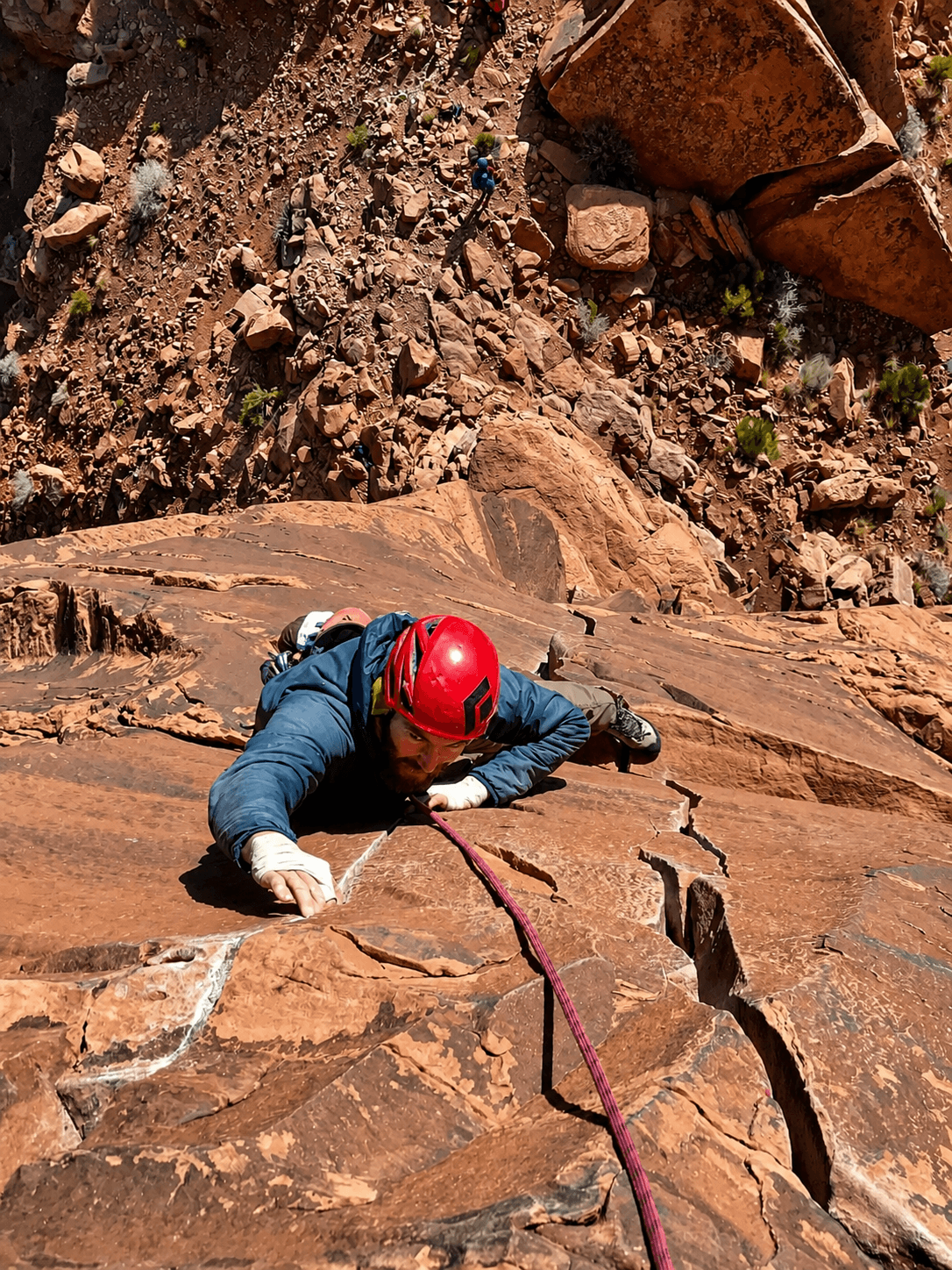
The Kor-Ingalls route is one of the most famous desert tower climbs in North America. First climbed in 1961 by Layton Kor and Huntley Ingalls, this four pitch route follows the striking southwest dihedral on Castleton Tower and combines steep cracks, wider climbing, face moves and chimney sections. Kor-Ingalls is a classic route, but its moderate grade should not be mistaken for an introductory climb due to the sustained steepness and blue collar climbing style.
Pitch 1: An easy, long pitch with sections of chimney climbing and scrambling.
Pitch 2: Double fist cracks to a rightward traverse leads to a ledge below the crux pitch.
Pitch 3: Physical crack climbing and laybacking up a left facing corner with a mostly wide crack. A short chimney section leads to a great ledge at the junction with the North Chimney.
Pitch 4: An exposed, easy hand traverse to the summit of Castleton Tower.
-
The North Face of Castleton Tower is a challenging multipitch desert classic for experienced climbers. The route combines steep crack climbing with exposed face climbing and sustained movement high and huge exposure. Compared with the North Chimney and Kor-Ingalls routes, the North Face demands stronger technical climbing and greater comfort with sustained multipitch terrain, making it best suited to climbers with solid climbing experience.
Pitch 1: A sustained wide hands crack in a tight corner system, capped by a short technical and powerful traverse around a large flake.
Pitch 2: Technically easier, but still challenging, a tight hand crack over a short bulge.
Pitch 3: The standard finish traverses right and climbs through a tricky wide section of 5.10. Alternatively, there is a direct finish with 5.11 face climbing on calcite crimps.
Direct, exposed, and challenging the North Face is an aesthetic line up Castleton Tower!
Classic Routes On Towers In Castle Valley
Castleton Tower is one of Moab's most iconic climbing objectives, but it isn't the only option. Depending on your experience and goals, your guide may recommend another desert tower.
Plan Your Castleton Tower Rock Climbing Trip
FAQs For Rock Climbing Castleton Tower
-
Castleton Tower has several routes of varying difficulty. The North Chimney is the easiest route in Castle Valley, though it’s hardly for beginners. The North Chimney has an original rating from Fred Beckey of 5.8+, though most modern climbers agree the rating is more akin to 5.9 with a few slippery opening moves into a steep corner hand crack system. The second pitch offwidth also is challenging (albeit short) and the climbing is physical so climbers should have a good grasp on crack climbing technique.
The Kor-Ingalls is a mega classic route on the south side of Castleton Tower, it’s a great wider crack climb with some offwidth, laybacks, and slippery face climbing on the calcite. This old school route is rated 5.9+ and has physical climbing again demanding that climbers be in good crack climbing shape.
Other routes such as the North Face of Castleton Tower or Fine Jade on the Rectory step up the difficulty to 5.11 and have challenging crack climbing of a variety of sizes. As the climbing grades get higher, the climbing typically is less wide though the cracks get thinner and steeper, with sections of tricky face climbing too.
If you want to practice and refine your crack climbing technique, we offer rock climbing prep days at the crags around Moab. Book a day of crack climbing instruction to go along with a day of climbing on a desert tower!
-
Castleton Tower is an intermediate level objective for climbers with previous multipitch experience, so it isn't the right place to learn the fundamentals of outdoor climbing.
If you're new to outdoor climbing, we recommend starting at one of Moab's single-pitch crags. A guided crack climbing day can help you develop movement skills, rope systems and confidence before progressing to multipitch terrain.
If you have several days in Moab, your guide can create a progression from single-pitch climbing, to crack climbing instruction, and capped by a desert tower multipitch route.
-
Previous multipitch rock climbing experience is required for a guided Castleton Tower ascent. Climbers should be comfortable climbing long routes with sustained 5.9 crack climbing.
A climber who comfortably climbs 5.9 indoors or on sport routes may still need additional preparation before climbing Castleton Tower.
If you're unsure whether your experience is sufficient, tell us about the routes you've climbed, your outdoor experience and your multipitch background. We'll help you determine the right objective and, if needed, recommend a preparation day.
-
Reaching Castleton Tower is part of the adventure. The approach is approximately 1.25 miles with 1,350 feet of elevation gain, following a steep and sometimes loose desert trail toward the base of the tower. Expect a few short scrambling sections, but most of the approach is steep hiking.
For a typical climbing team carrying day packs, the approach takes approximately 1.5 hours. Your guide will help set an appropriate pace and can discuss the approach, weather and what to expect before your trip.
The combination of a substantial approach, multipitch climbing and rappelling makes Castleton Tower a full-day adventure rather than simply a few hours at a crag.
-
Yes, Castleton Tower and other multipitch desert tower objectives are generally guided at a maximum of two climbers per guide. This allows the guide to provide focused instruction, manage the technical systems efficiently and tailor the pace to the team.
If you're traveling with a larger group, we can add guides so multiple teams can climb together. Contact us to discuss group options and objectives.
-
Late spring and fall generally provide the best conditions for climbing Castleton Tower. Cooler temperatures make the approach and sustained crack climbing more comfortable, while the changing angle of the sun can significantly affect conditions on different faces of the tower.
Winter climbing can be possible during favorable weather, while summer heat can make exposed desert climbing uncomfortable or unsafe. Your guide will consider the forecast, temperature, wind, recent weather and route aspect when planning your climb.
Because Castleton Tower is a committing objective with a substantial approach, weather decisions are an important part of a successful climbing day.
-
Rock climbing in Moab is on a soft sandstone that is highly porous. Rain is absorbed into the rock and weakens the bond on hand holds and even bolts. Cams can even have a weaker holding power on the saturated sandstone! In the event of rain within 24 hours of our climbing trip in Moab, we may have to reschedule. This rescheduling will depend on how much rain occurs, whether the sun comes out, and what the wind speed/direction is. Thankfully, it’s rare that we have to cancel or reschedule a climb due to rain.
Our guides and office staff will work you to coordinate rescheduling, if necessary. For more information on our cancellation policy, please see our terms and conditions and contact us with any other questions.